
Cylindrobasidium
Cylindrobasidium
The pathogen is a fungus from the Cylindrobasidium genus, most notably Cylindrobasidium laeve. It is a basidiomycete responsible for causing various types of rot in the bark and wood of woody plants.
What the section contains
Cylindrobasidium
This fungus acts as a facultative parasite, meaning it thrives primarily as a saprotroph on dead organic matter but can easily transition to attacking weakened or stressed living tissues.
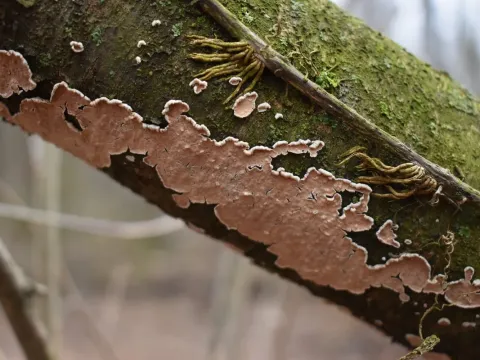
The fungus produces resupinate fruit bodies that cling tightly to the bark surface. These structures usually exhibit creamy, whitish, or yellowish colors depending on the maturity of the fungus.
The mycelium penetrates the tree through wounds, pruning cuts, sunscalds, or frost cracks. Once inside, it colonizes the cambium and the sapwood, systematically breaking down the structural components of the cell walls.
Spread is facilitated by the release of basidiospores that are dispersed by wind currents. These spores germinate readily when they land on moist surfaces, initiating new infections.
The most visible symptom is the appearance of thin, leathery fruit bodies on the bark of stems and branches. These crust-like formations are firmly attached to the woody substrate.
Infected areas often show signs of bark necrosis, where the bark cracks, detaches from the trunk, or becomes dry and brittle as the underlying tissue decays.
Leaf yellowing and premature leaf drop are common responses to the blockage of vascular tissues. The disruption of nutrient and water flow leads to the gradual decline of the affected branches.
Internally, the wood undergoes discoloration and softening. As the fungus consumes cellulose and lignin, the wood loses its mechanical integrity, becoming prone to wind breakage.
- Leathery cream-colored crusts on bark
- Bark detachment and cracking
- Yellowing and early senescence of leaves
- Softening and discoloration of wood
High humidity and moisture are the primary environmental requirements for the development of the fungus. Extended periods of rain or fog create perfect conditions for spore germination.
Open wounds are essential for infection. Pruning cuts left untreated, animal damage, or natural fissures in the bark provide easy entry points for the pathogen to establish a colony.
Trees suffering from physiological stress, poor nutrient levels, or drought are far more susceptible to infection compared to healthy, vigorous trees with active defense mechanisms.
Poorly ventilated and overly dense planting sites promote high moisture retention on the bark, which significantly increases the risk of spore colonization and mycelial expansion.
The fungus is most active during moderate temperature ranges, making spring and autumn critical periods for monitoring and implementing protective measures in orchards and landscapes.
The primary danger lies in the structural degradation of the tree trunk, which can lead to sudden branch or tree failure. This poses a significant safety risk in inhabited areas.
Systemic disruption of vascular functions results in reduced vigor, diminished crop yields, and loss of the aesthetic value of ornamental or fruit-bearing trees.
The disease is progressive. If left unmanaged, the fungus will continue to spread throughout the woody tissue, ultimately resulting in the decline and eventual death of the host tree.
A single infected tree becomes a reservoir for spores, creating a high-risk environment for neighboring healthy plants, which requires immediate containment actions.
Economic losses arise from the need for professional tree removal, the loss of harvest, and the recurring costs associated with protective fungicide treatments and garden sanitation.
Strict horticultural hygiene is the first line of defense. Regular pruning of dead or diseased branches, followed by immediate tool disinfection, is crucial to prevent spread.
All pruning wounds exceeding a certain size (typically over 2-3 cm) should be sealed with horticultural paint or wound dressing to prevent fungal spores from accessing exposed tissues.
Maintaining tree vigor through proper fertilization and irrigation helps the plant sustain its natural defense against pathogens, reducing the likelihood of successful fungal infection.
If fruit bodies are identified, they should be carefully excised along with a small portion of surrounding healthy tissue, and the area treated with a fungicide or copper-based wash.
Proactive dormant-season spraying with copper-containing fungicides effectively reduces the local spore population, lowering the risk of spring infections on the bark surface.