
Cylindrocarpon root rot
Cylindrocarpon olidum
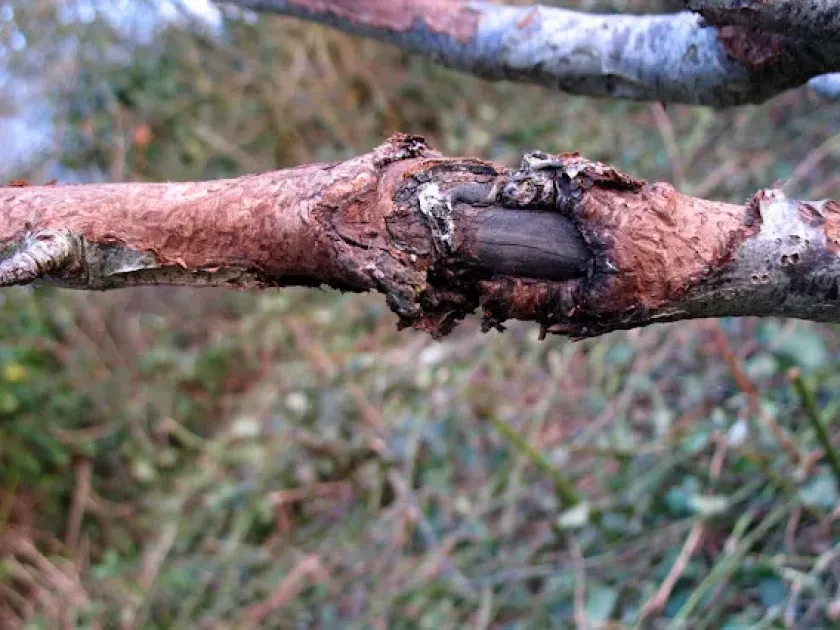
Description
Symptoms
The earliest symptom is often a gradual wilting that does not respond to regular watering. The foliage may turn pale, yellow, or show signs of nutrient deficiency despite proper fertilization.
Upon examination of the root system, dark, sunken lesions appear on the roots. These lesions often turn black or dark brown as the tissue necrosis progresses deeper into the cortex.
In humid conditions, a visible mycelial growth (often white or pinkish) may appear on the root collar or around the base of the stem. This indicates a high level of fungal activity.
Root system decline is rapid, with smaller lateral roots being destroyed first. Over time, the main roots decay, causing the plant to lose its anchorage in the soil.
When the roots are cut crosswise, browning of the internal vascular tissues is usually evident, a classic sign of the systemic progression of the fungal infection.
Pathogen
The disease is caused by the soil-borne fungus Cylindrocarpon olidum (now often reclassified within the Neonectria genus). It is a persistent pathogen capable of surviving for years in soil and plant debris.
The fungus acts as a facultative parasite, attacking the root systems of various crops. It excels in diverse soil types and can thrive even in the absence of a primary host by living as a saprotroph.
Transmission occurs through the movement of contaminated soil, irrigation water, and the use of infected nursery stock. It is particularly problematic in systems where propagation is done via cuttings or divisions.
The fungus forms conidia, which are easily dispersed. These spores can remain dormant in the soil, waiting for favorable conditions to germinate and infect new host roots.
Biological studies show that Cylindrocarpon species can weaken a plant's vascular tissue, making it impossible for the plant to transport water and nutrients, which eventually leads to total system failure.
Conditions for development
Excessive soil moisture is the primary driver of Cylindrocarpon outbreaks. Poorly drained soil creates a hypoxic environment that stresses roots and favors fungal colonization.
Temperatures ranging from 18°C to 25°C are optimal for the pathogen. These moderate temperatures allow the fungus to grow rapidly and penetrate the host tissue effectively.
Soil compaction exacerbates the condition by preventing proper aeration, which limits the root's ability to resist the infection and regenerate after the initial attack.
Continuously growing the same crop in the same soil leads to a dangerous accumulation of inoculum. Without rotation, the pathogen population density increases every season.
High levels of undecomposed organic matter in the soil can support the survival of the fungus, providing a bridge for it to survive the winter and infect subsequent plantings.
Why it matters
The pathogen causes significant economic losses in the nursery industry, where contaminated batches must be destroyed to prevent further spread of the infection.
In mature plants, root rot causes reduced yield and poor overall vigor, making the plants more susceptible to environmental stressors like drought or frost.
The disease can lead to the total collapse of entire beds or greenhouse modules if not caught in time, necessitating costly sanitation and soil sterilization procedures.
Quality of the harvest is often severely compromised, as the physiological stress from the roots affects fruit development, sugar content, and shelf life.
Because the disease is soil-borne, it poses a long-term risk to land, often requiring chemical treatment or long fallow periods to reduce the population of the fungus to manageable levels.
Protection
The primary control strategy is rigorous sanitation. This includes sourcing healthy, disease-free stock and using sterile planting substrates for young plants.
Improving soil structure through amendments and ensuring excellent drainage is critical to minimizing the environmental conditions favored by Cylindrocarpon.
Implementing a strict crop rotation schedule helps break the life cycle of the pathogen. Avoiding susceptible crops for at least 3-4 years can significantly lower soil inoculum.
Chemical control involving fungicides used as soil drenches or root dips can provide protective benefits, though they should be part of an integrated management program.
- Applying biological control agents, such as beneficial Trichoderma fungi.
- Sterilizing tools and machinery with appropriate disinfectants after use in infected areas.
- Removing and destroying infected plants along with the surrounding soil.
- Monitoring irrigation practices to prevent waterlogging and high humidity at the root zone.
Discussion
No discussions yet — be the first.