
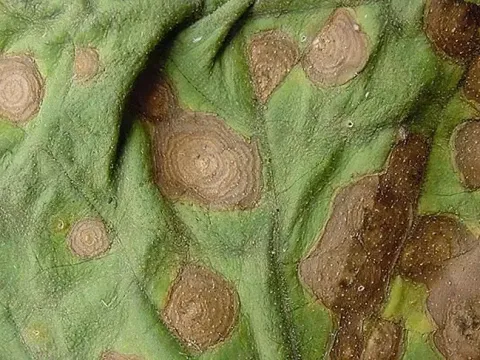
Corynespora leaf spot
Corynespora calicioidea
The disease is caused by the fungus Corynespora calicioidea, a versatile pathogen capable of infecting a wide range of host plants across various agricultural crops.
What the section contains
Corynespora leaf spot
The fungus survives primarily in plant debris and infested soil, acting as a reservoir for recurring infections when environmental conditions become suitable.
Transmission occurs through conidia, which are easily disseminated by wind and splashing rainwater, facilitating the spread of the disease throughout the field.
The pathogen utilizes a mix of parasitic activity to invade living tissues and saprophytic survival to maintain its presence during non-cropping seasons.
Its ability to breach the leaf cuticle or enter through natural openings makes it a significant threat to vulnerable crops in humid environments.
Symptoms typically manifest as small, chlorotic spots that progressively enlarge and transition into necrotic lesions with a brown or reddish-brown center.
A distinctive feature of these lesions is often a darker, well-defined border or a yellow halo, which distinguishes the disease from other common leaf spots.
Under high humidity, a grayish or brown fungal growth may appear on the lesions, consisting of conidiophores and spores, indicating active sporulation.
As the infection advances, individual lesions often merge to form large, irregular patches of necrotic tissue, causing the leaves to dry out and fall prematurely.
In systemic or severe cases, the stems and petioles may exhibit elongated, dark streaks or lesions that can impede nutrient transport within the plant.
High relative humidity and frequent rainfall are the most critical environmental factors that promote the rapid development of Corynespora leaf spot.
Warm temperatures, specifically within the range of +20 °C to +28 °C, provide the ideal physiological conditions for the germination and penetration of the fungal spores.
Poor field hygiene, including leaving crop residues on the soil surface, significantly increases the pressure of the inoculum for subsequent plantings.
Dense planting configurations reduce airflow and keep foliage damp for longer periods, creating a perfect microclimate for the fungus to thrive and spread.
Plants under nutrient stress, particularly those lacking sufficient potassium or trace minerals, demonstrate increased susceptibility to the disease.
The primary impact of the disease is the substantial reduction in the photosynthetic capacity of the plant due to the loss of functional green leaf area.
Premature leaf drop stunts overall plant growth and development, directly affecting the yield quantity and the quality of harvested produce.
Severe infestations can lead to early senescence of the entire plant, which shortens the vegetative growth period and limits the potential for fruit or seed filling.
In addition to physical tissue loss, the plant redirects vital energy toward stress response rather than productive growth, further decreasing crop vigor.
Economic damage is compounded by the need for multiple fungicide interventions and the potential for total crop loss in highly susceptible varieties.
A robust crop rotation strategy is the cornerstone of management, aimed at breaking the lifecycle of the fungus by avoiding susceptible hosts in the same field.
Sanitation practices such as removing or deeply plowing under infested plant residues drastically reduce the initial inoculum level for the next season.
Selecting disease-resistant or tolerant cultivars is a highly recommended long-term strategy for minimizing the need for chemical treatments.
If environmental monitoring predicts a high risk of outbreak, the application of preventative systemic fungicides is essential to protect the canopy.
Maintaining optimal plant density and balancing soil fertility improves the overall health of the crop, making it less prone to infection and severe damage.