
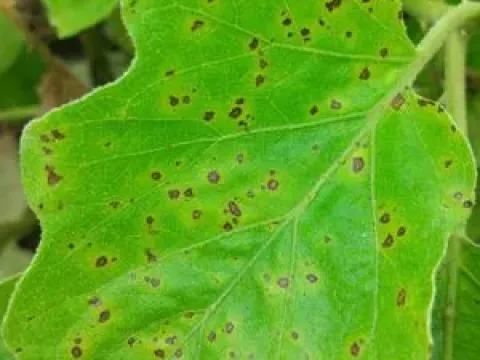
Corynespora leaf spot of eggplant
Corynespora melongenae
The causative agent of this disease is the fungus Corynespora melongenae. This pathogen belongs to the group of imperfect fungi and possesses a high ability to survive in plant debris.
What the section contains
Corynespora leaf spot of eggplant
The disease primarily affects the Solanaceae family. Eggplants are at high risk, although the pathogen can be found on other cultivated and wild solanaceous plants under favorable conditions.
The fungus life cycle involves the formation of conidia, which are dispersed by wind, water splashes, or contaminated tools. Inside plant tissues, the mycelium spreads actively, gradually destroying the cellular structures of leaves and stems.
The pathogen can maintain viability for a long period in plant residues found in the topsoil or on the soil surface. This makes the issue of infection control urgent when crop rotation practices are neglected.
The biology of the pathogen allows it to adapt to a wide range of temperatures, which complicates the control of spore spread in protected environments and greenhouses.
The first symptoms appear as small chlorotic spots on the lower leaves of the eggplant. As the disease develops, the spots enlarge, acquiring a characteristic circular or angular shape.
A key feature of Corynespora leaf spot is the formation of concentric rings within the affected zones. These spots often have a gray-brown hue with a darker margin along the edges.
Affected tissue eventually becomes necrotic and may fall out, causing the leaves to take on a shot-hole appearance. Under conditions of high humidity, a slight grayish growth of conidial sporulation forms on the surface of the spots.
As the infection progresses, the process spreads to petioles and stems. Elongated brown lesions can appear on the stems, leading to disruption of plant nutrition and subsequent wilting.
Without timely intervention, the signs of the disease quickly move to the upper canopy, causing premature leaf drop and a significant loss of the plant's photosynthetic surface area.
The development of the disease is closely linked to high air humidity, which is a key factor for spore germination. Humidity levels above 85% create an ideal environment for the epiphytotic spread of the infection.
The optimal temperature range for the development of Corynespora melongenae lies between +22°C and +28°C. Under these conditions, the pathogen colonizes plant tissues as quickly as possible.
Poor ventilation in greenhouses contributes to stagnant humid air, which accelerates the spread of spores between plants. Poor air circulation creates a microclimate favorable to the fungus.
Weakened plants, suffering from nutrient deficiencies or stressed by temperature fluctuations, become the most vulnerable to initial infection by the pathogen.
The presence of water droplets on leaves after irrigation or condensation acts as a medium for conidia, facilitating their entry into stomata and micro-cracks in the plant tissue.
Corynespora leaf spot causes serious damage to eggplant yields, leading to a decrease in the market quality of the fruits. Due to the damage of the leaf apparatus, the plants lag significantly in growth and development.
Massive infection of the leaves sharply limits photosynthesis, which inevitably leads to a lack of vegetative mass. This negatively affects the number of fruit sets and the speed of their development.
In neglected cases, the disease leads to the death of the plant. Heavily infected plants cannot maintain a normal water balance, causing them to dry out quickly under direct sunlight.
The harmfulness is also manifested in the fact that the infection can remain in the soil for several seasons, making repeated cultivation of eggplants on the same site economically unviable without deep disinfection.
Indirect costs include expenses for fungicides and additional labor costs for the removal and disposal of diseased plants, which significantly increases the production cost of the final vegetable crop.
Prevention begins with strict adherence to crop rotation. It is not recommended to plant eggplants on beds following other solanaceous crops, as the pathogen persists in the soil.
The use of healthy seed material and soil disinfection before planting seedlings are mandatory. It is important to ensure optimal plant density for better aeration of the plants.
During the growing season, preventive spraying with systemic and contact fungicides approved for use on vegetable crops is effective. Applications should be performed upon the appearance of the first signs of spotting.
Proper irrigation management is necessary, avoiding water contact with the leaves. It is important to regularly remove lower damaged leaves and timely dispose of all plant residues after harvest.
- Disinfection of tools and greenhouses.
- Humidity control in protected environments.
- Growing resistant eggplant hybrids.
- Timely removal of weed infection reservoirs.
- Application of balanced fertilizers to improve plant immunity.