
Coryneliales fungi
Coryneliales
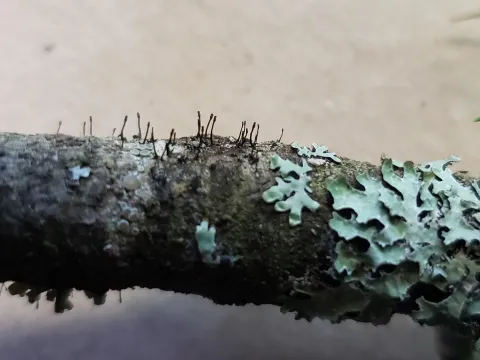
The primary symptom of Coryneliales infection is the appearance of distinct black, cushion-like stromata on the bark of branches or trunks. These structures often protrude from the surface, serving as the fungal reproductive sites.
What the section contains
Coryneliales fungi
As the fungal fruiting bodies mature, they may develop small apertures, allowing spores to be released into the environment. In many cases, the surrounding bark shows signs of discoloration, cracking, or localized tissue necrosis.
Trees affected by these fungi frequently display premature yellowing or wilting of the foliage on the branches distal to the infection site. This is a clear indicator that the fungal growth has disrupted the tree's internal transport system.
If left untreated, the infection can progress to form deep cankers that may eventually girdle the affected branch. This process leads to the permanent death of the tissues beyond the girdled area.
Visual identification is most effective during the sporulation season, when the dark stromata become highly visible against the tree bark, facilitating early detection of the pathogen.
The disease is caused by fungi in the order Coryneliales, which are members of the class Sordariomycetes. These fungi are specialized pathogens that typically exhibit a parasitic or weakly parasitic lifestyle on woody plants.
The fungal mycelium colonizes the bark layers, absorbing nutrients from the host cells and gradually compromising the integrity of the protective tissue. This slow, persistent growth allows the fungus to remain established for long periods.
Reproduction is primarily achieved through the dispersal of spores by wind or rain splash. Once these spores land in small bark fissures or wounds, they germinate to initiate new infection sites.
These fungi possess a high level of host specificity, with different species adapted to infect various tree types. Their biological cycle is finely tuned to the physiology of their host plants.
The research into the biology of Coryneliales highlights their ability to coexist with the host for a significant duration, which often masks the underlying health issues of the tree until major symptoms appear.
High humidity and consistent moisture are the most critical factors for the development of Coryneliales. Regions experiencing frequent fog, dew, or heavy rainfall provide the ideal environment for spore dispersal and germination.
The presence of wounds—resulting from mechanical damage, frost cracks, or pest infestation—greatly increases the susceptibility of the tree. Intact, healthy bark acts as a formidable barrier against fungal penetration.
Dense planting or poor pruning practices that limit air circulation create a stagnant, humid microclimate. This lack of airflow is highly conducive to the spread of fungal spores between neighboring plants.
Temperature fluctuations within temperate climates support the metabolic activity of the fungus. While they may survive dormant periods, the active growth phase is closely tied to the milder, more humid seasons of the year.
Proximity to existing infection sources in older, unmanaged trees significantly increases the risk of the pathogen spreading to younger, more vulnerable specimens within a forest or orchard.
The economic and ecological harm caused by Coryneliales involves the steady depletion of tree vitality. Affected trees divert energy toward defense mechanisms, which often reduces overall growth and productivity.
Fungal infection creates an entry point for secondary pathogens, including bacteria and other wood-decay fungi. This synergistic effect can lead to more rapid deterioration of the tree's structural integrity.
In fruit-bearing species, the infection can indirectly reduce yield quality, as the tree struggles to maintain vegetative and reproductive functions. Canopy thinning is a common result of chronic infection.
For forestry and nursery operations, these fungi can lead to substantial losses in market value and seedling survival. Management of infected stands often requires intensive sanitation efforts to prevent wider outbreaks.
Long-term colonization of the main trunk by these fungi can deform the growth pattern and reduce the tree's resistance to environmental stresses, such as high winds and heavy snow loads.
Effective management begins with strict sanitation practices, including the prompt pruning and disposal of all infected branches. It is crucial to remove affected material well beyond the visible symptoms.
The application of protective fungicides during the growing season can help manage spore levels. Additionally, sealing pruning wounds with appropriate treatments helps prevent new infections from taking hold.
Maintaining proper tree health through appropriate fertilization and water management strengthens the host's innate defenses. Healthy trees are significantly more resilient to colonization.
Sanitizing all pruning tools between uses is mandatory to prevent the mechanical transmission of spores from infected to healthy trees. This is a simple but vital step in stopping disease outbreaks.
- Regular inspection of bark for black stromata.
- Ensuring adequate tree spacing to promote airflow.
- Selecting resistant cultivars for new plantings in high-risk areas.