
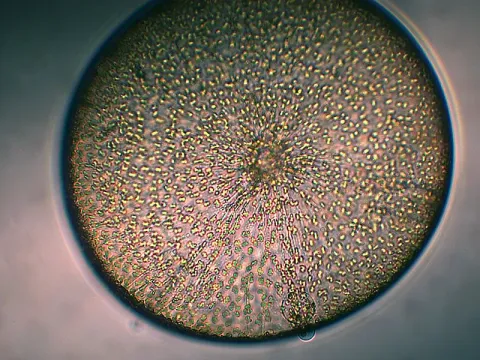
Coscinodiscus wailesii
Coscinodiscus wailesii
The presence of Coscinodiscus wailesii is primarily identified by the appearance of large, disc-shaped cells under microscopic examination. These cells are significantly larger than most other phytoplankton, making them relatively easy to isolate in water samples.
What the section contains
Coscinodiscus wailesii
A key indicator of their presence is the formation of abundant, gelatinous mucilage in the water column. This slime often accumulates on nets, buoys, and the surfaces of submerged objects, giving them a slippery, brownish coating.
Water discoloration is another visual sign of a bloom. Dense populations can turn the water into a brownish or yellowish hue, indicating an over-abundance of these large cells and their associated byproducts.
In aquaculture environments, farmers often notice a sudden decrease in the growth rates of fish or seaweed. This is frequently accompanied by increased mortality rates due to respiratory stress caused by the blockage of gill structures by mucus.
The accumulation of dead cells at the bottom of the water column can be detected during routine water quality checks. A rapid decrease in dissolved oxygen levels, particularly during early morning hours, is a classic warning sign of a major bloom event.
Coscinodiscus wailesii is a large centric diatom species belonging to the class Bacillariophyceae. While it is not a pathogen of terrestrial plants, it functions as a biological hazard for marine and brackish water environments, causing severe imbalance.
The organism is characterized by a thick, silicified frustule and a complex internal structure. Its ability to undergo rapid vegetative division allows it to quickly colonize environments where resources are readily available.
Unlike parasitic fungi, this organism does not infect the host tissues directly. Instead, it acts as an environmental stressor that compromises the health of cultivated species through mechanical and chemical interference.
Global dispersal of the species is primarily linked to maritime transport. Cells can survive for extended periods in ship ballast tanks, allowing them to cross oceans and establish new populations in favorable habitats far from their native range.
The species exhibits high phenotypic plasticity, allowing it to adapt to various environmental conditions. This biological robustness is what makes it a persistent and difficult organism to manage once it has been introduced to a new ecosystem.
Optimal growth of this diatom is favored by high concentrations of dissolved nutrients, specifically nitrates and phosphates. Eutrophication caused by agricultural runoff or sewage discharge provides the perfect conditions for these blooms.
The species thrives in a wide range of water temperatures. Although it prefers temperate waters, its wide thermal tolerance allows it to establish throughout different seasons, extending the period during which control measures are necessary.
Turbulence and water mixing play a crucial role in vertical distribution. Frequent mixing brings resting cells into the sunlit euphotic zone, where they resume active photosynthesis and rapid reproduction cycles.
While the species is primarily marine, it shows a significant degree of tolerance to salinity changes. This adaptability allows it to infiltrate estuaries and coastal regions where river freshwater mixes with seawater, putting aquaculture sites at risk.
Lack of specialized grazers in newly invaded areas allows for unrestricted biomass accumulation. The absence of natural biological controls is a major factor that supports the explosive growth observed in many modern aquaculture incidents.
The primary harm caused by Coscinodiscus wailesii is the secretion of excessive amounts of mucilage. This substance is highly problematic as it clogs filtration systems, fouls equipment, and interferes with the respiration of gill-breathing organisms.
The bloom can lead to severe oxygen depletion. During the night, the massive biomass consumes large amounts of oxygen for respiration, leading to hypoxic conditions that can kill fish and other commercially important aquatic organisms.
Mechanical damage is a significant concern for seaweed and oyster farms. The sticky mucus traps debris and sediments, preventing the proper exchange of nutrients and gasses, which leads to stunted growth or total crop loss.
By outcompeting native phytoplankton, the species disrupts the local food web. It shifts the primary production towards a less nutritional pathway, which negatively impacts the growth of naturally occurring zooplankton and other fish larvae.
Economic damage is substantial, encompassing the loss of inventory, increased labor for equipment maintenance, and the costs associated with implementing emergency aeration and water purification measures.
Management of Coscinodiscus wailesii starts with rigorous monitoring. Regular phytoplankton assessments allow managers to detect early population spikes, providing a window of opportunity to implement mitigation strategies.
Preventative measures are essential, specifically focusing on the treatment of ballast water for commercial vessels. Ensuring that no viable cells are released into vulnerable areas is the most effective way to prevent the spread of the species.
Reduction of nutrient input into coastal waters is a long-term goal for sustainable aquaculture. Improving the management of agricultural fertilizers and on-farm waste significantly lowers the risk of large-scale blooms.
Mechanical control through fine-mesh filtration can effectively reduce cell density at the water intake of fish farms. While labor-intensive, it provides a physical barrier that prevents the worst impacts of the bloom from affecting the stock.
In cases where environmental management is insufficient, localized chemical or physical treatment may be considered. However, these methods must be used with caution to avoid secondary impacts on the surrounding marine biodiversity and the quality of the harvested product.