
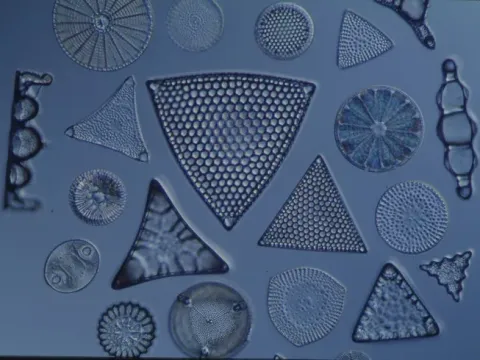
Coscinodiscus
Coscinodiscus
Coscinodiscus is not a plant disease but a genus of marine centric diatoms belonging to the class Bacillariophyceae. These microscopic organisms are recognized for their distinct discoid shape and silica shells.
What the section contains
Coscinodiscus
In the field of agronomy, these diatoms do not infect crops but may be found in water sources intended for irrigation, where they act as primary producers.
These organisms are strictly aquatic, performing photosynthesis and playing a vital role in marine and freshwater ecological cycles.
They should not be confused with pathogenic fungi or bacteria; identifying them in water is a matter of water quality analysis rather than plant pathology.
The biology of these diatoms revolves around cellular division and silicon metabolism, which sets them apart from true crop pathogens.
The development of Coscinodiscus is governed by the presence of silicates, which are essential for building their protective frustules.
Optimal conditions include well-oxygenated water with sufficient light penetration and appropriate concentrations of nitrates and phosphates.
Turbulence in water columns prevents these organisms from settling, allowing them to remain suspended and continue photosynthesis.
Temperature fluctuations significantly influence their growth rate, with most species favoring stable, moderate conditions.
Agricultural runoff rich in fertilizers can create favorable environments for bloom events in irrigation reservoirs.
The primary concern regarding these diatoms in agriculture is the clogging of micro-irrigation systems, particularly drip emitters and fine filters.
In hydroponic setups, excessive diatom growth can alter the nutrient balance of the solution and physically obstruct water distribution.
While they are non-toxic, the accumulation of organic matter from diatom blooms can lead to biofouling in water storage tanks and distribution lines.
This biofouling increases maintenance requirements and potentially reduces the efficiency of water pumps and flow sensors.
There is no direct pathological impact on plant tissue, as they are not parasites or necrotrophs that attack plant cells.
Effective management involves the installation of robust filtration systems, such as screen or media filters, capable of removing microscopic particulate matter.
Regular monitoring of water sources for turbidity and algal content is essential for early detection of potential clogging issues.
UV sterilization is an effective method for controlling phytoplankton populations in closed irrigation or hydroponic systems.
Implementing proper storage management, including shading reservoirs and limiting nutrient inflow, helps suppress excessive growth.
Chemical control using algaecides should be handled with caution to ensure compatibility with both the irrigation infrastructure and the target crops.