
Shot hole disease
Coryneaceae
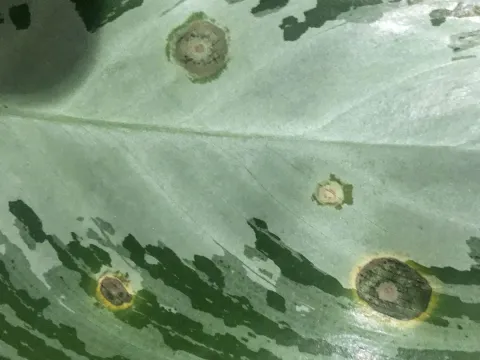
The first symptoms of the disease appear in spring on young leaves as small round spots with a reddish-brown center and a dark rim.
What the section contains
Shot hole disease
As the infection progresses, the dead tissue in the center of the spots dries up and falls out, leaving small, characteristic holes in the leaves.
On twigs, the disease manifests as round red lesions that eventually enlarge into deep cankers, often accompanied by significant gumming.
Fruits are also susceptible, developing purple spots that sink into the flesh, causing the skin to crack and ruining the fruit's quality.
Buds can be infected, leading to blackening and dieback, which drastically reduces the tree's overall potential for the upcoming season.
The causal agent is the fungus Stigmina carpophila (formerly Wilsonomyces carpophilus), a member of the Dothideomycetes class.
The pathogen overwinters as mycelium within infected twig lesions, bud scales, and sometimes on fallen leaves on the orchard floor.
In spring, conidia are spread via splashing rain and wind, initiating primary infections on newly emerging plant tissues during wet weather.
The fungus can persist in the bark for multiple seasons, creating perennial cankers that serve as a constant source of new spores.
Reproduction occurs through the production of conidia on the surface of lesions, allowing the disease to cycle repeatedly throughout the growing season.
Prolonged periods of high humidity and rainfall during the spring are the most critical factors for the rapid spread of the disease.
The fungus thrives in moderate temperatures, typically ranging from 10 to 20 degrees Celsius, which often coincides with bud break.
Dense canopy growth, which prevents efficient air circulation and traps moisture, significantly increases the risk of infection in orchards.
Lack of proper pruning and orchard sanitation allows the pathogen to build up high levels of inoculum year after year.
Trees that are already stressed due to poor soil conditions or improper fertilization are much more susceptible to the fungal invasion.
Severe defoliation weakens the tree, preventing it from storing enough energy reserves for the following winter and spring growth cycles.
Cankers on branches cause dieback and structural damage, leading to deformed tree growth and reduced longevity.
The cosmetic damage to fruits makes the harvest unsalable, causing significant economic losses for commercial growers and home gardeners.
Excessive gumming resulting from bark infections can attract secondary pests and facilitate the entry of other wood-decaying fungi.
In cases of heavy infestation, the disease can eventually kill young trees, making early detection and intervention crucial.
Sanitation is key; all infected twigs and branches must be pruned out during the dormant season and removed from the orchard.
Applying copper-based fungicides during the dormant period is the standard practice for reducing the initial spore load in the orchard.
Systemic fungicides should be applied during the growing season if weather conditions are particularly wet and favorable for the fungus.
Proper canopy management, such as thinning, ensures that the foliage dries quickly after rain, which inhibits spore germination.
- Removal and destruction of all plant debris beneath the trees.
- Sealing large pruning wounds to prevent secondary infections.
- Balancing fertilizer applications to avoid overly succulent, susceptible growth.