
Shrimp mushroom
Russula xerampelina
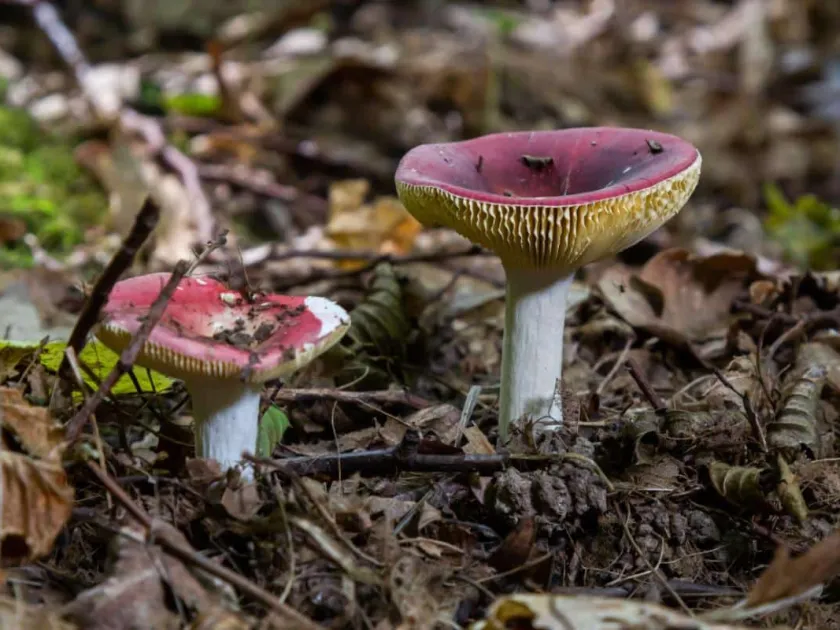
Description
Pathogen
It is important to clarify that the Shrimp mushroom (Russula xerampelina) is not a plant pathogen or a disease-causing agent.
This fungus is a well-known mycorrhizal species that lives in a symbiotic relationship with the root systems of various tree species.
Unlike parasitic fungi, this organism does not damage plant tissues; it instead facilitates the exchange of nutrients and water between the soil and the plant.
No symptoms of disease or plant decay are associated with the presence of this mushroom in forests or plantation zones.
Agronomically, this species is considered a beneficial organism that contributes to the health and vitality of forest ecosystems.
Conditions for development
The development of the fruit body requires a stable symbiotic relationship with host trees, typically conifers or broad-leaved species.
Optimal conditions for growth include high soil moisture, moderate temperatures, and the presence of organic forest litter.
The fungus thrives in acidic soil environments, which are essential for maintaining active mycorrhizal networks.
Spore dispersal occurs naturally via wind, and successful colonization requires healthy soil microflora and interaction with tree roots.
Fruiting typically peaks during the late summer and autumn, reflecting favorable climatic conditions for forest-dwelling fungi.
Why it matters
The Shrimp mushroom poses no threat to agricultural crops or forestry plantations and causes no harm to plant life.
The mycorrhizal association provided by this fungus actually strengthens tree resistance to various abiotic stressors.
There are no recorded cases of economic damage caused by this species, as it is a non-parasitic part of the environment.
The biological activity of this fungus is associated with improved soil structure and plant nutrient uptake efficiency.
Therefore, it is classified as a helpful component of the ecosystem rather than a hazard to be managed or eliminated.
Protection
No control, prevention, or protection measures are required for this species as it is not a plant disease.
Applying fungicides in areas where this fungus resides is discouraged, as it may disrupt beneficial mycorrhizal networks.
The focus of forest management should be on preserving the natural mycorrhizal background for long-term health.
Observation of this species should be seen as an indicator of good soil quality and ecological balance within the stand.
- Preserve the natural forest floor integrity.
- Avoid unnecessary chemical intervention in natural areas.
- Value the role of mycorrhiza in tree development.
Discussion
No discussions yet — be the first.