
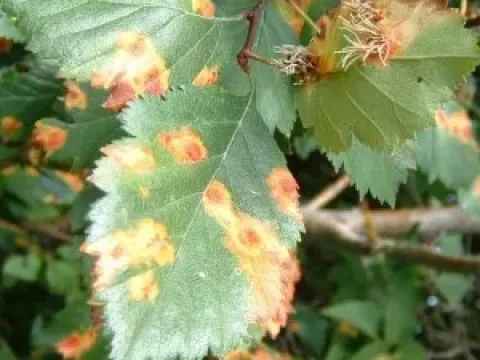
Shrubby cinquefoil rust
Phragmidium andersonii
The causal agent of this disease is the specialized rust fungus Phragmidium andersonii. This pathogen specifically targets plants of the genus Dasiphora (formerly Potentilla), including the popular ornamental shrubby cinquefoil.
What the section contains
Shrubby cinquefoil rust
The fungus is an obligate parasite, meaning it requires living host tissue to survive. It follows a complex life cycle involving different spore stages, which allows it to thrive and spread efficiently during the growing season.
The pathogen survives the winter in the form of dormant spores found on fallen leaves and woody debris under the shrubs. With the return of warm, humid weather in spring, these spores become active, initiating new infections.
Microscopic examination of the rust reveals that the fungus infiltrates the leaf tissue through stomata. Once inside, it develops a network of mycelium that drains nutrients from the plant to fuel its own reproductive cycles.
Because the fungus is host-specific, it can rapidly colonize entire patches of shrubby cinquefoil in a nursery or landscape setting, making early detection critical for disease management.
The primary symptom of the infection is the appearance of small, yellow-to-brown spots on the upper surfaces of the leaves, typically becoming visible in mid-to-late summer.
On the undersides of the affected leaves, distinctive orange or rust-colored powdery pustules (uredinia) develop. These pustules are clusters of spores, which are easily dislodged by wind or splashing water.
As the infection advances, the foliage begins to yellow, curl, and wither. Heavy infestations lead to premature defoliation, which leaves the shrubs sparse and unattractive by late summer.
In severe cases, the rust may extend to the young, green stems of the plant. This causes visible distortion and stunted development of the new growth, potentially weakening the shrub's overall structure.
Gardeners should carefully inspect the leaf undersides if they notice yellowing, as these characteristic rust-colored spots are the definitive sign of a Phragmidium infection.
The development of shrubby cinquefoil rust is heavily dependent on moisture. Prolonged wet periods, such as rainy weeks or frequent overhead irrigation, provide the necessary environment for spores to germinate.
Warm temperatures, ranging between 18°C and 25°C (65°F–77°F), are optimal for the rapid spread of the fungus. High humidity levels combined with these temperatures significantly accelerate the disease cycle.
Plants grown in crowded or poorly ventilated conditions are more prone to infection. The lack of air movement prevents foliage from drying quickly, maintaining the damp surface required for spore penetration.
Inadequate sanitation in the garden, particularly leaving leaf litter under the bushes, creates a reservoir for the fungus. These residues serve as the primary source of infection for the next growing season.
Plants that are stressed due to nutrient deficiencies, improper light exposure, or drought are generally more susceptible to infection by Phragmidium andersonii compared to healthy, well-maintained shrubs.
The primary impact of the rust is a significant reduction in the plant's photosynthetic capacity. By destroying leaf tissue, the fungus reduces the amount of energy the shrub can produce, leading to general decline.
Premature leaf drop causes a severe physiological stress, which often results in poor cold-hardiness. Plants that lose their foliage too early may not successfully harden off before the winter frosts arrive.
From a landscape perspective, the aesthetic value of the shrub is compromised. A rusted shrubby cinquefoil loses its ornamental appeal, which is especially problematic in public gardens and formal landscaping.
Over multiple years, persistent rust infection can result in branch dieback or the eventual death of the entire plant. This represents a significant loss in nurseries where crop quality is essential.
Beyond physical damage, the infection can stunt the growth of the shrub and inhibit the development of buds, leading to significantly fewer and smaller flowers in subsequent seasons.
Managing shrubby cinquefoil rust requires an integrated approach that focuses on prevention through sanitation and the targeted use of fungicides when necessary.
The most important control measure is strict garden hygiene. Every autumn, all fallen leaves must be raked and destroyed—burning or deep burial is recommended to eliminate the overwintering spores of the fungus.
When selecting a planting site, ensure the shrubs have adequate space to allow for good airflow. Pruning to maintain an open canopy structure will help keep the foliage dry and reduce infection risk.
- Apply copper-based fungicides as a preventative measure if rust is a known issue.
- Use systemic fungicides at the first sign of symptoms to halt disease progress.
- Avoid overhead watering, opting for drip or base-level irrigation to keep foliage dry.
- Monitor regularly and remove any early infected twigs to contain the spread.
Maintain plant health through appropriate fertilization and regular soil care. A robust, well-nourished shrub is much more capable of resisting fungal pathogens and recovering quickly from an infection.