
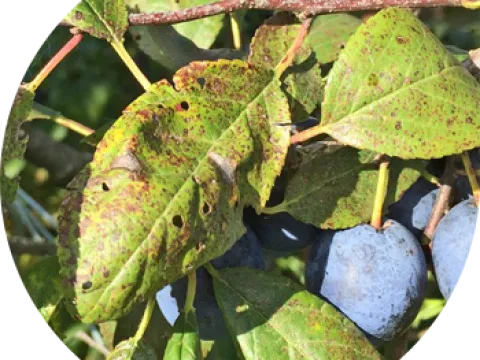
Shothole disease
Wilsonomyces carpophilus
Shothole disease, caused by the fungus Wilsonomyces carpophilus (formerly Clasterosporium carpophilum), is a major threat to stone fruit crops. This pathogen is highly specialized and attacks leaves, twigs, and fruit.
What the section contains
Shothole disease
The fungus is an ascomycete that thrives in temperate climates. It survives the winter as dormant mycelium within infected buds or in localized lesions (cankers) on the twigs of host plants.
As soon as spring weather arrives, spores are produced and disseminated by rain, wind, and insects. This primary inoculum lands on young, developing tissues and initiates the infection cycle early in the growing season.
The pathogen has a wide host range, including common apricot, peach, sweet cherry, sour cherry, and almond. The severity of the attack often depends on the host's susceptibility and the prevailing climatic conditions.
Biologically, the fungus is very moisture-dependent. Understanding the infection cycle is crucial for orchardists, as it helps determine the exact timing for preventative fungicide applications before symptoms become widespread.
The most iconic symptom is the presence of small, reddish-brown spots on the leaves. As the infection progresses, the dead tissue in the center of the spot dries out and falls away, leaving a perfectly round hole, which gives the disease its name.
Twigs often show small, purple, or reddish lesions that may develop into cankers. These cankers are often sites of gummosis, where the tree exudes a sticky, amber-colored sap as a defense mechanism against the fungal invasion.
On fruit, the fungus causes small, dark, circular spots. These spots may be slightly raised or depressed and can lead to fruit deformity, flesh shriveling, and significant loss of quality, rendering the harvest unmarketable.
Bud infection is a severe sign of the disease. Infected buds often turn black and fail to bloom, leading to significant yield loss. In severe cases, the tree may exhibit premature leaf drop during the summer months.
Distinguishing shothole from other leaf spots is possible by looking for the distinct, thin, light-colored halo surrounding the necrotized tissue. This characteristic feature is a hallmark of Wilsonomyces carpophilus infection.
Moisture is the primary driver for disease development. Extended periods of rain or high humidity, especially during the spring, create an ideal environment for spore germination and rapid tissue colonization.
Orchards located in low-lying areas with poor air drainage are more prone to severe outbreaks. The lack of proper airflow allows leaves and twigs to remain wet for longer periods, facilitating fungal entry.
Cultural practices that lead to dense tree canopies increase the risk of disease. Dense foliage prevents sunlight from drying the interior of the tree, creating a persistent microclimate that favors fungal activity.
Temperature plays a secondary role but remains important. The fungus is highly active in the temperature range of +10°C to +25°C. Warm, rainy springs are considered the most dangerous conditions for rapid disease spread.
Poor orchard sanitation, such as leaving infected prunings on the ground, provides a constant source of inoculum. This significantly increases the risk of infection in subsequent growing seasons.
The disease causes significant economic loss by reducing both yield and fruit quality. Deformed fruit is usually discarded, and bud destruction directly limits the potential crop for the current and following years.
Premature defoliation weakens the tree's ability to store carbohydrates. This reduced vigor leaves the tree susceptible to cold damage during winter, which can lead to limb dieback or even the death of the entire tree.
The formation of cankers on twigs impairs water and nutrient transport. Furthermore, these cankers can serve as entry points for other opportunistic pathogens, potentially leading to long-term tree health issues.
Gummosis, while a natural tree response, consumes energy that the tree could otherwise spend on growth and fruit production. Persistent gum exudation is a clear indication that the tree's physiology is stressed.
Repeated annual attacks lead to a decline in tree longevity. Orchards that are not managed for shothole disease often require premature replanting, representing a substantial long-term investment loss for the grower.
The foundation of shothole management is sanitation. Pruning out and destroying infected twigs during the dormant season is critical to removing the primary sources of overwintering fungal inoculum.
Preventative fungicide applications are essential. Key timings include the dormant period (before bud break), at the pink bud stage, and immediately after the petal fall stage to protect developing tissues.
Systemic fungicides, along with copper-based protectants, are standard tools in the fight against Wilsonomyces carpophilus. It is important to rotate chemical classes to prevent the development of resistant fungal strains.
- Regular removal and burning of fallen leaves.
- Balanced fertilization to keep trees healthy and vigorous.
- Proper tree pruning to ensure adequate airflow and light penetration.
- Whitewashing trunks to protect bark from temperature-related cracks.
Always purchase disease-free certified nursery stock. By establishing a clean orchard from the start and maintaining rigorous hygiene standards, growers can effectively manage shothole disease and ensure profitable yields.