
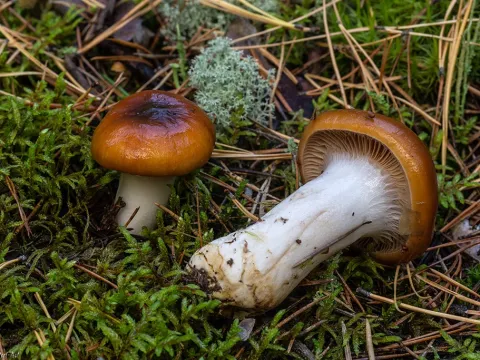
Cortinarius vibratilis
Cortinarius vibratilis
Cortinarius vibratilis is not a plant pathogen or a disease-causing agent. It is a mycorrhizal fungus belonging to the Cortinariaceae family, which forms a mutualistic relationship with trees.
What the section contains
Cortinarius vibratilis
The fungus establishes a symbiotic connection with tree roots, known as ectomycorrhiza. This relationship is mutually beneficial, as the fungus provides the tree with essential nutrients and water from the soil.
Unlike pathogenic fungi that destroy plant tissue, Cortinarius vibratilis depends on the carbon provided by the host tree to complete its life cycle.
The organism exists primarily as a network of mycelium in the forest floor, only emerging as a fruiting body when environmental conditions are conducive to spore production.
Consequently, it is incorrect to categorize this organism as a disease of crops or plants. It is a vital component of healthy forest soils and tree vitality.
The development of Cortinarius vibratilis is strictly tied to the presence of host trees. It thrives in temperate forest environments with abundant organic matter.
Soil moisture levels are critical for the formation of fruiting bodies. Higher humidity during the late summer and autumn months triggers the emergence of mushrooms.
Temperature requirements for this fungus generally align with cool to moderate climates. Extreme heat or prolonged drought will inhibit its development and force the mycelium into dormancy.
The fungus prefers acidic, well-draining soils where it can easily extend its mycelial network to colonize root systems and exchange minerals.
The availability of leaf litter and woody debris is essential for maintaining the soil conditions that support the overall fungal population in the forest habitat.
Cortinarius vibratilis poses no harm to cultivated plants, commercial crops, or forest tree species. It is a non-parasitic organism that does not cause disease symptoms.
There are no recorded instances of this fungus damaging plant structures, such as roots, stems, or leaves, as it does not engage in destructive enzymatic degradation of living tissues.
From an agricultural perspective, the fungus is benign. It does not compete with crops in a way that would limit yield or diminish the health of the plants.
Any perceived conflict with land use is usually based on a misunderstanding of its biological function, as it actually enhances the nutrient uptake capabilities of trees.
Therefore, it requires no mitigation efforts or monitoring for agricultural safety, as it does not contribute to any form of plant stress or decay.
There are no control measures recommended for Cortinarius vibratilis. Since it is not a pathogen, any attempt to eradicate it would be ecologically unnecessary.
The use of fungicides to target this fungus is strictly discouraged, as it could disrupt the beneficial mycorrhizal networks that support tree growth.
Management practices should focus on maintaining natural forest health rather than removing fungal organisms that provide ecological services.
- No chemical treatment is required.
- No biological control agents are necessary.
- It does not impact crop protection programs.
In conclusion, Cortinarius vibratilis should be viewed as a valuable element of the forest ecosystem that benefits tree health through established symbiosis.