
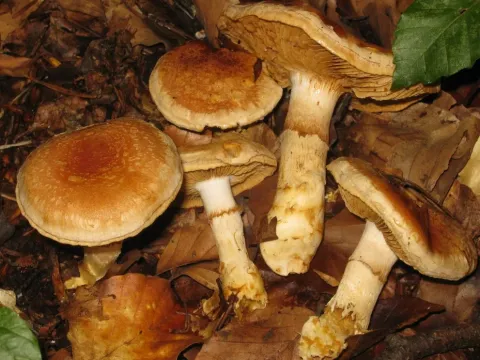
Cortinarius vulpinus
Cortinarius vulpinus
Cortinarius vulpinus, commonly known as the fox-colored webcap, is a species of fungus in the family Cortinariaceae. It is strictly a mycorrhizal organism, meaning it establishes a mutualistic relationship with trees rather than being a plant disease.
What the section contains
Cortinarius vulpinus
The fungus forms an ectomycorrhizal association with the roots of conifers, primarily in forest environments. This symbiosis assists the host tree in nutrient uptake, particularly phosphorus and nitrogen, while the tree provides carbon to the fungus.
The term pathogen is incorrectly applied to this mushroom, as it does not degrade living plant tissue or cause decay. It plays a vital role in nutrient cycling and soil health within its native habitat.
Biological studies of the genus Cortinarius reveal its complexity, with many species remaining poorly understood. The fox-colored webcap is classified under the subgenus Phlegmacium, characterized by a viscid or glutinous cap surface.
Spore dispersal occurs via the wind and small forest mammals. As a natural forest component, it thrives in undisturbed woodland soils that support stable mycorrhizal networks.
Identification of Cortinarius vulpinus involves observing its characteristic tawny, fox-colored cap, which is often sticky or slimy when wet. The margin of the cap is initially rolled inward, revealing the cobweb-like veil.
The gills are attached to the stem and undergo a distinct color change as the fungus matures. Initially, they are a lighter brown, turning a deeper rusty-brown as the mature spores are released.
The stem is typically robust and often displays a bulbous base, which is a common feature in this genus. Remnants of the cortina, or web-like veil, may be visible on the upper part of the stem in younger specimens.
The odor is described as strong and somewhat unpleasant, a trait that serves as a deterrent to many mycophagists. This pungent scent is a reliable field character for those learning to identify forest fungi.
Fruiting bodies usually appear in late summer and autumn. They grow solitary or in small groups amidst the leaf litter, often partially obscured by moss or organic debris.
The fox-colored webcap requires specific ecological conditions to produce fruiting bodies. It flourishes in moist, well-drained forest soils that are rich in organic matter and have a slightly acidic to neutral pH balance.
Climate plays a significant role in its distribution. The species prefers areas with consistent rainfall during the late summer, as drought conditions can inhibit the formation of the visible mushroom structures.
Tree hosts are essential for its survival. It is most commonly found in association with spruce or pine, making it a staple of coniferous and mixed forest biomes.
Temperature fluctuations are a factor in the timing of the fruiting season. Optimal growth occurs when the soil temperature remains stable, allowing for the slow maturation of the mycelium.
Human impact, including soil compaction or chemical run-off, can significantly harm the fungal network. Protecting the forest floor is vital for maintaining populations of mycorrhizal species like this one.
Cortinarius vulpinus poses no risk to agriculture or commercial crop production. It is not a phytopathogen and does not cause economic loss to farmers or forest managers.
The primary concern regarding this mushroom is its potential for ingestion error. As a member of the Cortinarius genus, which includes many toxic species, it is considered non-edible and should be avoided by mushroom gatherers.
Some species within the genus are known to contain orellanine, a potent toxin. While this specific species is primarily noted for its unpleasant taste and smell, caution is always advised to avoid accidental consumption.
Ecologically, the presence of this fungus is considered beneficial. It aids in the breakdown of organic matter and supports tree growth, contributing to the overall health and resilience of the forest ecosystem.
There are no recorded instances of this mushroom causing disease or harming forest health. Its removal from the forest is unnecessary and could potentially disrupt the mycorrhizal balance that trees rely upon.
No control or management measures are recommended, as Cortinarius vulpinus is a beneficial forest organism. It does not require intervention through fungicides or pesticides.
Education is the best preventive strategy for those interested in mycology. Learning to distinguish between various mushroom types ensures that only safe, identified species are gathered for consumption.
Maintaining the natural integrity of the forest ecosystem is the only "protection" this species requires. Preserving the soil structure and host trees supports the long-term survival of the fungus.
If the fungus appears on property near wooded areas, it can be left alone. It does not damage structures or lawns and serves as a sign of a healthy, functioning forest soil environment.
For those involved in professional forest management, the presence of such fungi is often viewed as a positive indicator of ecological health, and no specific actions are taken to remove or suppress them.