
Corynelia jamaicensis
Corynelia jamaicensis
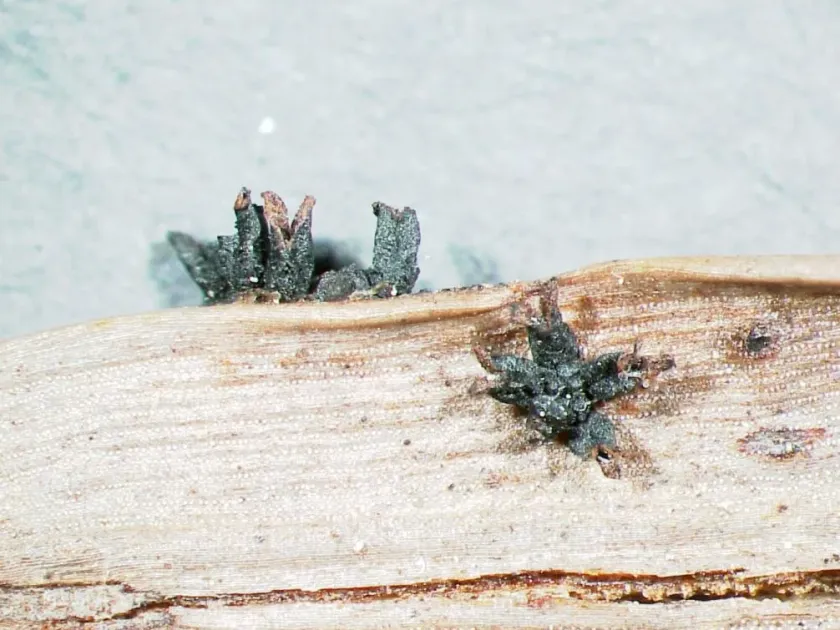
Description
Symptoms
The most visible sign of infection is the emergence of small, black, protruding pustules on the leaf surfaces, representing the fungal fruiting bodies.
Affected leaves often show symptoms of chlorosis or yellowing around the pustules, indicating a disruption in the plant's photosynthetic capacity.
Advanced stages of the disease lead to premature leaf senescence, causing the leaves to curl, wither, and drop from the plant earlier than normal.
Infection can also affect leaf petioles and young shoots, leading to tissue deformation and impaired growth of the branch or stem.
These symptoms are most evident during humid seasons when the fungus is actively developing and producing visible reproductive structures.
Pathogen
The pathogen Corynelia jamaicensis is an ascomycetous fungus belonging to the Coryneliaceae family. It is known for parasitizing specific woody plant species, primarily in tropical and subtropical regions.
The fungus develops its reproductive structures, known as perithecia, directly on the surface of the host's tissues, which is the defining characteristic of this infection.
Its life cycle relies heavily on high humidity levels and the availability of suitable host tissue to complete spore formation and dissemination.
As a biotroph, it extracts nutrients from living plant cells, which causes a gradual decline in the vigor and health of the host plant over time.
Dispersal is primarily facilitated by wind and water splashing, allowing the pathogen to spread effectively within dense plant populations.
Conditions for development
High humidity and mild temperatures are the primary environmental conditions that favor the germination and colonization of Corynelia jamaicensis.
Poor air circulation within the plant canopy creates a microclimate with high moisture, allowing the fungus to thrive and spread more rapidly.
Excess moisture or water films on the leaf surface act as a medium for spore movement and subsequent penetration into the leaf tissue.
Overcrowded plantings and lack of proper pruning prevent foliage from drying quickly, which significantly increases the risk of successful infection.
Poor sanitation, such as leaving infected plant debris around the base, ensures that a source of inoculum remains available for subsequent infection cycles.
Why it matters
The primary harm caused by this fungus is the weakening of the host plant, resulting from the loss of functional leaf area and nutrient depletion.
Chronically infected plants exhibit reduced growth rates, impaired flowering, and a decline in overall structural health and vitality.
For ornamental varieties, the disease causes significant aesthetic damage, reducing the commercial value and beauty of the foliage.
Increased vulnerability to secondary infections and opportunistic pests is a common consequence of the weakened state of the infected plant.
If left unmanaged, the cumulative stress can lead to branch dieback and, in severe cases, the long-term decline of the plant specimen.
Protection
Management strategies focus on early detection, regular sanitation, and creating an environment that is unfavorable for fungal development.
Pruning infected parts of the plant and removing debris is essential to reduce the amount of inoculum available for further infection.
Promoting good airflow by thinning the canopy helps leaves dry out faster after rainfall, which hinders the success of fungal colonization.
- Regular sanitary pruning of affected branches.
- Removal and destruction of fallen infected leaves.
- Improving air circulation through spacing and canopy thinning.
- Application of copper-based fungicides when symptoms first appear.
Maintaining the host plant's general health through balanced fertilization and proper hydration helps the plant tolerate infection and recover more quickly.
Discussion
No discussions yet — be the first.