
Cortinarius xanthophyllus
Cortinarius xanthophyllus
Cortinarius xanthophyllus is not a plant pathogen and does not cause diseases in agricultural crops or horticultural plants.
What the section contains
Cortinarius xanthophyllus
As a member of the Cortinariaceae family, this fungus operates as a mycorrhizal organism, forming a symbiotic relationship with tree roots.
It provides nutrients to trees in exchange for carbon compounds, which is a beneficial interaction rather than a parasitic one.
There is no record of this species affecting crop health, and it poses no threat to the agricultural sector or plant protection systems.
Classifying this organism as a disease agent is a misinterpretation of its fundamental biological role in forest ecosystems.
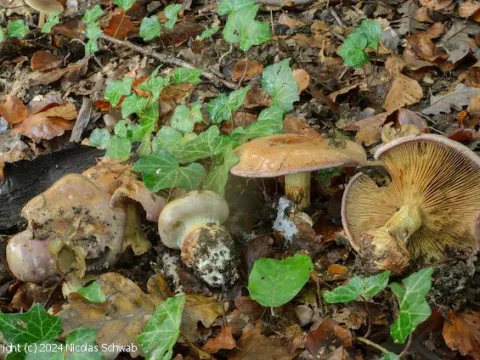
The macroscopic features of Cortinarius xanthophyllus are defined by its characteristic cap shape and distinct color of the gills.
The cap typically displays shades of ochre or yellowish-brown, sometimes developing darker hues as the fruit body matures.
The most defining characteristic is the presence of vibrant yellow or saffron-colored gills, which remain a primary diagnostic feature.
- Fibrous stem texture.
- Presence of a cortina (cobweb-like veil) in younger specimens.
- Firm flesh that does not significantly change color when sliced.
The overall appearance is consistent with other species in the genus, requiring precise examination for accurate identification.
The fungus thrives in woodland environments, specifically associating with the root systems of various forest tree species.
It prefers well-drained but moist soils with a significant layer of leaf litter, which supports the survival of the mycelium.
Growth is favored by cool and damp weather conditions, usually occurring in late summer and throughout the autumn season.
Environmental stability is essential for this fungus, as it is highly sensitive to soil compaction and major habitat destruction.
The presence of mature forest stands is a crucial factor, as the species relies on established mycorrhizal networks.