
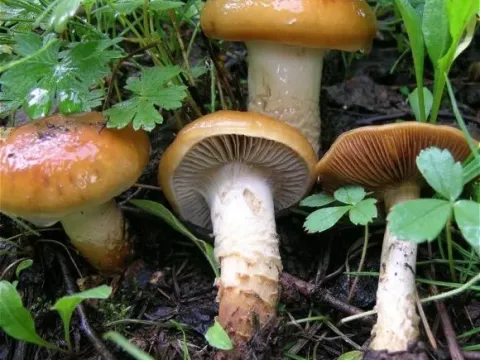
Slimy Cortinarius
Cortinarius mucifluus
Slimy Cortinarius (scientific name Cortinarius mucifluus) is a gilled mushroom species that is not a plant pathogen. It does not cause diseases in crops or trees; instead, it acts as a beneficial mycorrhizal partner.
What the section contains
Slimy Cortinarius
This fungus establishes a mutualistic relationship with tree root systems, forming ectomycorrhiza, which is vital for the health and nutrient uptake of many woody plants.
Belonging to the Cortinariaceae family, the fungus develops an extensive network of hyphae in the soil, which integrates directly with the fine roots of host trees.
The reproductive bodies of this mushroom are characterized by a prominent slimy coating, which provides a protective barrier against moisture loss in fluctuating woodland environments.
The biological cycle of the fungus is entirely centered on nutrient exchange, where the fungus provides minerals and water in return for essential carbohydrates supplied by the host tree.
The primary diagnostic sign of this fungus is the emergence of fruiting bodies with a slimy, yellowish-brown to ochre cap that ranges from 4 to 10 cm in diameter.
In young specimens, the gills are shielded by a fibrous, web-like veil known as a cortina, which is a distinctive feature of the entire Cortinarius genus.
The stem (stipe) is also coated in a slimy substance and possesses a fibrous texture. Upon drying, the slime can create visible, ring-like zones on the stem surface.
Within the soil environment, the presence of the fungus is identified by the formation of fungal mantles around the root tips of host trees, a hallmark of successful mycorrhizal colonization.
Fruiting bodies typically appear in groups or scattered clusters during the late summer and autumn seasons, often following periods of consistent rainfall.
Development of Cortinarius mucifluus fruiting bodies is highly dependent on soil moisture levels and stable atmospheric conditions during the autumn months.
The fungus thrives in moist forest areas, particularly where organic litter and humus are abundant, providing the necessary substrate for mycelial expansion.
Optimal mycorrhizal formation requires a slightly acidic to neutral soil pH, which facilitates the metabolic exchange between the fungal hyphae and plant roots.
The fungus is sensitive to prolonged drought, which may inhibit the production of visible fruiting bodies, although the mycelium remains active deep within the soil profile.
Temperature stability is also critical, with the fungus favoring moderate temperatures that allow for sustained nutrient transport and overall physiological health.
Cortinarius mucifluus poses no threat to plants. In agricultural and silvicultural contexts, it is considered a beneficial organism rather than a pest or disease.
The fungus does not damage bark, leaves, or vascular tissues. There is no evidence of necrosis or structural deterioration caused by this species.
Quite the contrary, the presence of this fungus is an indicator of a healthy, functioning ecosystem where nutrient cycling is efficient and balanced.
Host trees inoculated with this mycorrhizal partner often exhibit enhanced growth rates and better resistance to environmental stresses like drought or nutrient deficiency.
Since the fungus is a mutualist, it should never be targeted with pest control measures, as doing so would negatively impact the host tree's long-term health.
As this species is ecologically beneficial, there are no control, protection, or preventative measures required to combat its presence.
Forest management practices should focus on maintaining the natural balance of soil microflora to ensure that beneficial mycorrhizal associations remain intact.
Indiscriminate use of broad-spectrum fungicides should be avoided, as these chemicals can disrupt the vital symbiotic connections between trees and fungi.
Preservation of the natural forest floor and organic litter is recommended to sustain optimal conditions for the growth and reproduction of this species.
- Maintain healthy forest soil structure.
- Avoid excessive use of chemical soil treatments.
- Protect native plant-fungal relationships for forest health.