
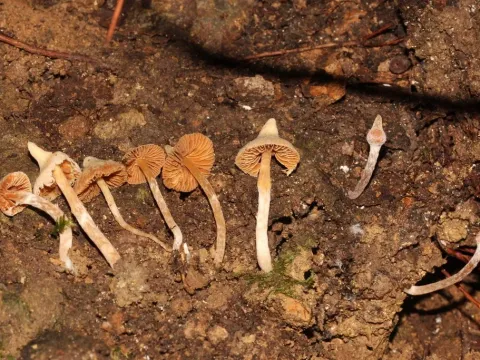
Cortinarius acutus
Cortinarius acutus
Cortinarius acutus, commonly known as the sharp webcap, is a basidiomycete fungus belonging to the Cortinariaceae family. It is not an agricultural pathogen and does not cause diseases in crops.
What the section contains
Cortinarius acutus
This fungus functions primarily as a mycorrhizal organism, establishing symbiotic associations with the root systems of various forest trees.
The mycelium of this species lives within the soil and leaf litter, facilitating the uptake of nutrients for the host tree in exchange for carbohydrates.
It is characterized by the presence of a cortina, a spiderweb-like veil that protects the gills in young specimens and distinguishes the genus.
From an agronomic perspective, this mushroom is ecologically beneficial, contributing to the decomposition of organic matter and forest soil health.
The most distinctive feature of Cortinarius acutus is its conical, bell-shaped cap with a prominent, sharp central umbo.
The cap color ranges from ochraceous to reddish-brown, often appearing darker when wet and paler when dry due to hygrophanous properties.
Gills are typically distant, broad, and rust-brown in color, reflecting the maturation of the spore mass within the fruiting body.
The stipe is slender, fibrous, and often curved, matching the cap color and frequently displaying traces of the fibrous cortina remnants.
The flesh is very thin and lacks a distinct odor or taste, which is a common characteristic for many small-sized species within the genus.
Development of Cortinarius acutus requires cool, moist forest environments, particularly under coniferous or mixed woodland canopies.
The species prefers acidic soil conditions rich in decomposing organic matter, which provides the necessary carbon source for the mycelium.
Fruiting typically occurs during the late summer and autumn months when soil moisture and humidity levels are at their annual peak.
Spore dispersal is facilitated by wind, allowing the species to successfully colonize suitable ecological niches within its native range.
As a mycorrhizal associate, its presence is highly dependent on the survival and vitality of the tree species it partners with in the ecosystem.
Cortinarius acutus causes no harm to agricultural crops, orchards, or vegetable gardens as it is strictly a forest-dwelling species.
It does not function as a pathogen, nor does it compete with crops for space or resources in standard agricultural fields.
In forest management, it is considered beneficial as it enhances the nutrient absorption efficiency of trees through its symbiotic relationship.
There is no economic damage associated with this fungus, and it does not require any form of eradication in its natural habitat.
Potential risks are limited to human consumption, as many members of the genus are known to be toxic, necessitating caution for foragers.
No control measures are necessary for Cortinarius acutus, as it poses no threat to agricultural productivity or plant health.
In silviculture, maintaining the natural soil structure and avoiding excessive fungicide use helps preserve the beneficial mycorrhizal network.
Should the presence of mushrooms be undesirable in landscaped or nursery areas, simple sanitation and moisture control are sufficient to discourage development.
Integrated forest management strategies favor the existence of such fungi, as they contribute to long-term soil fertility and ecosystem stability.
There is no reason for chemical intervention, as the fungus provides essential ecological services without negative impact on human activity.