
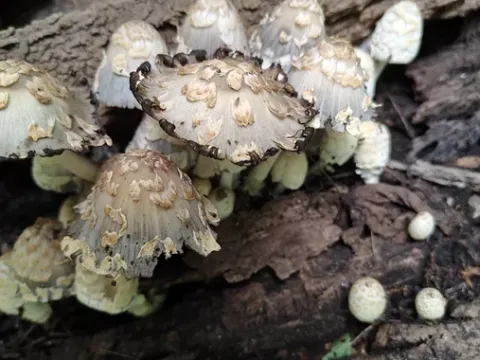
Coprinopsis variegata
Coprinopsis variegata
Coprinopsis variegata is a species of fungus in the Psathyrellaceae family. It is strictly a saprotrophic organism, not a plant pathogen.
What the section contains
Coprinopsis variegata
Unlike parasitic fungi that attack living tissues, this fungus feeds exclusively on decaying organic matter.
Its biological function is to decompose dead plant debris, wood, or humus-rich soil, returning nutrients to the earth.
It acts as a decomposer, which makes it a beneficial component of the ecosystem rather than a disease-causing agent.
Scientific evidence confirms that this species lacks the necessary enzymes to invade healthy plant cells or tissues.
The growth of Coprinopsis variegata is dependent on high humidity and a consistent supply of organic substrate.
These fungi typically emerge in moist environments where soil moisture levels remain elevated for extended periods.
Mild temperatures ranging between 15 to 22 degrees Celsius create an optimal environment for the development of its fruiting bodies.
Commonly found in rich, humus-dense soil or on damp wood, it is frequently spotted following heavy rainfall.
Poor ventilation in greenhouse settings or waterlogged soil in garden beds can facilitate its appearance.
The primary sign of its presence is the emergence of distinctive, bell-shaped fruiting bodies that grow from the ground.
The caps are typically pale with darker, variable scales, giving the mushroom its characteristic variegated appearance.
As the fruiting body matures, the gills turn black and liquefy through a process known as deliquescence or autodigestion.
This leaves behind a dark, spore-containing liquid that gradually disappears into the substrate.
No symptoms such as wilting, chlorosis, or necrosis occur on adjacent plants, which distinguishes it from actual plant diseases.
Coprinopsis variegata poses no threat to agricultural crops, ornamental plants, or vegetable gardens.
It does not cause damage to plant health, as its metabolism is restricted to breaking down already dead plant materials.
In fact, its presence indicates that the soil contains active organic decomposition processes, which are vital for soil fertility.
There are no recorded economic losses associated with this fungus, as it does not affect crop yield or quality.
Gardeners should view it as a benign visitor rather than a pest that needs to be controlled or eliminated.
No chemical control or fungicide application is necessary or recommended for Coprinopsis variegata.
To discourage its growth, focus on standard horticultural practices such as improving soil drainage and reducing stagnant water.
Ensure that greenhouses have adequate ventilation and that organic fertilizers are fully composted before application.
If the appearance of mushrooms is unwanted for aesthetic reasons, they can be easily removed by hand.
Proper management of the garden environment and removal of excessive wood debris will naturally limit its recurrence.