
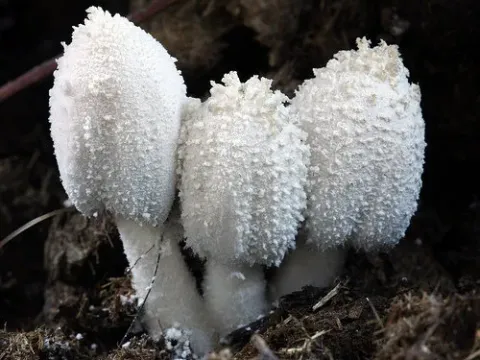
Coprinopsis nivea
Coprinopsis nivea
The causative agent is the fungus Coprinopsis nivea, formerly classified as Coprinus niveus. It is a basidiomycete fungus that acts as a significant competitor in the professional cultivation of edible mushrooms.
What the section contains
Coprinopsis nivea
The type of damage caused is primarily competitive colonization of the substrate. While it is not a direct plant parasite, it aggressively outcompetes the mycelium of mushrooms like Agaricus bisporus for nutrients.
Biologically, this species is characterized by high spore production and rapid growth rates. Its ability to colonize available organic matter quickly makes it a persistent threat in mushroom production facilities.
The fungus produces a dense, white mycelium that rapidly spreads through the compost. This active growth allows it to deplete the substrate's resources, effectively starving the cultivated mushroom mycelium.
Its life cycle involves the rapid development of fruiting bodies that mature and undergo autolysis, turning into a spore-rich black liquid that ensures widespread dispersal within the growing room.
The primary driver for the development of Coprinopsis nivea is poor thermal treatment or inadequate pasteurization of the growing substrate.
High relative humidity, typically exceeding 85%, combined with moderate temperatures between 20°C and 25°C, provides optimal conditions for the growth of this competitive fungus.
Substrates with high nitrogen content that have not been properly fermented are especially susceptible to colonization by this species, as they serve as excellent nutrient reservoirs.
Ventilation systems that lack high-efficiency filters facilitate the entry of airborne spores from the external environment directly into the production chambers.
Inadequate sanitation protocols and hygiene management within the facility create favorable conditions for the persistence and spread of fungal spores between growing cycles.
The initial sign of contamination is the emergence of white, fluffy mycelium on the substrate surface, which spreads much faster than the desired mushroom mycelium.
Within a few days, small, white, conical fruiting bodies appear, initially covered in a veil-like layer that quickly dissipates as the mushrooms mature.
As the fruiting bodies mature, the edges of the caps turn dark, and the structures liquefy into a black, inky substance, which is a hallmark of this genus.
Contaminated blocks often emit a distinct odor reminiscent of decaying straw or vegetable matter, which is an indicator of unwanted microbial activity in the substrate.
- Rapid white mycelial growth on substrate
- Development of small conical mushrooms
- Liquefaction of fruiting bodies into black liquid
- Suppression of the main crop mycelium
The primary economic harm is the severe reduction in mushroom yield due to nutrient competition, which forces the cultivated mushrooms to cease development.
The secretion of metabolic byproducts by Coprinopsis nivea can inhibit the healthy growth of mushroom mycelium, lowering both the quantity and the quality of the marketable harvest.
Heavy contamination often requires the complete disposal of affected substrate blocks, resulting in direct financial losses and increased waste management costs.
Massive outbreaks necessitate intensive cleaning and disinfection of the growing area, leading to downtime and reduced annual production capacity.
The presence of this fungus significantly degrades the uniformity and visual appeal of the substrate, making it impossible to produce standard, high-quality mushroom crops.
Rigorous pasteurization of the substrate is the most effective preventative measure. Ensuring the core temperature reaches at least 60°C for a sufficient period effectively eliminates spores.
Selection of high-quality raw materials and ensuring proper fermentation of the compost is critical to minimizing the initial spore load in the substrate.
Implementing strict hygiene practices, such as the use of specialized uniforms, foot baths, and changing shoes when entering production areas, helps prevent human-mediated spread.
Maintaining air filtration systems with high-efficiency filters prevents the entry of spores from the outside environment through the ventilation ducts.
Immediate removal and safe disposal of any substrate blocks showing signs of infestation are necessary to prevent the further release of spores into the facility.