
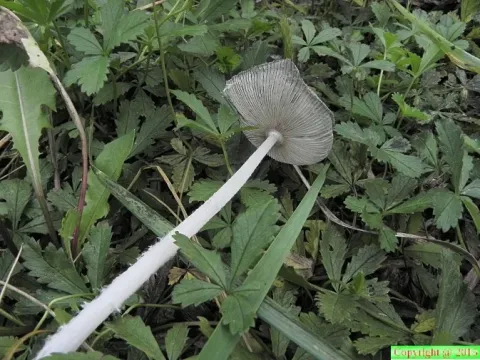
Coprinopsis jonesii
Coprinopsis jonesii
The fungus Coprinopsis jonesii belongs to the Psathyrellaceae family. It is a specialized coprophilous or litter-inhabiting saprotroph that typically thrives on decaying organic matter rich in nitrogen.
What the section contains
Coprinopsis jonesii
Unlike true pathogens that feed on living tissues, this species is a decomposer. It prefers substrates that have undergone primary fermentation, such as compost heaps, aged manure, or heavily mulched soil patches.
The mycelium actively colonizes the substrate, secreting enzymes to break down complex organic compounds. During its growth phase, it forms characteristic cylindrical fruiting bodies that degrade rapidly after sporulation.
The biology of this species is closely tied to the availability of nitrogenous nutrients. This fungus rarely acts as an aggressor against living plants, but it can compete for nutrients in the rhizosphere.
Its presence in an agroecosystem is often an indicator of excess uncomposted organic matter. While not always directly harmful, its presence signals high microbiological activity in the root zone.
The development of Coprinopsis jonesii is directly dependent on high substrate moisture. The fungus prefers shaded areas with limited aeration where moisture is retained for extended periods.
Optimal conditions for the emergence of fruiting bodies occur during heavy rainfall or excessive irrigation. In such environments, the mycelium accelerates its growth, exploiting organic matter in the soil.
Presence of partially decomposed manure, hay, or straw serves as an ideal nutrient source. The fungus demonstrates rapid colonization at temperatures ranging from 15 to 25 degrees Celsius.
In greenhouses or controlled environments, spore dispersal occurs via air currents or irrigation water droplets. Poor ventilation facilitates the establishment of the mycelium in greenhouse substrates.
Lack of proper crop rotation and the accumulation of plant debris create a stable environment for the perennial presence of this species on a plot.
The direct harmfulness of Coprinopsis jonesii to agricultural crops is minimal, as it lacks clear phytopathogenic properties. However, it can indirectly influence seedling development.
The main risk lies in the competition for resources within the root zone. Extensive mycelial growth can temporarily bind nitrogen, making it unavailable to young plants during critical growth phases.
Under mass development, the fungus may release specific metabolites that can potentially inhibit the growth of sensitive crops. This phenomenon is observed more frequently in potted cultures or greenhouse conditions.
The species acts as an indicator of agronomic management issues. Its dominance in compost or soil mixtures may suggest poorly prepared substrate and inadequate decomposition.
Occasionally, intensive mycelial development can lead to the compaction of the topsoil layer, hindering oxygen access to the roots of vegetable crops.
The primary prevention method is adherence to proper composting practices. Using only fully mature, well-rotted compost eliminates the emergence of saprotrophic fungi.
Ensuring proper soil aeration is crucial. Regular loosening of the root zone prevents the development of surface mycelium and promotes the drying of the substrate.
Normalization of irrigation regimes helps avoid waterlogging, which creates a favorable environment for Coprinopsis jonesii spores. Stagnant water on beds should be avoided.
If fungi appear in a greenhouse, it is recommended to improve ventilation and reduce air humidity. In extreme cases of heavy substrate colonization, disinfection or complete replacement is advised.
- Optimization of organic fertilizer composition.
- Timely removal of plant debris.
- Implementation of crop rotation for soil health.