
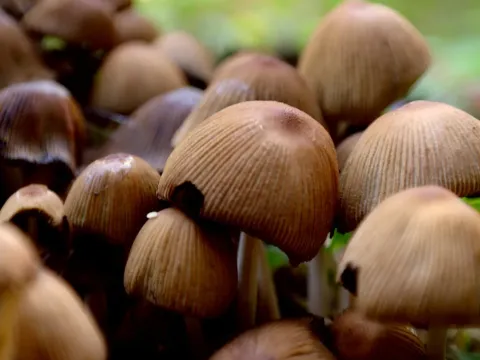
Coprinoid mushrooms
Coprinaceae
The Coprinaceae family includes a group of saprotrophic fungi that are often misclassified as plant pathogens in agronomy. It is essential to understand that most members of this family feed on dead organic matter.
What the section contains
Coprinoid mushrooms
The primary agent is the mycelium of fungi belonging to genera such as Coprinus and Coprinopsis. These organisms do not attack living plant tissues but actively decompose humus and fresh manure.
In a strict phytopathological sense, there is no "disease," as these mushrooms are decomposers, not parasites. Their presence is an indicator of excessive non-decomposed organic matter.
The biology of these fungi is characterized by a rapid life cycle. Spores germinate in nitrogen-rich soil, forming a vast network of hyphae capable of rapidly developing fruiting bodies.
In agricultural settings, they are sometimes mistaken for dangerous root rots due to their close proximity to the root zones of greenhouse crops.
The main condition for the development of coprinoid mushrooms is the presence of an excessive amount of non-decomposed organic matter in the substrate.
High soil or greenhouse substrate moisture (above 70–80%) creates an ideal climate for the germination of spores found in organic fertilizers.
Temperature ranges from +18 to +25 degrees Celsius promote the fastest emergence of fruiting bodies onto the soil surface.
Poor ventilation in greenhouse conditions leads to stagnant air, which triggers the active spread of spores and colonization of the entire bed area by mycelium.
The application of fresh, non-composted manure or poorly prepared peat is a key factor that triggers the development of fungal colonies.
The primary harm of coprinoid mushrooms is their competition for nutrients available in the soil solution for cultivated plants.
During mass development, the mycelium consumes a significant amount of nitrogen, leading to temporary nitrogen deficiency in vegetable crops and stunted growth.
The presence of these fungi creates an unfavorable aesthetic and sanitary environment, complicating routine maintenance and cultivation tasks.
In rare cases, excessive density of fungal mycelium can physically prevent moisture from reaching plant roots by forming a water-repellent crust.
Indirect damage manifests as increased air humidity, which can potentially trigger the development of true pathogens, such as gray mold or powdery mildew.
The first and most important protective measure is to use only fully composted materials and high-quality, disinfected soil mixes.
Normalizing irrigation schedules and preventing moisture stagnation in the root zone significantly reduce the likelihood of fruiting bodies appearing.
Regular ventilation of greenhouses and cold frames helps maintain air humidity at levels optimal for crops, which inhibits mycelium growth.
If mass growth is detected, it is recommended to remove the mushrooms manually along with the top layer of substrate and loosen the soil to improve aeration.
- Ensure proper drainage in greenhouses
- Use biological fungicides based on Trichoderma to outcompete fungi
- Follow crop rotation and proper organic application rules