
Coprinellus disseminatus
Coprinellus disseminatus
Description
Symptoms
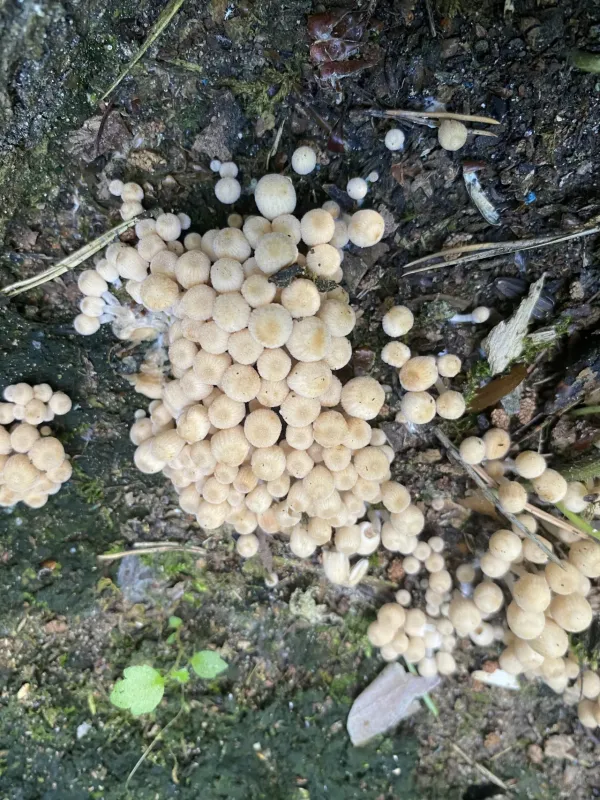
The presence of this fungus is marked by the appearance of numerous small, bell-shaped mushrooms growing in dense clusters.
The caps are typically beige to gray, turning darker and eventually black as the spores mature within the gills.
Stems are slender, fragile, and white, often breaking easily when touched, which is characteristic of the fragile nature of the fruiting body.
These mushrooms frequently appear on rotting logs, tree stumps, or decaying wood remnants buried in the ground.
Large colonies can appear seemingly overnight after periods of rainfall, covering the substrate in what looks like a scattered arrangement.
Pathogen
Coprinellus disseminatus, commonly known as the fairy inkcap, is a saprophytic fungus belonging to the Psathyrellaceae family.
This species is not a plant pathogen; it does not infect living plant tissues and is generally harmless to agricultural and garden crops.
The biological role of this fungus is the decomposition of dead organic matter, primarily focusing on wood fiber and cellulose.
It acts as a decomposer, breaking down complex lignocellulosic materials into simpler compounds, thereby enriching the soil with humus.
Because it lacks the ability to attack living vascular plants, it is not classified as a disease agent in agronomic practice.
Conditions for development
Coprinellus disseminatus thrives in moist, shaded environments where there is an abundance of decaying woody material.
Optimal growth occurs during mild temperatures, typically following warm, rainy weather which saturates the substrate with moisture.
The fungus is commonly found in gardens, forests, and grassy areas where wood debris is left to decompose on the soil surface.
High humidity is the primary catalyst for the development of fruiting bodies, as the mycelium requires consistent moisture to flourish.
Lack of proper drainage in soil or overgrown, shaded areas provides the perfect microclimate for these colonies to establish themselves.
Why it matters
There is no direct damage caused to healthy crops, as the fungus does not possess the mechanisms to invade living plant structures.
The only minor concern is the rapid decomposition of wooden structures, such as fence posts or garden beds, that are in contact with wet soil.
The proliferation of these mushrooms can be seen as an indicator of poor sanitation, suggesting that there is too much rotting debris in the area.
While not a disease, its presence in large quantities can reflect an imbalance in the garden's moisture levels or organic matter management.
The aesthetic nuisance of a sudden fungal bloom is the most common reason for garden managers to seek ways to eliminate them.
Protection
Management focuses on sanitation: the most effective way to prevent its growth is to remove stumps, rotting logs, and woody garden waste.
Improving soil drainage prevents the accumulation of water, thereby reducing the suitability of the environment for mycelial colonization.
Keeping the area clear of organic debris and promoting good air circulation discourages the establishment of fungal colonies.
There is no need for chemical fungicides, as they are ineffective against saprophytes and may disrupt the natural soil microbiota.
Proper maintenance of wooden garden installations, including the use of sealants or keeping them away from direct contact with soil, prevents damage.
Discussion
No discussions yet — be the first.