
Coltricia
Coltricia
The genus Coltricia, notably the species Coltricia perennis, belongs to the family Hymenochaetaceae. These fungi act as wood-decay pathogens.
What the section contains
Coltricia
While often categorized as saprotrophs living on woody debris, they frequently display parasitic behavior by attacking the root systems of weakened coniferous trees.
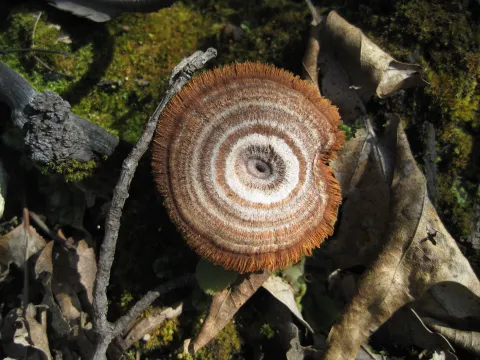
The pathogen is characterized by its distinctive leathery or corky fruiting bodies, which often exhibit a funnel-shaped structure and concentric color zones.
Once established, the mycelium penetrates the roots and releases enzymes that break down lignin and cellulose, leading to white rot disease in the tree's base.
The fungus can persist in the soil for extended periods, remaining viable in decaying organic matter and waiting for suitable hosts to infect.
The most visible sign of infection is the presence of brown, funnel-shaped fruiting bodies appearing at the base of the tree or on exposed roots.
Tree crowns show symptoms of chlorosis, where needles turn yellow and thin out due to the compromised root system's inability to supply water and nutrients.
Excavation of the root system often reveals degraded tissue that is brittle, discolored, and has a stringy, white rot appearance.
A significant reduction in the tree's annual growth rate and premature needle drop are clinical indicators of advanced root rot damage.
In humid conditions, white or light-brown fungal mats may be visible under the bark near the root collar, signaling active colonization.
Coltricia thrives in environments with high soil moisture, particularly in poorly drained sites or regions experiencing prolonged rainfall.
A high concentration of woody debris, stumps, and leaf litter in the soil provides an ideal nutrient base for the initial development of the fungus.
Optimal growth temperatures for the mycelium typically range between 18 and 25 degrees Celsius, matching late spring and summer climates.
Damage to roots caused by heavy machinery, forest thinning activities, or burrowing pests facilitates the entry of fungal spores into the tree.
Lack of proper soil aeration and over-dense planting densities create a microclimate that promotes the spread of spores between adjacent trees.
The primary threat of Coltricia is the structural failure of the root system, which significantly increases the risk of trees falling during windstorms.
By preventing the tree from absorbing water, the fungus causes slow, progressive desiccation, often leading to the eventual death of the tree.
The disease tends to form focal points of infection, spreading laterally through root contacts, which creates localized patches of standing dead timber.
Economically, this leads to significant timber losses and the high cost of conducting sanitary logging and subsequent reforestation in affected zones.
Seedlings in nurseries are at particularly high risk, as a minor root infection can quickly lead to total plant mortality due to their limited reserves.
Sanitary forest management, including the removal of infected trees and stumps, is the most effective method to stop the spread of the pathogen.
Improving soil drainage in areas prone to waterlogging reduces the environmental suitability for the fungus to establish itself.
Minimizing mechanical injury to roots and trunks during forestry operations is essential to prevent infection through open wounds.
Biological control using antagonistic fungi like Trichoderma species can help suppress the growth of Coltricia in the forest ecosystem.
- Regular inspections of root collars and bases.
- Physical removal of fruiting bodies to prevent sporulation.
- Monitoring soil moisture levels in sensitive forest plots.
- Using site-appropriate tree species to improve stand vigor.