
Coltricia perennis
Coltricia perennis
Description
Symptoms
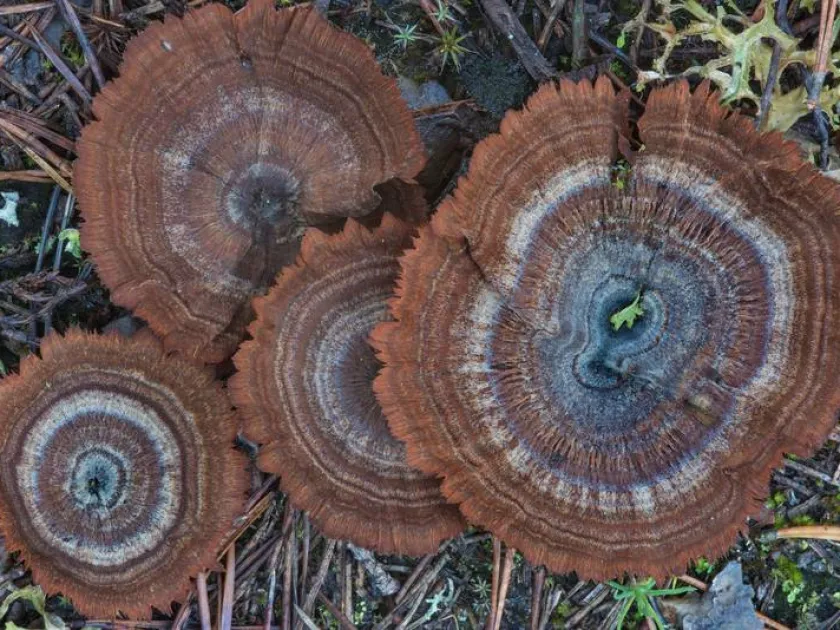
The most visible symptom of an infestation is the presence of the fungus's fruiting bodies around the tree base or on the forest floor nearby. These structures are leathery and typically appear during the late summer and autumn.
A decline in the tree's vitality is manifested through thinning needles, chlorosis, and premature needle cast. The crown may appear sparse, and new twig growth is often significantly stunted compared to healthy specimens.
Below ground, the root system exhibits signs of decay. The presence of white or yellowish mycelial mats between the bark and wood of the roots is a definitive sign of advanced infection.
Trees infected with this fungus lose their anchorage in the soil. Even without the visible decay of the trunk, the trees become prone to windthrow, as the structural roots have been compromised by the fungal activity.
The wood tissue within the roots becomes soft, bleached, or mottled due to the enzymatic breakdown by the fungus. This decay process reduces the tree's ability to transport water and essential nutrients from the soil.
Pathogen
Coltricia perennis is a fungus belonging to the Hymenochaetaceae family. It is a facultative parasite known for causing root decay in various coniferous species, particularly in forest environments.
The fungus propagates primarily through basidiospores that are dispersed by wind. Once a spore lands in a suitable environment, it germinates to form mycelium that colonizes the root tissues of host trees.
The organism is noted for its ability to persist in the soil for extended periods as a saprotroph, feeding on woody debris and organic matter. This persistence makes it a long-term threat to replanted forest sites.
The life cycle of the pathogen is characterized by the formation of tough, funnel-shaped, zonate fruiting bodies. These sporocarps, often brown or ochre in color, are key diagnostic features appearing near the base of infected trees.
Unlike aggressive pathogens that kill quickly, Coltricia perennis typically acts as a chronic colonizer. It gradually breaks down the structural integrity of the root system, which may take years before causing visible decline in the tree's health.
Conditions for development
The fungus thrives in moist, acidic soil conditions. Areas with poor drainage or excessive water retention provide an ideal environment for spore germination and mycelial growth.
Periods of high rainfall combined with moderate temperatures create optimal conditions for the production and spread of basidiospores throughout the forest landscape.
Stress factors such as drought, nutrient deficiency, or prior damage from pollution weaken the tree's natural defense mechanisms, making it more susceptible to colonization by Coltricia perennis.
Mechanical damage to roots, caused by heavy machinery during thinning or logging operations, serves as a primary infection point. The wounded tissue allows the fungus to bypass the tree's protective barriers.
Dense planting regimes facilitate the spread of the fungus via root-to-root contact. When roots of adjacent trees grow into each other, the pathogen can travel through the network, creating spreading infection centers.
Why it matters
The primary impact of the disease is the reduction of timber volume and the premature death of trees. This leads to economic losses in forestry and requires significant investment in salvage logging and site restoration.
By weakening the root system, the fungus makes trees highly vulnerable to secondary attacks by bark beetles and other wood-boring insects. These pests often accelerate the mortality of already stressed trees.
In landscape and park settings, the decay of root systems poses a risk to public safety. Fallen trees can cause significant damage to nearby structures, utility lines, or pathways used by the public.
The loss of mature trees changes the forest structure, potentially leading to a shift in species composition. This can disrupt the local ecosystem and reduce the biodiversity of the affected forest stand.
Erosion issues can arise in areas where large numbers of infected trees are killed, as the lack of living roots leads to a loss of soil stability, especially on sloped terrain.
Protection
Sanitation is the most effective management strategy. Removing infected stumps and debris from the site helps to significantly reduce the inoculum load in the soil for future plantings.
Improving site drainage is crucial for preventing conditions that favor the fungus. Proper land management to avoid waterlogging creates a less hospitable environment for the pathogen.
Using biological control agents, such as beneficial fungi like Trichoderma, can help suppress the pathogen's activity in the soil, protecting the root zones of vulnerable tree species.
During forest operations, operators should exercise care to minimize damage to the roots and bark of remaining trees, as these wounds are primary entry points for the fungal spores.
In high-value areas, treating the soil with systemic fungicides may be considered, although this is generally impractical for large-scale forestry. Proactive monitoring and the removal of clearly symptomatic trees remain the most viable approaches.
Discussion
No discussions yet — be the first.