
Colus hirudinosus
Colus hirudinosus
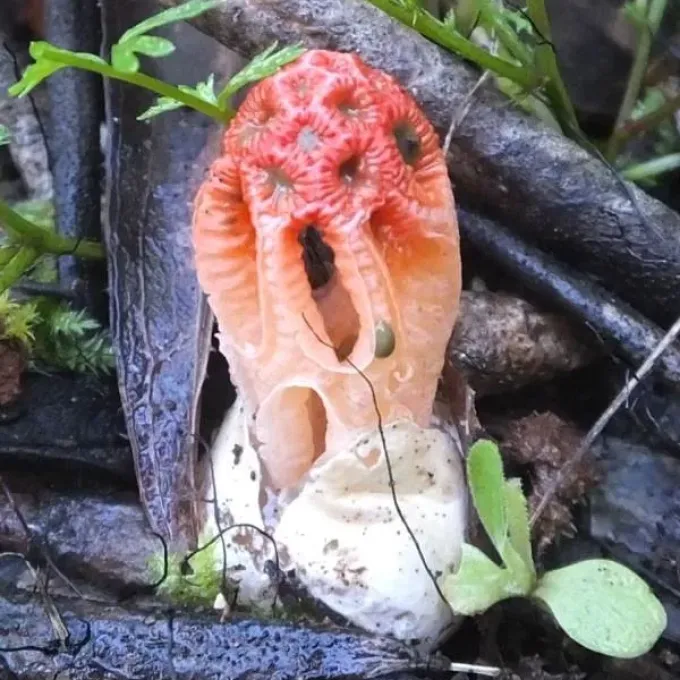
Description
Pathogen
Colus hirudinosus is a fungus belonging to the Phallaceae family, commonly known as a stinkhorn. It is important to clarify that this organism is not a plant pathogen and does not cause any plant diseases.
It acts exclusively as a saprotroph, meaning it derives its nutrients from decaying organic matter, such as leaf litter, wood chips, or humus-rich soil.
The life cycle involves an underground mycelium that develops into a distinctive, lattice-shaped red fruiting body. This structure is meant to attract insects for spore dispersal.
There is no evidence in agricultural science suggesting that this fungus interacts with living plant tissues in a parasitic or pathogenic manner.
Therefore, it should not be categorized as a threat to crops, as it does not affect plant health or yield in any capacity.
Conditions for development
The development of Colus hirudinosus is strictly dependent on environmental factors, primarily high humidity and the presence of abundant organic substrates in the soil.
It thrives in temperate environments, typically appearing after significant rainfall events, which stimulate the growth of the fungal mycelium.
Preferred habitats include gardens, lawns, and woodland borders where the accumulation of organic debris is significant and undisturbed.
Spore dissemination is primarily driven by insects (entomochory), which are attracted by the strong odor emitted by the mature fruiting bodies.
Soil structure, specifically its porosity and moisture-holding capacity, plays a vital role in determining where and when these fungi appear.
Why it matters
Colus hirudinosus causes zero harm to agricultural crops, ornamentals, or forests. It does not penetrate roots or foliage and produces no toxins that affect plant physiology.
In fact, as a decomposer, it plays a beneficial role in nutrient cycling by breaking down dead organic material, making nutrients available to the soil.
Agricultural operations can proceed normally even if this fungus is present in the soil, as it does not compete with crop species for nutrients.
The only minor nuisance is the pungent smell during the maturation phase, which is a natural mechanism for insect attraction rather than a sign of pathological activity.
There is no economic damage associated with this fungus, and it should be viewed as an indicator of healthy, biologically active soil rather than a problem.
Protection
Since Colus hirudinosus is not a plant pathogen, there are no specific control measures required or recommended for this species in any agricultural setting.
If management of the fruiting bodies is desired for aesthetic reasons on lawns or in decorative gardens, simple manual removal is the most effective approach.
Adjusting irrigation systems to reduce surface moisture and improving soil drainage can naturally discourage the development of the fungal fruiting bodies.
Fungicides should never be applied for the purpose of eradicating this fungus, as they can cause significant and unnecessary collateral damage to beneficial soil organisms.
Overall, maintaining a clean gardening environment free of excess wood debris is the only prophylactic measure that could limit its presence.
Discussion
No discussions yet — be the first.