
Colpoma oak canker
Colpoma quercinum
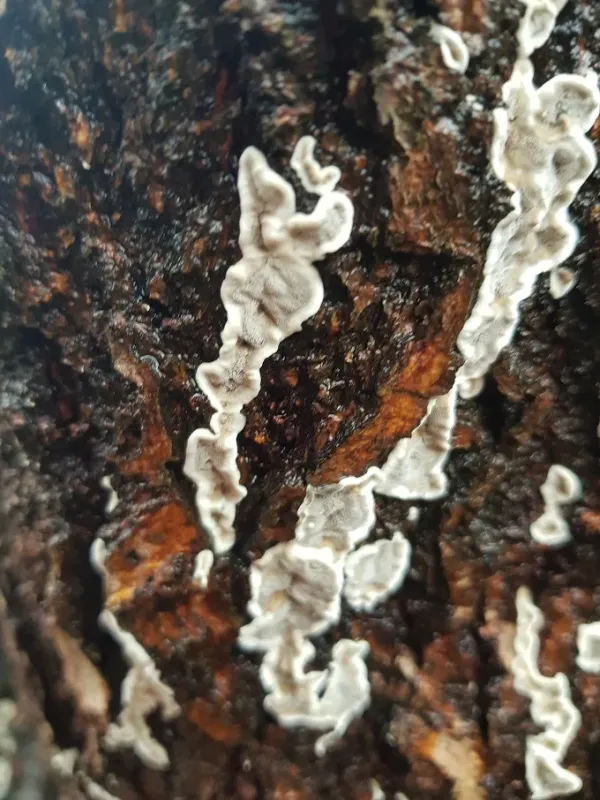
Description
Symptoms
The most prominent symptom is the presence of black, transverse fruiting bodies (apothecia) that erupt through the bark of branches and stems.
Infected areas exhibit noticeable bark necrosis, where the affected tissue becomes discolored, sunken, and eventually cracks transversely.
The crown of an infected tree may show symptoms of dieback, with branches drying out due to the disruption of xylem and phloem vessels.
The bark in the affected areas becomes brittle and may peel away, revealing the underlying dark stroma produced by the fungal pathogen.
Visual inspection often reveals a distinctive pattern of transverse splitting, which allows for early identification of the disease in forest stands.
Pathogen
The causal agent of this disease is the ascomycete fungus Colpoma quercinum (Pers.) Wallr., which belongs to the order Rhytismatales. It is a specialized pathogen affecting various oak species.
The life cycle involves the formation of apothecia, which appear as elongated, transverse black structures breaking through the outer layer of the bark.
The fungus mycelium colonizes the bark and cambium layers, gradually spreading and disrupting the vital transport systems of the tree's branches or stems.
The pathogen survives on dead twigs and branches, producing spores that are disseminated primarily by wind and rain splashes during moist periods.
The biology of C. quercinum is closely linked to the host's vitality, as it preferentially infects weakened or physiologically stressed trees.
Conditions for development
The development of Colpoma quercinum is highly dependent on periods of high humidity and rainfall, which favor spore production and germination.
Dense forest stands with limited airflow and high moisture levels are particularly susceptible to the rapid spread of this fungal pathogen.
Trees that are under stress—whether due to drought, nutrient deficiency, or competition—are more susceptible to successful colonization.
The temperate climate provides ideal conditions for the fungus to persist and grow during the autumn and winter months, even when the tree is dormant.
Mechanical injuries to the bark provide accessible entry points for the fungal spores, accelerating the infection process in trees.
Why it matters
Colpoma oak canker causes significant damage to the bark and cambium, restricting the movement of nutrients and water throughout the tree.
Chronic infection leads to branch dieback, reducing the tree's photosynthetic capacity and overall vigor, eventually causing stunted growth.
Weakened trees become highly vulnerable to secondary infestations by stem-boring insects, which can lead to the mortality of the oak tree.
The presence of the disease significantly diminishes the economic value of timber, as it causes severe necrosis and internal damage to the wood.
In nurseries and young plantations, the disease can cause devastating losses, requiring strict sanitation to protect the young stock.
Protection
The primary control measure is the systematic removal and disposal of infected branches and dead trees through sanitation logging.
Early detection through frequent forest monitoring is essential to isolate infection centers and prevent further spread of the pathogen.
Silvicultural practices, such as thinning to improve air circulation and sunlight exposure, help maintain tree health and reduce humidity.
In forest nurseries, maintaining optimal plant health and hygiene prevents the disease from taking hold and causing large-scale damage.
While chemical fungicides are sometimes investigated for small-scale applications, integrated forest management remains the most sustainable approach.
Discussion
No discussions yet — be the first.