
Columnar rust of currant
Puccinia ribis
The causal agent of this disease is the rust fungus Puccinia ribis, which is a specialized parasite primarily affecting various species within the Ribes genus.
What the section contains
Columnar rust of currant
The fungus operates through a complex life cycle that involves the production of several types of spores. These spores are highly adapted for transmission through air currents and water droplets.
This pathogen overwinter as dormant mycelium or spores on fallen, infected leaves, which serve as the primary reservoir for infection in the following spring season.
As a basidiomycete, the fungus penetrates the leaf tissue, establishing a parasitic relationship that siphons nutrients from the plant host and interferes with normal metabolic processes.
The biological success of Puccinia ribis is attributed to its ability to synchronize its reproductive stages with the growing season of the currant plant, ensuring efficient spread.
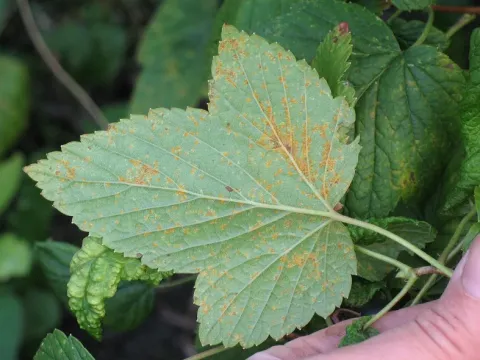
The initial signs appear on the upper leaf surface as small, pale yellow spots that gradually enlarge and take on a reddish-brown or orange hue over time.
On the underside of the leaves, these spots develop into characteristic orange-colored cushions that eventually elongate into distinct pillar-like structures, giving the disease its name.
These pillars are densely packed with urediniospores, which are eventually released into the environment to spread the infection to neighboring leaves or new plants.
Severe infections cause premature yellowing, wilting, and widespread leaf drop, often occurring mid-summer, which leaves the currant bushes completely defoliated prematurely.
While the orange pillars are the most diagnostic feature, gardeners should also monitor for general leaf yellowing and reduced vigor as indicators of an underlying rust issue.
High humidity and consistent moisture on foliage are the most critical factors for the germination of fungal spores and the subsequent development of the disease.
The ideal temperature range for rapid fungal development is between 15°C and 22°C (59°F–72°F), making mild, rainy summers high-risk periods for the spread of rust.
Poor air circulation within the shrub canopy creates a microclimate with stagnant, humid air, which significantly increases the vulnerability of the plant to fungal attachment.
The presence of decomposing leaf litter around the base of the bushes ensures that the pathogen has a persistent home, allowing the infection to cycle year after year.
Areas prone to heavy dew or located near water bodies are frequently more susceptible, as these conditions extend the period during which leaf surfaces remain wet.
Columnar rust drastically reduces the plant's ability to perform photosynthesis, leading to stunted growth and a significant decline in the overall vigor of the currant bush.
Because the leaves drop early, the plant fails to store sufficient carbohydrates for winter survival, resulting in lower cold tolerance and potential damage during freezing months.
The reduction in foliage leads to lower fruit quality, smaller berries, and poor taste, which directly impacts the commercial and nutritional value of the harvest.
Long-term infestation weakens the bush to such an extent that it may become susceptible to secondary infections or environmental stresses, eventually leading to plant death.
In cases of severe annual infection, the reproductive capacity of the plant is stunted, leading to a noticeable drop in berry yields in the seasons following the outbreak.
Rigorous sanitation practices are paramount; all fallen leaves must be raked and destroyed or composted deep to eliminate the primary overwintering sites for the fungus.
Proper pruning techniques should be employed to open up the canopy, improving airflow and sunlight penetration, which helps keep the foliage dry and less hospitable to spores.
Fungicidal sprays containing copper or other recommended active ingredients should be applied as a preventive measure during the early stages of the growing season.
Gardeners should aim to plant resistant cultivars whenever available, as this remains the most effective and sustainable strategy for managing rust in a backyard garden.
Monitoring the garden for early signs and removing infected shoots can help mitigate the spread of the fungus before it reaches an epidemic level across the entire planting area.