
Cocconia
Cocconia
Cocconia manifests on leaf surfaces as distinct spotting. In the early stages, the spots appear as small, slightly diffuse areas, often developing a yellowish or brownish hue.
What the section contains
Cocconia
As the fungal infection progresses, the spots expand in diameter, frequently coalescing to cover large portions of the leaf blade. Necrosis of the affected plant tissue is commonly observed at the center of these spots.
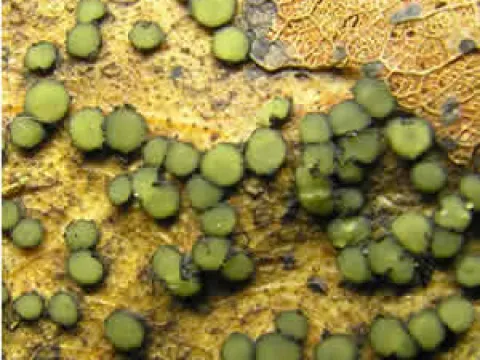
A crucial diagnostic feature is the development of fungal fruiting bodies on the surface of the lesions. These appear as minute, dark, slightly elevated dots, which are clearly visible upon close inspection.
Severe infection leads to premature chlorosis and leaf abscission. This drastically reduces the plant's photosynthetic capacity, negatively impacting its overall metabolic processes and energy reserves.
Accurate identification often requires laboratory verification, as visual symptoms may mimic other fungal or bacterial leaf spot diseases.
The causative agent of this disease is the fungus Cocconia, which belongs to the Ascomycota phylum. These are highly specialized pathogens that parasitize the tissues of living plants.
The fungus is primarily an endophyte, developing its mycelium within the intercellular spaces and cells of the host leaves. The fungus feeds by breaking down host cells and absorbing their contents.
Reproduction occurs through spores produced within specialized structures known as ascostromata. Spore release is typically triggered by periods of high humidity.
Dissemination of spores across a field or to neighboring plants occurs primarily through rain splashes, wind currents, or via insect vectors carrying the inoculum.
The fungal life cycle includes a dormant stage, typically overwintering in fallen, infected leaves or on plant debris, ensuring survival until the next growing season.
Favorable conditions for the development of Cocconia include a combination of moderate temperatures and high atmospheric humidity.
Prolonged rainfall, heavy fog, or persistent morning dew create the perfect microclimate for spore germination and mycelial penetration into healthy leaf tissues.
Overcrowded plantings with poor air circulation contribute to moisture retention on leaf surfaces, significantly increasing the risk of rapid disease spread.
Plants weakened by nutrient deficiencies or environmental stress, such as drought or mechanical injury, are significantly more susceptible to infection by this fungus.
In greenhouses, the disease develops more aggressively if ventilation protocols are ignored and if sanitation measures are neglected.
The primary damage caused by Cocconia is the significant reduction of the plant's functional leaf surface, which directly translates to lower biomass accumulation.
Premature leaf loss disrupts the normal vegetative cycle, which is particularly detrimental during critical phases like flowering and fruit development.
Infected crops show decreased overall productivity and reduced quality, as well as lower storage of essential nutrients required for winter dormancy or subsequent regrowth.
For nursery and ornamental crops, the disease ruins the aesthetic and commercial value of the plants, rendering them unsuitable for sale.
Without intervention, the pathogen can spread rapidly across a field, causing substantial economic losses for the farming operation.
Management of Cocconia relies on strict adherence to cultural practices aimed at enhancing plant vigor and creating an environment hostile to the pathogen.
It is essential to promptly collect and destroy infected plant debris, as this is the primary reservoir for the fungus during its dormant period.
Avoid high-density planting by maintaining recommended spacing, which ensures adequate aeration and sunlight penetration through the plant canopy.
Regular field monitoring is a vital control strategy, allowing for the application of appropriate fungicides at the first sign of symptoms to halt infection clusters.
- Use of certified, disease-free planting material.
- Implementation of proper crop rotation.
- Balanced nutrient and fertilizer management.
- Prophylactic fungicide treatments during high-risk seasons.