
Coccotrema cucurbitula
Coccotrema cucurbitula
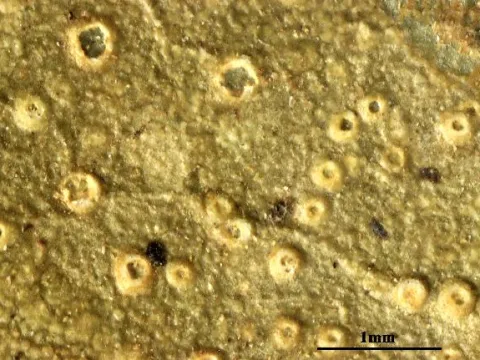
Coccotrema cucurbitula appears as a crustose lichen forming distinct patches on the bark of trees. These patches vary in shape and often present a greyish, greenish, or yellowish hue, blending naturally with the texture of the host tree.
What the section contains
Coccotrema cucurbitula
The primary identification feature is the presence of apothecia—small fruiting bodies that may appear as tiny dots or slight elevations on the thallus. This gives the bark a rough, grainy surface that contrasts with the smoother surrounding areas.
The lichen colonies tend to expand slowly in a radial pattern. While it is not a parasitic fungus, the coverage can be quite dense, sometimes wrapping around branches and making the tree look aged or neglected.
In wet conditions, the thallus absorbs moisture and becomes more vibrant in color, making it easier to spot. When dry, it may appear dull and flake slightly at the edges, which is a normal aspect of its life cycle.
The presence of Coccotrema cucurbitula is usually detected through visual inspection of the scaffold branches and the trunk. It is distinguished from other pathogens by the lack of visible tissue decay beneath the lichen layer.
The causative agent is the lichen Coccotrema cucurbitula, which is a symbiotic organism comprised of a fungus and an alga. It functions as an epiphyte, using the bark strictly as a substrate for attachment rather than a source of nutrition.
Reproduction is facilitated by spores that are dispersed by wind and splashing rainwater. Upon landing on a suitable substrate with enough organic dust and moisture, the spores germinate to form a new lichen colony.
The biological development is extremely slow, allowing these lichens to persist for many years. Unlike parasitic diseases, it does not extract nutrients or toxins from the tree, yet it remains a significant presence in the orchard ecosystem.
The fungal component provides structural integrity, while the photosynthetic alga ensures a steady supply of carbohydrates. This independence from the tree's internal circulation is what allows it to thrive on bark surfaces.
Classified as a crustose lichen, it is a key indicator of environmental stability. Its proliferation is often a sign of long-term neglect regarding canopy maintenance and pruning in the affected tree stands.
High relative humidity is the most critical condition for the establishment and growth of Coccotrema cucurbitula. Orchards located near water bodies or in shaded valleys are particularly prone to colonization.
Lack of canopy air circulation creates a stagnant microclimate that encourages lichen growth. Dense, unpruned crowns prevent sunlight from reaching the trunk, creating the dark, humid conditions the lichen prefers.
The age and condition of the bark influence the colonization rate. Older trees with rough, deeply fissured bark provide more surface area and shelter for spores to settle and germinate compared to young, smooth-barked trees.
The absence of industrial pollution allows the lichen to thrive, as many species are highly sensitive to sulfur dioxide and other air pollutants. Thus, its presence often indicates a clean air environment.
Prolonged wet seasons offer a significant boost to the expansion of existing colonies. The moisture retention capacity of the lichen allows it to survive intermittent dry spells without significant damage.
The primary concern regarding Coccotrema cucurbitula is the shelter it provides to orchard pests. The crevices beneath the lichen serve as ideal overwintering spots for scale insects, mites, and various harmful pathogens.
Heavy colonization can obstruct the gas exchange of the bark through the lenticels. While this doesn't kill the tree outright, it may contribute to stress in old or otherwise weakened specimens over a long period.
The lichen acts as a sponge, holding moisture against the bark for longer than natural. This persistent dampness can promote the development of secondary fungal rots and soften the bark, making it more vulnerable to damage.
From a commercial perspective, excessive lichen growth reduces the aesthetic and perceived health quality of the fruit trees. It also complicates pesticide application as the lichen layer can act as a physical barrier.
Trees heavily infested with lichens may suffer from a decline in vigor, not because of the lichen itself, but because of the accumulated load of pests and the environmental factors that the lichen reflects.
Proper pruning is the most effective preventative measure. Thinning the canopy improves airflow and increases light penetration, effectively drying out the bark and making it an unsuitable habitat for lichens.
Mechanical cleaning during early spring using specialized brushes or scrapers helps remove established colonies. This should be done carefully to avoid damaging the underlying cork cambium of the tree.
Applying a lime wash to trunks and main branches is a traditional and highly effective method. The alkaline environment created by the lime inhibits the survival and growth of lichen spores and established thalli.
Spraying with iron or copper-based fungicides during the dormant season is a standard practice to suppress both lichen growth and overwintering pest populations in the orchard.
- Ensure balanced fertilization to keep the tree vigorous and better able to shed old bark.
- Monitor the orchard regularly to identify and treat early-stage lichen colonization.
- Remove debris and dead branches from the tree to minimize habitat for potential pests.