
Cocconeis
Cocconeis
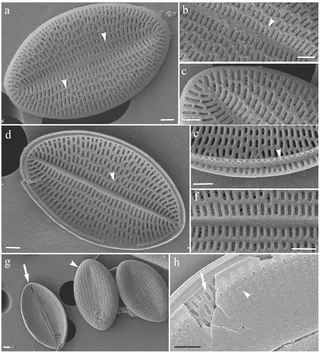
Description
Symptoms
The primary symptom of Cocconeis colonization is the appearance of a brown, gold, or yellowish film on the leaves and stems of aquatic vegetation.
When the population density is high, this film may become opaque and difficult to remove, effectively masking the natural color and texture of the plant surface.
Microscopic examination reveals individual oval-shaped cells securely attached to the epidermis of the plant, often appearing in dense clusters.
Signs of infestation are most prominent in areas with high light intensity, as these diatoms rely heavily on photosynthesis for energy.
Advanced stages of fouling often lead to the plant looking dull or discolored, which is a sign of inhibited respiration and gas exchange.
Pathogen
Cocconeis is a genus of diatom algae that acts as an epiphyte on aquatic plants. While not a pathogenic fungus, it significantly impacts plants by colonizing their surfaces in submerged environments.
These organisms are pennate diatoms featuring silica-based frustules. Their rigid structure allows them to adhere firmly to leaves, stems, and other submerged objects, creating persistent colonies.
Unlike traditional pathogens, Cocconeis does not invade plant tissues; however, its presence as an "aufwuchs" (fouling) organism creates a biological barrier that interferes with the plant’s normal physiological functions.
The population grows via cell division, rapidly covering host surfaces when environmental factors like light and mineral availability are favorable.
In aquaculture and hydroponic systems, understanding the lifecycle of Cocconeis is essential for maintaining the health of the aquatic crop and the clarity of the water.
Conditions for development
Growth is highly dependent on the availability of dissolved silica, which is a critical building material for the cell walls (frustules) of Cocconeis diatoms.
Water temperatures between 15°C and 25°C create an ideal environment for rapid division and expansion of these algal colonies.
High nutrient levels, particularly phosphates and nitrogenous compounds, act as catalysts for the explosive growth of diatom populations.
Stagnant or slow-moving water conditions facilitate the settlement of diatom cells onto plant surfaces, increasing the overall coverage area.
Sufficient light penetration is the most critical environmental variable for determining the intensity of the colonization on submerged vegetation.
Why it matters
The main harm caused by Cocconeis is the creation of a physical barrier that prevents efficient gas exchange and light absorption, limiting the plant's photosynthesis.
This suppression leads to reduced plant vigor, stunted growth, and potential loss of biomass in commercially cultivated aquatic plants.
The dense biofilm provides a niche for other opportunistic organisms, including bacteria that may cause secondary rot or decay of the underlying plant tissue.
In hydroponic and aquaculture systems, the buildup of these algae can clog water filtration systems, affecting the efficiency of the entire cultivation setup.
Long-term exposure to these colonies can cause physiological stress, making the plants more susceptible to environmental changes or other diseases.
Protection
Effective management begins with nutrient control; reducing phosphate and nitrogen input helps limit the primary food source for the diatoms.
Mechanical filtration systems designed to remove particulate matter from the water can significantly reduce the number of cells capable of colonizing plants.
Biological controls, such as introducing algae-eating fish or invertebrates, are highly effective in managing biofilms in closed-loop systems.
If chemical intervention is required, selective algicides should be used with caution to ensure they are safe for the primary aquatic crop.
- Monitor water chemistry, specifically targeting silica and phosphate levels.
- Ensure adequate water circulation to minimize surface settling of diatoms.
- Implement regular physical cleaning protocols for submerged structures.
Discussion
No discussions yet — be the first.