
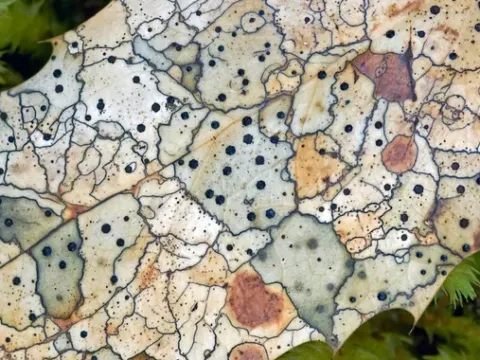
Oak leaf spot
Coccomyces dentatus
The causal agent of this disease is the ascomycete fungus Coccomyces dentatus. This pathogen is known for infecting the leaves of various oak species in forest ecosystems.
What the section contains
Oak leaf spot
The fungus reproduces through apothecia, which are small fruiting bodies that develop on decaying leaf litter during the spring season. These structures release spores that initiate the infection cycle.
Once the spores land on healthy leaves, the fungus penetrates the tissue and develops a mycelial network. This process interferes with the host plant's ability to maintain healthy cellular functions.
The pathogen overwinters within the organic matter on the forest floor. The proximity of this infected debris to the living trees allows for rapid re-infection every growing season.
Scientific studies on Coccomyces dentatus highlight its adaptability to humid forest environments, making it a persistent challenge for forest management and tree nurseries.
The primary symptom of infection is the appearance of distinct spots on the foliage. These lesions are usually yellowish or tan at the early stages of development.
As the infection progresses, the spots expand and often develop a darker margin. The center of these lesions may become necrotic, eventually drying out and breaking away.
A hallmark sign of Coccomyces dentatus is the formation of black, tooth-edged apothecia on the underside of the leaves. These structures are visible indicators of the fungus's presence.
Severe infections typically lead to chlorosis and premature leaf drop. Trees affected by this condition often look sparse and unhealthy well before the autumn months.
- yellowish spots on leaves;
- necrotic tissue areas;
- black fruiting bodies (apothecia);
- premature leaf abscission;
- foliar deformation.
The development of oak leaf spot is heavily dependent on moisture levels. Periods of high humidity and frequent rainfall during the spring are critical for the fungus's success.
Optimal temperatures for spore dispersal and germination range between 15°C and 20°C. Weather patterns that keep foliage wet for extended durations favor rapid disease outbreaks.
Poor air circulation within dense canopies creates a microclimate that prevents leaves from drying quickly. This trapped moisture provides an ideal environment for fungal proliferation.
The density of the oak stand plays a significant role in disease progression. Crowded trees are significantly more likely to experience higher infection rates compared to well-spaced specimens.
In contrast, hot and dry summer weather limits the activity of Coccomyces dentatus, as high temperatures and low moisture inhibit the survival of fungal spores.
The main damage caused by this pathogen is the reduction of the leaf surface area available for photosynthesis. This decline significantly impacts the tree's energy storage capacity.
Continuous defoliation over several years weakens the overall vigor of the tree, making it susceptible to secondary stressors like drought or insect infestations.
In nurseries, this disease can destroy the ornamental value of young oak trees, resulting in significant economic losses for growers and forestry managers.
Growth rate reduction is a common consequence of sustained leaf infection. The energy that would normally go into wood formation is instead diverted to fight the fungal infection.
By weakening the host's defenses, Coccomyces dentatus indirectly facilitates the decline of entire stands, making trees more vulnerable to opportunistic pathogens.
Effective management begins with sanitation. Removing and destroying fallen leaf litter significantly reduces the primary inoculum reservoir for the following spring.
Promoting good airflow is essential in plantation management. Thinning out overcrowded branches helps reduce the humidity around the foliage and minimizes the infection risk.
Fungicide treatments, applied at the onset of bud break, can provide protection against early infection. This is especially useful in valuable ornamental settings or high-density nurseries.
Maintaining tree vigor through proper fertilization and watering can improve the host's natural resistance. Healthy trees are better equipped to tolerate the effects of the fungus.
Regular field scouting for early signs of leaf spot allows for the timely application of control measures, effectively preventing the spread of the disease to adjacent areas.