
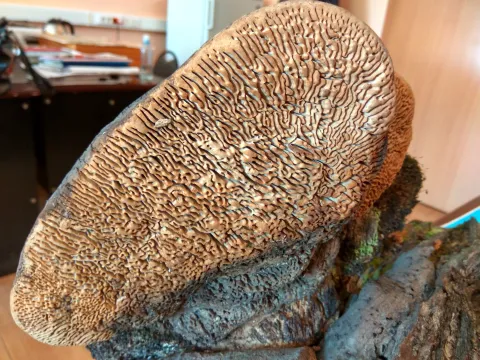
Oak Mazegill
Daedalea quercina
Daedalea quercina, commonly known as the Oak Mazegill, is a wood-decay basidiomycete fungus belonging to the Polyporaceae family. It is a known causative agent of brown cubical rot in hardwood trees.
What the section contains
Oak Mazegill
The fungus functions as a saprotroph, decomposing cellulose within the wood structure while leaving lignin behind, which results in a characteristic brownish color of the infected timber.
It typically gains access to the tree's interior through wounds, broken branches, or unsealed pruning cuts where the wood tissue is exposed to the elements.
The fungus produces perennial fruiting bodies on the trunk, which serve as the primary source for spore dispersal over extended periods of time.
Its mycelium deeply penetrates the wood, slowly breaking down structural integrity and eventually compromising the tree's overall stability.
The most visible signs of infection are the leathery, shelf-like fruiting bodies attached to the trunks or stumps of affected trees.
These fruiting bodies are identifiable by their unique labyrinthine or maze-like pore surface on the underside, which gives the species its common name.
Infected wood inside the tree becomes dry, brittle, and breaks into cubical chunks when handled, which is a classic symptom of brown rot decay.
Trees may exhibit general signs of decline, such as thinning foliage, branch dieback, or the appearance of longitudinal cracks along the bark surface.
In advanced cases, the fungal presence can be detected by the hollow sound produced when tapping the trunk or the presence of visible fungal mats inside cavities.
The development of Daedalea quercina is heavily favored by damp, stagnant conditions, particularly in areas where moisture remains trapped in wood crevices.
Trees that are already weakened by environmental stress, drought, or old age are significantly more susceptible to colonization by this fungus.
Proper aeration in the canopy and trunk area is essential to prevent spore germination, as stagnant air promotes the survival of fungal spores.
Wounds that are not sealed or treated properly serve as optimal entry points for the pathogen, especially during humid seasons when spore activity is high.
The fungus thrives in undisturbed environments like old orchards or wooded parks where large amounts of dead wood provide a persistent reservoir for the pathogen.
The primary danger posed by this fungus is the internal destruction of wood, which significantly reduces the structural load-bearing capacity of the tree.
Trees affected by advanced stages of brown rot are prone to sudden breakage during windstorms, creating a safety hazard for surrounding areas.
By interfering with the tree's internal vascular system, the fungus impairs the transport of nutrients and water, eventually leading to tree death.
Economic damage includes the loss of timber value and the cost associated with the removal of large, hazardous trees from managed landscapes.
Furthermore, the fungus acts as a persistent source of inoculum, potentially spreading to healthy, vulnerable trees in the immediate vicinity.
The best defense against this fungus is to maintain tree vigor through proper irrigation, fertilization, and general care to boost natural defense mechanisms.
Careful pruning practices are critical; always ensure that cuts are clean and treated with appropriate wood sealants or fungicides to prevent infection.
Regular visual inspections of tree trunks for any unusual growth or fruiting bodies are necessary for early detection and mitigation of the fungus.
Remove and destroy any infected wood or stumps to minimize the concentration of airborne spores within the gardening or forestry site.
In cases where the structural integrity of the tree is compromised by rot, professional removal is recommended to prevent accidental damage to property.