
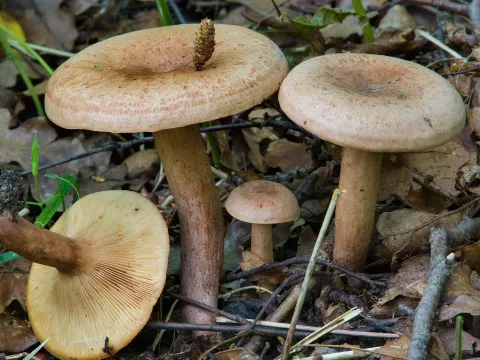
Oak milkcap
Lactarius quietus
Lactarius quietus, commonly known as the oak milkcap, is not a pathogen but a beneficial mycorrhizal fungus.
What the section contains
Oak milkcap
It establishes a symbiotic relationship with tree roots, specifically those of oak species, enhancing nutrient uptake.
The fungus does not invade host cells in a parasitic manner, nor does it destroy plant tissues.
In modern agronomy, it is classified as a symbiotic partner rather than a causative agent of plant disease.
Its mycelium extends into the rhizosphere, facilitating water absorption and mineral transport to the host tree.
The development of Lactarius quietus is strictly tied to the presence of oak trees as mycorrhizal hosts.
The fungus thrives in broad-leaved forests where soil moisture remains consistent during the growing season.
Humid conditions are essential for the production of fruiting bodies, usually occurring from late summer through autumn.
A soil structure rich in organic matter provides the necessary substrate for mycelial expansion.
Moderate temperatures ensure the metabolic activity required for the fungus to complete its reproductive cycle.
The fungus produces fruiting bodies with caps that are typically reddish-brown to cinnamon-brown in color.
The cap often exhibits faint concentric zones that are useful for visual identification in the field.
A milky white or watery latex is exuded when the gills are damaged, which does not significantly change color over time.
One of the most distinct features is the scent, which is frequently described as smelling like bedbugs or oily chemicals.
Gills are usually crowded and have a decurrent attachment to the stem, deepening in color as the specimen matures.
As a mycorrhizal fungus, Lactarius quietus does not cause economic damage to crops or forest plantations.
It poses no risk to the structural integrity of timber or the health of saplings growing in proximity.
There are no recorded instances where this species acts as an opportunistic pathogen or secondary invader.
Its role is vital for the health of mature oak trees, as the symbiosis improves resilience against abiotic stresses.
Therefore, it is considered an ecologically benign and highly valuable component of temperate forest systems.
There is no need for protective measures, fungicides, or control strategies against this mushroom species.
Manual removal of fruiting bodies is sufficient if their presence is undesirable in managed landscape areas.
Good soil drainage management can naturally regulate the moisture levels that promote fungal fruiting.
No agricultural protocol includes the eradication of this fungus as it is a natural part of forest soil health.
Promoting biodiversity and maintaining ecological balance is recommended rather than attempting to eliminate symbionts.