
Oak Ophiostomosis
Ophiostoma subannulatum
Description
Symptoms
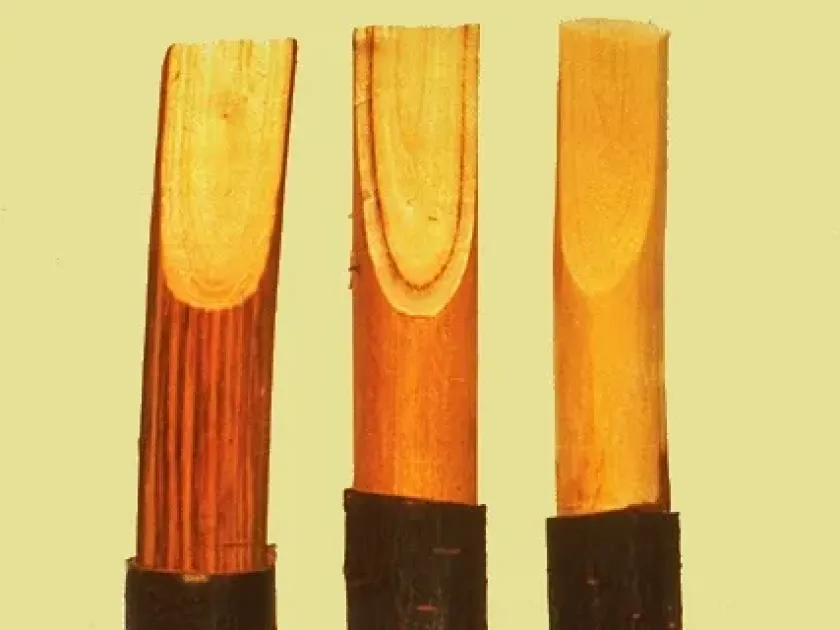
Early symptoms include a visible color change in the sapwood, characterized by radial blue or greyish-black streaks observed on cross-sections of the wood.
In the crown, the foliage shows signs of stress, starting with yellowing, curling, and premature shedding of leaves, which often progresses from the branches to the entire tree.
The bark may display necrotic patches, small cracks, or exudation of sap. Fine boring dust or frass found on the trunk surface indicates the presence of insect activity associated with the fungal invasion.
Peeling back the bark in affected areas reveals distinct, dark-stained wood, a clear indicator of systemic infection within the conductive tissues.
Advanced stages of the disease lead to severe crown dieback, resulting in the eventual death of the tree as its structural integrity and water transport capacity fail.
Pathogen
The causative agent of this disease is the microscopic ascomycete fungus Ophiostoma subannulatum. This pathogen belongs to a group of fungi known for colonizing the vascular systems of woody plants.
The fungus invades the xylem tissue, entering the tree primarily through bark wounds or via wood-boring insects, such as bark beetles, which serve as primary vectors.
The life cycle involves the formation of conidia and perithecia, which are adapted for dispersal by insects or air currents. Once established, the mycelium spreads rapidly through the tree's water-conducting vessels.
Ophiostoma subannulatum is characterized by high enzymatic activity, allowing it to degrade wood cell walls and colonize sapwood efficiently.
The fungus is highly specialized, maintaining a symbiotic-like relationship with various xylophagous insects, which ensure its transmission between host trees.
Conditions for development
The disease frequently targets trees weakened by environmental stressors such as prolonged droughts, extreme temperature fluctuations, or poor soil conditions.
Favorable conditions for infection include high humidity, which promotes spore germination, and moderate temperatures that facilitate rapid mycelial growth within the wood.
High population densities of insect vectors like bark beetles are a critical driver for the rapid spread of the disease across forest stands.
Accumulation of deadwood, logging debris, and standing dead trees provides a reservoir for the pathogen to survive and infect nearby healthy trees.
Mechanical damage caused during forest thinning or construction activities acts as an entry point for the fungus, significantly increasing the infection rate in local populations.
Why it matters
The primary economic harm stems from the degradation of timber quality; wood colonized by Ophiostoma species exhibits characteristic blue stain, making it unsuitable for high-value applications.
The disease disrupts the tree's internal water transport, leading to physiological drought and eventual decline, which reduces the overall value of the forest stand.
Infected trees become less resilient, often falling prey to secondary pests and additional fungal infections, which accelerates the collapse of local ecosystems.
Extensive outbreaks can lead to the loss of mature oak stands, negatively impacting forest biodiversity and ecosystem services provided by the trees.
Costs related to tree removal, salvage logging, and forest rehabilitation represent a substantial economic burden for forestry operations.
Protection
Effective management begins with strict sanitation: the prompt identification, removal, and proper disposal of diseased, infested, or dead trees to eliminate inoculum sources.
Control of insect vectors is crucial; this can be achieved through the use of pheromone traps to monitor and reduce populations of wood-boring beetles.
Minimizing mechanical injury to trees during maintenance and harvest operations is essential, as any wound acts as a potential infection court.
Proper forest management practices, including the removal of logging residues, help prevent the buildup of pest populations that transmit the fungal spores.
Regular monitoring of forest stands for symptoms, combined with maintaining tree vigor through appropriate site management, remains the most sustainable approach to protection.
Discussion
No discussions yet — be the first.