
Oak powdery mildew
Erysiphe alphitoides
Description
Symptoms
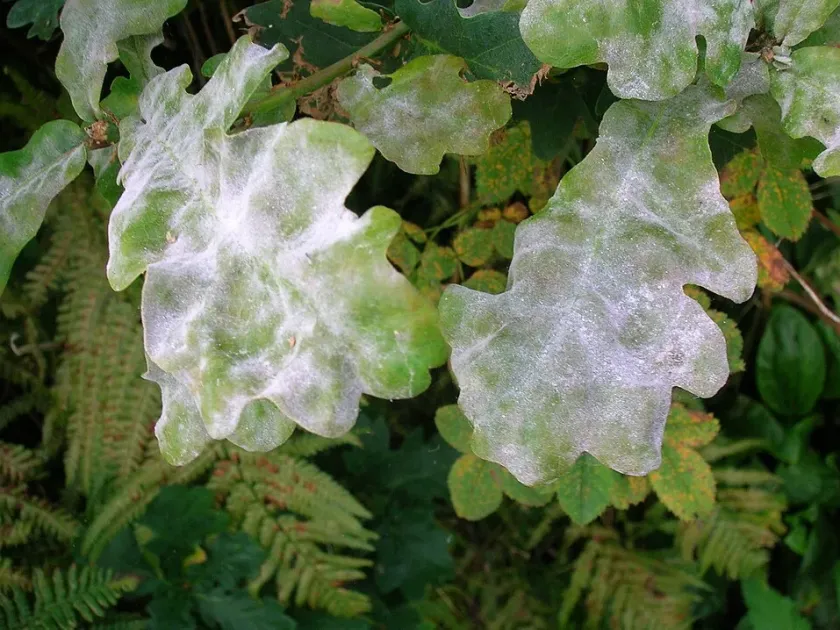
The most recognizable sign is the emergence of white, cobweb-like patches on the leaves, which eventually develop into a dense, dusty powdery coating.
Infection spreads to young, tender shoots, which often become stunted, twisted, and fail to reach their full physiological potential.
Extensive colonization of leaf surfaces can lead to necrosis, causing leaves to turn brown or reddish and eventually wither prematurely.
Tiny black dots, representing the fungal sexual reproductive structures, appear on the white mycelium in late summer, indicating the disease lifecycle.
Severe infestations cause premature leaf drop, which significantly weakens the tree's health and reduces its overall aesthetic and biological quality.
Pathogen
The disease is caused by Erysiphe alphitoides, a specialized ectoparasitic fungus belonging to the Ascomycota class, primarily infecting leaves and shoots.
The life cycle involves the production of conidia that facilitate rapid spread during the growing season, covering the foliage with a mycelial layer.
As the season progresses, the fungus produces cleistothecia—tiny, dark fruiting bodies—which serve as survival structures during the winter months.
The fungus develops superficial mycelium and derives nutrients from host tissues via specialized structures called haustoria penetrating the epidermis.
Primary inoculum sources include fallen leaves, infected current-year shoots, and overwintering dormant buds where the fungus persists.
Conditions for development
Favorable conditions for fungal development include warm temperatures combined with moderate to high humidity, typical of late spring and early summer.
Fluctuating temperatures and the presence of dew during early morning hours significantly enhance the germination rate of fungal spores.
Crowded plantings and lack of air circulation within the canopy create a microclimate that traps moisture and facilitates rapid disease spread.
Periods of drought can stress trees, making them more susceptible to colonization by Erysiphe alphitoides due to weakened defense mechanisms.
The disease thrives in environments where warm weather follows a wet period, providing optimal conditions for massive spore production.
Why it matters
Oak powdery mildew is particularly devastating for seedlings in forest nurseries, where it can cause significant growth reduction and mortality.
Mature trees suffer from impaired photosynthesis due to the fungal layer blocking sunlight, leading to decreased vigor and reduced annual growth.
Affected shoots often fail to lignify properly before autumn, making them extremely vulnerable to winter kill and frost damage in colder climates.
Weakened trees are more prone to secondary attacks by wood-boring insects and other pathogens, potentially leading to top dieback.
The economic impact involves diminished growth rates in commercial oak stands and a significant loss of value for nursery-grown planting material.
Protection
Preventive measures include planting resistant oak cultivars and maintaining appropriate spacing to ensure adequate airflow within the tree stands.
Sanitation practices, such as raking and removing infected leaf litter during autumn, are crucial for reducing the primary inoculum for the next year.
Fungicide applications, particularly sulfur-based treatments or systemic fungicides, are effective in nursery settings if applied at the first sign of infection.
Proper nutrient management, especially balanced fertilization, helps support tree health and increases natural resistance against fungal infections.
Regular pruning of infected branches and thinning of dense canopies significantly improve air movement, reducing the humidity necessary for spore development.
Discussion
No discussions yet — be the first.