
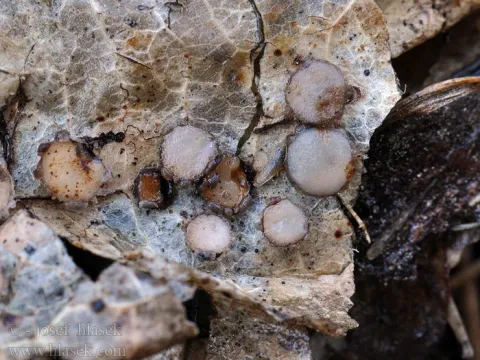
Oak leaf spot
Coccomyces coronatus
The causative agent of this disease is the ascomycete fungus Coccomyces coronatus. It is a parasite specifically targeting the leaves of various oak species.
What the section contains
Oak leaf spot
In the fungal life cycle, apothecia forming on fallen leaves from the previous season play a crucial role. These structures release spores that infect young leaves during the spring.
The disease is classified as a necrotic leaf spot. The pathogen penetrates plant tissues, destroying cells and disrupting photosynthesis, leading to localized leaf necrosis.
The fungus development is closely linked to the host's biology. The mycelium can persist in leaf litter, making the forest floor an ideal reservoir for recurring infections.
The biology of Coccomyces coronatus is specialized, affecting primarily the foliage, while the woody parts of the tree remain unaffected by the fungus itself.
The main signs of the infection appear as round or irregular spots on the oak leaves. Initially, these spots are yellowish, darkening over time.
Eventually, small black dots appear on the affected areas; these are the fungal apothecia. They are often found in clusters or scattered across the surface of the spot.
As the infection progresses, leaves may turn yellow, curl, and wither prematurely. This gives the tree a scorched appearance by mid-summer.
Severe infections lead to massive defoliation, which begins long before the natural autumn leaf drop season.
- Appearance of dark spots with black inclusions.
- Premature yellowing and leaf shedding.
- Reduced aesthetic value and crown vigor.
High humidity and moderate temperatures during spring and summer promote fungal development. Prolonged rainfall in May and June provides ideal conditions for spore dispersal.
Dense stands lacking good air circulation suffer more severely from leaf spot, as moisture tends to linger on the leaves for longer periods.
The presence of large amounts of un-decomposed leaf litter acts as a primary source of inoculum, facilitating reinfection of the trees in the following year.
Trees weakened by poor soil conditions or pest stress become significantly more susceptible to the pathogen.
The microclimate within a forest or park setting plays a decisive role in the rate at which fungal spores spread through the tree canopy.
The primary damage is the disruption of assimilation processes. Premature defoliation prevents the tree from storing necessary nutrients for winter survival.
Repeated infection over several seasons leads to significant tree decline, reduced annual growth, and lower vitality.
Oak trees weakened by leaf spot become more vulnerable to secondary pests, such as wood-boring insects, which can eventually lead to tree mortality.
In nurseries, this disease can lead to the culling of saplings as both their marketability and health are severely compromised.
Economic losses are associated not only with timber growth reduction but also with the costs of implementing protection measures in public and recreational areas.
The main preventive measure is the thorough removal and destruction (composting or burning) of fallen leaves, where the pathogen overwinters.
In parks and nurseries, applying fungicides during the leaf-bud break period is recommended to interrupt the primary infection cycle.
It is important to monitor the health of the stand, ensuring timely sanitary pruning and thinning to improve canopy aeration and reduce humidity.
The use of copper-based or systemic fungicides has proven effective when signs of the disease are identified early.
Maintaining good silvicultural practices, including fertilization to strengthen tree immunity, helps mitigate the risk of infection and the severity of its consequences.