
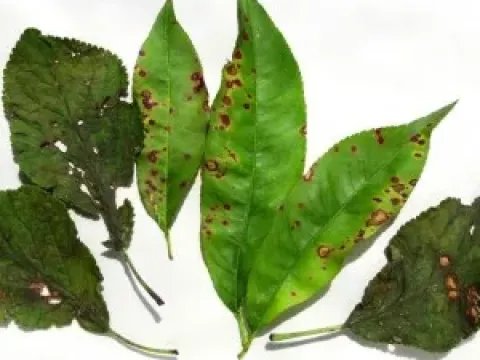
Shot hole disease
Clasterosporium
Shot hole disease is caused by the fungus Clasterosporium carpophilum (also known as Stigmina carpophila), which is a serious pathogen primarily affecting stone fruit trees.
What the section contains
Shot hole disease
The fungus survives the winter season as mycelium within infected twigs, buds, and the gum that exudes from bark lesions, serving as an overwintering reservoir.
During spring, in the presence of water films from rain or heavy dew, the fungus produces conidia which are disseminated by wind, splashing rain droplets, and insect activity.
Once they land on susceptible green tissue, the spores germinate and penetrate the host plant through stomata or small wounds on the surface of leaves and fruit.
The pathogen thrives in cool to moderate temperatures with high humidity, enabling rapid multiple infection cycles throughout the growing season if conditions persist.
The most distinctive symptom is the development of small, circular, reddish-brown spots on leaves, which are often surrounded by a darker or yellowish halo.
As the infection progresses, the dead tissue in the center of these spots dries out and drops away, creating the characteristic ragged holes that give the disease its name.
Young shoots often develop dark purple or reddish spots that may expand into sunken lesions, frequently resulting in a condition known as gummosis, where sticky sap exudes from the site.
Fruits may exhibit similar symptoms with small, raised, purple-edged spots that can crack as the fruit expands, leading to deformation and potential rot.
Infected buds may appear dark and varnished, failing to open in the spring, or they may die during the winter, resulting in sparse foliage on affected branches.
The primary driver for the spread of Clasterosporium is high ambient humidity and prolonged periods of wet weather, particularly during the early spring development.
Temperatures ranging from 15 to 25 degrees Celsius are considered highly favorable for the fungus to complete its life cycle and spread rapidly across the orchard.
Poor orchard sanitation, such as failing to prune infected wood or leaving diseased fruit debris on the ground, significantly increases the inoculum level for the following year.
Dense canopies with restricted airflow maintain a humid microclimate that allows the fungus to remain active for longer periods compared to well-pruned trees.
Tree stress, whether from frost damage, poor nutrient management, or drought, makes the bark and tissues more susceptible to initial fungal colonization.
Severe infection leads to premature leaf drop, which significantly reduces the tree's photosynthetic capacity, causing overall weakening and reduced winter hardiness.
Persistent attacks on twigs and branches can lead to dieback, which alters the canopy structure and reduces the tree's productive area over subsequent growing seasons.
Fruit quality is drastically compromised, rendering the harvest unmarketable due to unsightly lesions, deformation, and an increased risk of secondary fruit rotting pathogens.
Gummosis caused by the fungus depletes the tree's energy reserves and creates entry points for other opportunistic pathogens and wood-boring insects.
If left unmanaged, chronic shot hole disease can lead to the gradual decline and eventual death of the affected trees, especially in younger, vulnerable specimens.
Effective management begins with strict sanitation, including the pruning and removal of all infected twigs and dead branches to eliminate the primary sources of inoculum.
Applying copper-based fungicides during the dormant period, particularly at the green tip stage, provides a protective barrier against the initial spring infection.
Regular monitoring during the growing season is essential, followed by timely application of systemic fungicides if environmental conditions favor disease spread.
Promoting tree vigor through balanced fertilization and proper irrigation helps the plant develop natural defenses and recover from minor infections more efficiently.
- Prune trees to improve light penetration and airflow in the canopy.
- Disinfect pruning tools between trees to prevent the spread of fungal spores.
- Clean up all fallen leaves and debris from under the trees during autumn.
- Select resistant varieties if shot hole is a recurring problem in the area.