
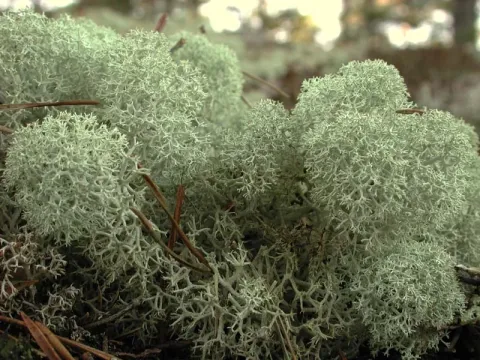
Star Reindeer Lichen
Cladonia stellaris
It is important to clarify that Cladonia stellaris (commonly known as the Star Reindeer Lichen) is not a plant disease. It is a species of fruticose lichen in the family Cladoniaceae, which is ecologically significant but poses no risk to agricultural or horticultural crops.
What the section contains
Star Reindeer Lichen
Biologically, this organism is a symbiotic association between a fungus (the mycobiont) and an alga (the photobiont). It grows on the ground in forest habitats, particularly in pine forests, and is a vital component of Northern forest ecosystems.
As a non-parasitic organism, it lacks the mechanisms to infect plants, such as haustoria or invasive mycelia. It does not obtain nutrients from living plant tissues, nor does it excrete toxic metabolites that could harm agricultural production.
Mistaking this lichen for a plant disease is a common taxonomic error. In an agronomic context, its presence indicates specific environmental conditions, such as nutrient-poor soil and high air quality, rather than an outbreak of a pathogenic infection.
Therefore, Cladonia stellaris should be classified as a natural element of the environment rather than a target for pest management or plant pathology control strategies.
The Star Reindeer Lichen is characterized by its densely branched, bushy thallus. Its structure is composed of intricate, rounded, coral-like branches that form a distinct star-shaped pattern, which is the origin of its specific name.
The color of the lichen ranges from whitish-gray to pale yellow or light green. Its surface is typically dry and firm to the touch, though it becomes pliable when moisture levels are high.
It does not possess true roots; instead, it anchors itself to the substrate via weak attachment points. It grows directly on the soil surface, sand, or moss-covered forest floors, often forming extensive, uniform carpets.
Unlike fungal pathogens that produce spots, blights, or necrotic lesions, Cladonia stellaris growth is uniform and does not cause visible damage to the surrounding vegetation.
When examined in the field, one will notice the absence of decay or yellowing on nearby plants, confirming that the lichen is merely occupying the space as a primary colonizer of nutrient-poor habitats.
Cladonia stellaris thrives in open, well-lit environments where competition from higher plants is minimal. It is typically found in subarctic and temperate forest regions with sandy or rocky soils.
It is highly sensitive to soil fertility; specifically, increased nitrogen levels from fertilizers or pollution cause the lichen to decline. This makes it an excellent bioindicator of pristine, non-industrialized environments.
Growth is extremely slow, often requiring several decades to form mature mats. It relies primarily on atmospheric moisture and precipitation for its nutrient uptake, rather than the underlying soil.
Temperature fluctuations are generally tolerated well, though the species is sensitive to mechanical disturbances, such as heavy trampling by livestock or machinery, which can permanently destroy its brittle thallus.
In terms of climate, it prefers cool to cold temperatures, making it a dominant groundcover in boreal zones, where it successfully competes with other organisms in limited-nutrient environments.
This species causes zero economic harm to agricultural systems. Because it requires low-nutrient soil, it does not colonize fertile farmland, thus posing no competition to cash crops.
There are no known instances where Cladonia stellaris suppresses crop growth through allelopathy or resource depletion. It remains within its natural ecological niche, often acting as a protective layer that prevents soil erosion.
The only minor concern for land management is its high flammability during dry seasons. As a dry, branched lichen, it can facilitate the rapid spread of ground fires if ignitions occur near its habitat.
In forestry and pastoral sectors, it is viewed as a valuable natural resource, serving as a primary winter food source for reindeer and caribou populations in Northern regions.
Consequently, no protective measures or eradication strategies are necessary for this species, as it represents a healthy, non-pathogenic component of the local ecosystem.
No chemical, biological, or physical controls are used against Cladonia stellaris in agricultural practice, as it is not a pathogen. Standard fungicides are ineffective and unnecessary for lichen management.
If land managers wish to clear areas occupied by this lichen, the most effective method is simply to improve soil fertility. Nitrogen supplementation through fertilizers naturally suppresses the lichen and encourages the growth of competing grasses and herbs.
Cultivation and soil aeration are sufficient to remove existing mats. Once the soil structure is disrupted, the lichen is easily replaced by secondary vegetation, rendering specific "control" measures redundant.
Preventive fire management, such as maintaining firebreaks near forest fringes, is the only recommended practice for areas where the lichen grows in abundance to protect against fire hazards.
In conclusion, the professional agronomist should regard Cladonia stellaris as a sign of environmental stability and not a disease-causing agent requiring any form of eradication.