
Steccherinum
Steccherinum
Description
Symptoms
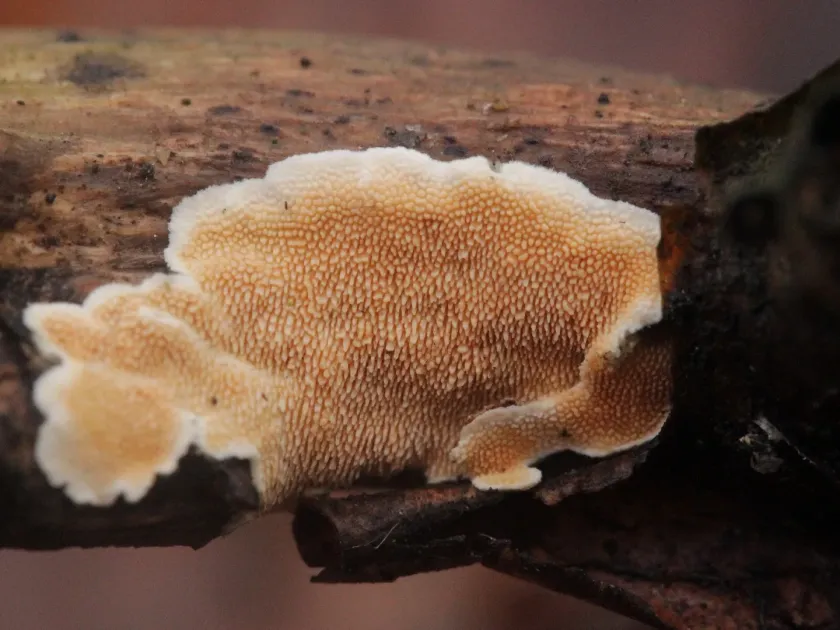
The primary visual sign of Steccherinum fungi activity is the emergence of characteristic fruit bodies on the bark and wood of fruit or forest trees. They are distinct due to their hymenium, which features spine-like structures.
In affected areas, the bark tissue eventually dies, becoming brittle and changing color to a darker or grayish hue. The fungus often settles in areas of mechanical damage, pruning cuts, or frost cracks.
At advanced stages, you can observe depressions in the wood that turn into large ulcers. The inner tissues of the trunk may develop a fibrous texture due to the destruction of lignin by the fungus.
The mycelium often spreads beneath the bark, causing it to peel away from the wood. In severe cases, the infected branches or trunk sections lose structural integrity and may snap easily during wind events.
When inspecting sections of infected wood, one can often find specific discolored zones accompanied by the characteristic smell of mycelium, indicating deep penetration of the pathogen.
Pathogen
The disease is caused by basidiomycete fungi belonging to the genus Steccherinum. These are saprotrophic or facultative parasitic organisms capable of actively decomposing wood components.
The fungus reproduces via spores, which are dispersed by wind or insects, landing on vulnerable parts of the tree. During growth, the mycelium penetrates wood cells, secreting enzymes to break down cellulose and lignin.
Biologically, this genus belongs to the group of fungi causing white rot. Active degradation of wood structure leads to a loss of mechanical stability in the affected plant.
The lifecycle of the fungus is closely linked to environmental humidity and the availability of dead or weakened wood. It can persist in wood residues for many years.
The fungus is perennial and can continue its development over several seasons if no sanitary measures are taken to remove infected tissue.
Conditions for development
Steccherinum development is stimulated by high air humidity and moderate temperatures. Weakened trees experiencing stress from drought or waterlogging are the most susceptible to infection.
An important factor in spread is open wounds on trunks and branches. Unprotected surfaces after pruning become entry points for fungal spores to penetrate deep tissue layers.
Dense plantings with poor ventilation create a microclimate favorable for spore germination. Moisture stagnation in the canopy promotes mycelium growth in bark micro-cracks.
The presence of large amounts of plant debris and unremoved diseased branches increases the overall infectious background of the orchard. The fungus spreads actively in the absence of regular sanitary pruning.
The fungus overwinters as mycelium inside the infected wood or as fruit bodies, which retain their ability to release spores even under adverse conditions.
Why it matters
The main danger of Steccherinum is reduced productivity and the premature death of fruit crops. The destruction of conductive tissues disrupts tree nutrition, leading to gradual branch dieback.
Wood damage makes trees hazardous. Due to the loss of trunk or scaffold branch strength, sudden breakage is possible even under minor weather loads.
Lowered tree immunity makes the plant more susceptible to secondary infections and pests. Ultimately, this leads to the degradation of the orchard and the necessity of removing the trees.
Economic damage involves both direct crop losses and the costs of maintaining diseased stands. The spread of infection to healthy trees requires significant efforts to localize the outbreak.
Infected trees exhibit stunted growth, premature leaf drop, and poor fruit ripening, which significantly reduces the commercial quality of the harvest.
Protection
The foundation of protection is strict adherence to agronomic practices. It is crucial to perform sanitary pruning in a timely manner, removing and burning all infected parts along with the fungal fruit bodies.
Any mechanical damage to the trunk and pruning cuts must be immediately disinfected with copper sulfate solution or horticultural wax. This prevents direct spore entry into unprotected tissues.
Maintaining a high level of orchard hygiene is recommended: balanced fertilization and proper irrigation increase tree resistance to fungal diseases.
If infection foci are discovered, it is advisable to treat the canopy with broad-spectrum fungicides. It is important to follow the frequency of applications according to the instructions for each specific product.
- Regular monitoring of bark and wood health.
- Cleaning infected areas down to healthy tissue.
- Disinfecting garden tools after working with diseased trees.
- Whitewashing trunks with lime mixed with fungicides.
- Removing stumps and decaying wood from the site.
Discussion
No discussions yet — be the first.