
Stegophora leaf spot
Stegophora
Description
Symptoms
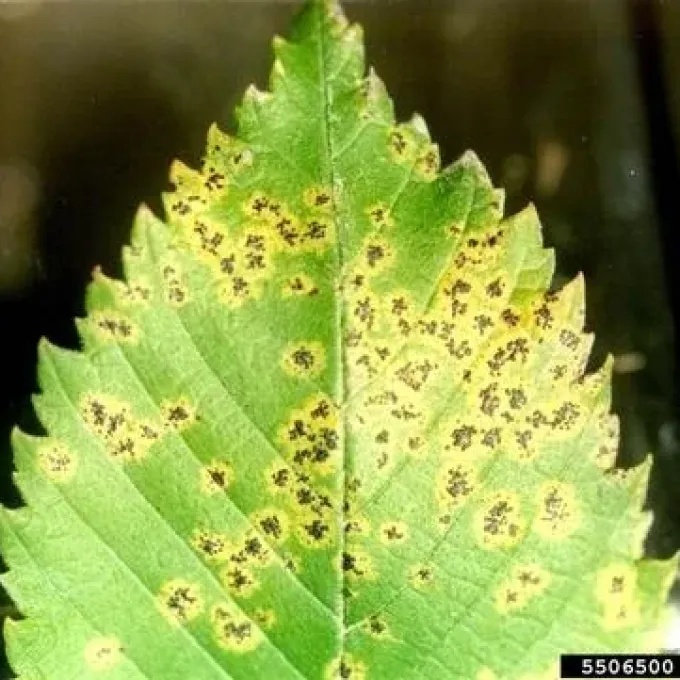
Symptoms typically start as small, irregular light-colored spots that gradually turn dark brown or black as the tissue dies.
On the surface of these spots, characteristic tiny black dots appear; these are the fruiting bodies of the fungus that produce infectious spores.
Severe infestations cause significant leaf yellowing, leading to premature leaf drop, which often happens in mid-to-late summer.
In addition to leaf damage, the pathogen can cause necrotic lesions on young twigs, potentially stunting the tree's growth and development.
- Light-colored leaf spots turning dark.
- Visible black fungal fruiting bodies.
- Premature leaf defoliation.
- Necrosis on young stem tissues.
Pathogen
The disease known as Stegophora leaf spot is caused by fungi of the Stegophora genus, most notably Stegophora ulmea, which primarily infects elm trees.
These fungi are ascomycetes that undergo complex lifecycles, surviving the winter in fallen infected leaves and producing spores during the spring.
The pathogen utilizes a two-stage reproductive process: asexual conidia that spread during the growing season and sexual ascospores released from overwintering structures.
Once the spores land on a susceptible leaf surface, they penetrate the epidermis and begin to consume the host tissues, leading to localized necrosis.
The rapid multiplication of the pathogen during wet conditions allows the fungus to colonize large portions of the host's canopy effectively.
Conditions for development
Stegophora thrives in environments characterized by high humidity and frequent rainfall, which facilitate spore germination and infection.
Dense canopies with poor air circulation create a microclimate that prevents leaves from drying, giving the fungus a perfect opportunity to establish.
The disease is most prevalent in years with wet spring weather, as moisture is essential for the dissemination of primary inoculum from overwintered leaves.
Plants that are stressed due to nutrient deficiency or drought are generally more susceptible to fungal entry and subsequent damage.
Optimal temperatures for the fungus typically range from 15 to 22 degrees Celsius, aligning with the spring growth spurt of the host plants.
Why it matters
The primary damage caused by this disease is the reduction in photosynthetic capacity due to the loss of leaf area from spotting and early leaf drop.
The loss of leaves inhibits the plant's ability to store sufficient carbohydrates, which reduces the tree's overall vigor and cold tolerance.
Repeated yearly infections can lead to branch dieback, especially in the upper parts of the tree, significantly impairing its structural health.
For nursery owners, this disease is a major issue as it ruins the aesthetic value of seedlings and impacts their overall survival rates after transplanting.
The stress induced by the infection makes the host tree much more vulnerable to secondary pests and various opportunistic pathogens.
Protection
Sanitation is the most critical control measure: gathering and destroying all fallen leaves at the end of the season prevents the pathogen from overwintering.
Pruning the canopy to increase airflow and sunlight penetration significantly lowers the probability of successful fungal infection.
Fungicide applications, particularly those containing copper or systemic triazoles, are effective when applied at the onset of symptoms.
Maintaining balanced soil fertility helps the plant maintain its natural defense systems and promotes vigorous, resilient growth.
When selecting planting sites, ensuring proper spacing between trees minimizes the risk of humidity buildup and limits the spread of disease.
Discussion
No discussions yet — be the first.