
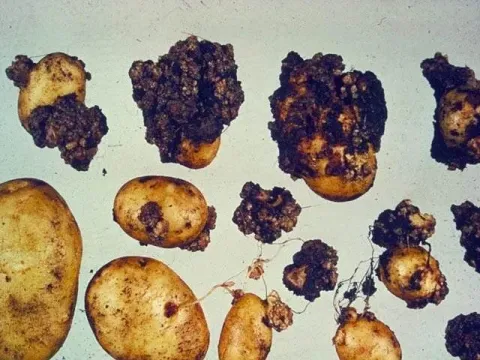
Chytrid fungi
Chytridiales
Chytrid fungi (Chytridiales) are members of the Chytridiomycota phylum, representing some of the most primitive fungal organisms existing in soil and aquatic environments.
What the section contains
Chytrid fungi
The pathogen reproduces via motile zoospores, which possess a single flagellum, allowing them to swim through water films to reach plant roots.
They act as intracellular parasites, invading the host cells and deriving essential nutrients directly from the plant's cytoplasm to sustain their life cycle.
In the soil, these fungi produce resilient resting spores (cysts) that can withstand extreme environmental conditions for many years until a host is available.
Most species within this order are obligate parasites, meaning they are entirely dependent on host plant tissue for growth, making their management a significant challenge.
A hallmark sign of chytrid infection is the development of abnormal growths, galls, or tumors on roots and other subterranean plant parts.
Above-ground symptoms often include stunted growth, chlorosis of the leaves, and premature wilting, which can be misdiagnosed as nutrient deficiencies or drought stress.
Affected root systems typically become fragile, dark in color, and may show extensive decay due to the destruction of root tissues and secondary infections.
In young crops or seedlings, severe infestation can cause damping-off, leading to total plant collapse and loss of the population.
Microscopic examination of affected tissue reveals numerous zoosporangia, which occupy the epidermal cells and disrupt the normal function of the root system.
Chytrid fungi thrive in high-moisture conditions, as the motile zoospores require a film of water to move effectively and find a host plant.
Optimal temperatures for development range from 15 to 22 degrees Celsius, making the disease most active during cool, wet spring or autumn months.
Acidic soil conditions significantly favor the proliferation of these fungi, whereas neutral or slightly alkaline soils often inhibit their spread.
Continuous cropping and the absence of adequate crop rotation allow the pathogen to build up in the soil, leading to significant outbreaks in subsequent years.
Spread is facilitated by contaminated agricultural equipment, infected nursery stock, and the movement of surface water during heavy rain events.
The primary damage caused by chytrid fungi is the compromise of the plant's vascular system, preventing the uptake of vital water and minerals from the soil.
Infestation leads to reduced yields and inferior quality of root crops, causing substantial economic losses in vegetable production and horticulture.
The persistence of resting spores in the soil makes infested fields unsuitable for sensitive crops for extended periods, complicating long-term farm management.
Infected roots are highly susceptible to secondary pathogens, including bacteria and other soil fungi, which accelerate the deterioration of the plant.
Effective control is difficult because the resting spores are highly resistant to standard fungicides and can survive in the soil for a decade or more.
Strategic crop rotation is the most critical control measure, as it disrupts the pathogen's life cycle by removing susceptible hosts from the field.
Adjusting soil pH by liming acidic soils can create an environment unfavorable for the pathogen and help manage the severity of the infection.
Prioritize the use of certified disease-free seeds and planting material to prevent the introduction of the pathogen into non-infested fields.
Sanitation practices, including the cleaning of tools and machinery between fields, are essential to stop the mechanical spread of soil-borne resting spores.
- Improve drainage systems to prevent waterlogging.
- Cultivate resistant crop varieties where available.
- Remove and destroy severely infected crop debris.