
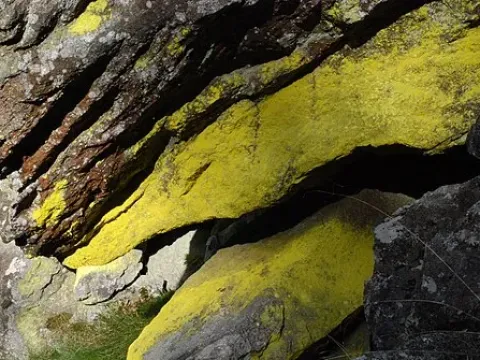
Chrysothrix lichen
Chrysothricaceae
Chrysothrix is a genus of lichens belonging to the Chrysothricaceae family. These organisms are formed by a symbiotic relationship between fungi and algae, relying on photosynthesis and atmospheric moisture for survival.
What the section contains
Chrysothrix lichen
They are classified as epiphytes, meaning they use tree bark as a substrate for attachment without penetrating living plant tissues or deriving nutrients directly from the host tree.
The thallus of Chrysothrix is characteristically leprose or powdery. These lichens grow very slowly, gradually expanding their coverage over the surface of trunks and branches.
Different species within this genus have varying light requirements, though they generally prefer stable environments. They are common in older, undisturbed orchards and woodland areas.
Their presence is often an indicator of good air quality, as they are highly sensitive to pollution, particularly sulfur dioxide, which inhibits their development.
The primary symptom of a Chrysothrix infestation is the appearance of a bright, powdery coating on the tree bark. The color typically ranges from vivid lemon-yellow to golden-yellow.
The lichen does not form a leafy structure but instead looks like finely scattered dust or grains sprayed across the bark. This granular texture is a distinct feature of the genus.
In mature cases, the colonies can merge to cover large sections of the trunk. This dramatically changes the texture and color of the bark, giving it a bright, dusty appearance.
These patches can be easily scraped off the surface. Unlike fungal pathogens that cause lesions or decay, these lichens do not leave behind open wounds when removed.
The appearance of these yellow patches on young or fast-growing trees is often a sign of reduced vitality or poor environmental circulation around the canopy.
High humidity is the most critical factor for the development of Chrysothrix. Dense canopies that lack airflow create a perfect, consistently damp microclimate for these organisms.
They thrive in shaded areas where direct sunlight is minimal. Constant shade prevents the bark from drying out, allowing the lichen to establish and spread effectively.
Weakened or elderly trees with rough, cracked bark provide the best anchor points for the lichen. Trees that have slowed their growth rate are colonized much faster than vigorous, healthy ones.
Periods of prolonged rainfall and misty weather are ideal for the dispersal of soredia, the reproductive units that allow the lichen to colonize new parts of the tree.
Conversely, very dry and windy environments, as well as areas with heavy industrial pollution, significantly hinder the growth and spread of these lichen species.
Chrysothrix lichens are not directly parasitic and do not cause systemic disease in trees. However, they can interfere with the tree's physiological processes when present in high density.
A thick layer of lichen can block lenticels, which are essential for gas exchange in the bark. This interference can slightly impede the respiration of the stem and branches.
The lichen acts as a protective habitat for various pests, including scale insects and mites. These pests can overwinter under the crust of the lichen, protected from both weather and pest control sprays.
Extensive coverage reduces the aesthetic value of the garden. Furthermore, it serves as a warning sign to the gardener that the tree may be aging or experiencing reduced vigor.
While rarely the primary cause of tree death, heavy lichen growth is often a symptom of underlying poor health or suboptimal orchard management practices.
Good garden hygiene is the best defense. Regular pruning improves airflow and sunlight penetration within the canopy, making the environment unfavorable for lichen colonization.
Mechanical removal is a highly effective control measure. During the dormant season, use a wire brush to gently scrape off the lichen from the bark without damaging the inner tissues.
Whitewashing the trunks with lime-based solutions is a traditional and effective method. The high pH of the lime creates a surface that is toxic to lichen spores and inhibits regrowth.
Applying a 3-5% iron sulfate solution during the dormant stage can effectively kill lichen colonies. This treatment is safe for the tree and provides a clean slate for the bark.
- Regular pruning to increase canopy ventilation
- Mechanical scrubbing of bark during winter
- Trunk whitewashing with lime
- Monitoring tree vigor and providing adequate fertilization
- Dormant season copper or iron-based sprays