
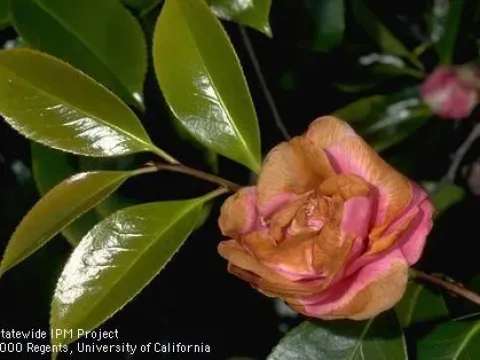
Ciborinia
Ciborinia
The disease is caused by fungi of the genus Ciborinia, which belong to the class Discomycetes. These are pathogenic ascomycetes characterized by their ability to produce sclerotia — dense, hardened structures of fungal mycelium that allow the pathogen to survive harsh conditions.
What the section contains
Ciborinia
The life cycle begins with the germination of sclerotia that have overwintered in the soil or on plant debris. Under appropriate conditions, these structures produce apothecia, which are small, cup-shaped fruiting bodies.
These apothecia release ascospores into the air, which serve as the primary source of infection for healthy plants at the beginning of the growing season.
Once the pathogen infects a plant, the mycelium rapidly colonizes the host tissues, secreting enzymes that break down cell walls and absorb nutrients, leading to tissue degradation.
The pathogen's biological resilience and ability to form sclerotia make it a persistent threat in agricultural environments, requiring careful long-term management.
The initial symptoms typically manifest as water-soaked spots on leaves, stems, or flower buds, which gradually turn brown or necrotic as the infection progresses.
In high-humidity conditions, a white, fluffy fungal growth (mycelium) often appears on the surface of infected tissues, signaling active fungal expansion.
A definitive diagnostic sign of Ciborinia infection is the presence of sclerotia — hard, black, seed-like structures forming within the stem tissues or on the surface of decayed plant parts.
Affected ornamental plants often exhibit premature wilting of buds, which may fail to open or become deformed and decay due to secondary bacterial infections.
Severe cases result in the collapse of the entire plant, as the fungus penetrates the root crown and disrupts the transport of water and nutrients through the vascular system.
High humidity and moisture are the primary environmental drivers for the development and spread of Ciborinia, as these conditions are essential for spore germination and infection.
The optimal temperature range for the pathogen's growth is typically between +15°C and +22°C (59°F–72°F), covering the active growth phase of many susceptible crops.
Dense planting configurations create microclimates with stagnant air and high local humidity, which significantly increase the risk of disease transmission between neighboring plants.
Plant residues containing sclerotia act as a major reservoir for the pathogen, allowing it to persist in the soil for years and initiate new infections in subsequent seasons.
Poor soil drainage or excessive irrigation practices that keep the plant base consistently damp create the perfect environment for the pathogen to thrive.
Ciborinia causes significant economic damage by reducing crop yields and rendering ornamental products unsellable due to their unsightly appearance and decay.
In nursery settings, the disease can cause catastrophic losses by infecting young seedlings in a short timeframe, necessitating large-scale culling of stock.
The rapid spread of the fungus means that infection foci can quickly expand to encompass entire fields or greenhouse benches if not identified and isolated promptly.
Since the pathogen often attacks the vascular tissues, plants frequently perish entirely, making recovery impossible once the symptoms become clearly visible.
The presence of the fungus in the soil complicates land use, as it may prevent the cultivation of susceptible host plants for several years without intensive intervention.
The cornerstone of management is a robust crop rotation strategy, where susceptible host plants are excluded from the affected field for at least 3-4 years to starve the pathogen.
Sanitation is critical; all infected plant debris must be carefully collected and destroyed to reduce the build-up of sclerotia in the soil profile.
- Ensure proper plant spacing to improve air circulation and reduce humidity around the base.
- Optimize irrigation practices to ensure the soil surface dries adequately between waterings.
- Use certified, disease-free starting materials to prevent introducing the pathogen to the site.
- Apply systemic fungicides as part of an integrated pest management program upon the first sign of infection.
Biological control agents, such as beneficial fungi (e.g., Trichoderma species), can be incorporated into the soil to competitively inhibit the germination and growth of the pathogen.
Regular field scouting is essential to identify early infection sites, allowing for rapid removal of affected plants and targeted treatments to prevent wider dissemination.