
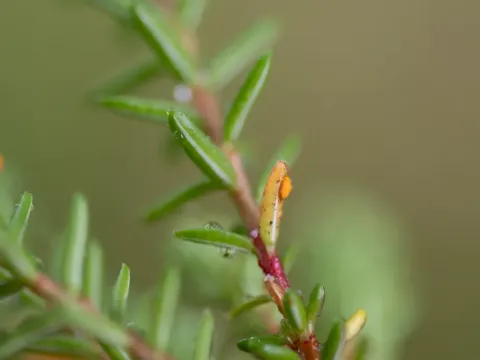
Crowberry rust
Chrysomyxa empetri
The causal agent of this disease is the highly specialized fungus Chrysomyxa empetri, a member of the order Pucciniales (rust fungi). It is an obligate parasite, meaning it requires living host tissue to complete its life cycle and derive essential nutrients for its survival.
What the section contains
Crowberry rust
The fungus produces various types of spores, including aecia and uredinia, on the surface of infected leaves. These spores are easily dispersed by wind and splashing rain, allowing the disease to spread rapidly across berry plantations during the growing season.
A distinctive biological feature of Chrysomyxa empetri is its adaptation to the cool climates preferred by its host, the crowberry (Empetrum). The fungus effectively survives the winter in infected evergreen foliage or dormant plant tissues, ensuring a new outbreak of the disease each spring.
The mycelium penetrates the intercellular spaces of the plant tissue, extracting nutrients and disrupting the plant's metabolic pathways. This parasitic activity drains the plant of the energy reserves needed for fruit production and cold hardiness.
Due to its specialized nature, this rust fungus focuses specifically on the Empetrum genus. This narrow host range makes it essential for growers to identify the pathogen accurately, as general-purpose fungicides may not always be effective against this specific rust strain.
The most visible symptom of Crowberry rust is the appearance of small, bright orange or yellow pustules on the underside of the leaves. These pustules contain massive amounts of fungal spores and are a key diagnostic feature of the disease.
On the upper side of the leaves, chlorotic spots appear directly above the pustules. Over time, these spots become necrotic and brown, leading to a general decline in the leaf's appearance and function. In severe cases, the affected foliage turns brittle and drops prematurely.
Infected shoots often exhibit stunted growth and visible deformation. The fungal infection can cause the death of shoot tips, which compromises the structure and long-term health of the crowberry plant.
If examined closely, the orange powder-like substance can be seen covering the leaf surface. This powder consists of millions of spores ready to be transported by the wind, which emphasizes how easily the disease can spread throughout a dense planting area.
Persistent infection leads to a cumulative loss of foliage, which is particularly detrimental to crowberry because it is an evergreen shrub. This premature loss of leaves weakens the entire plant and makes it susceptible to additional environmental stress.
High relative humidity and consistent rainfall are the primary drivers for the development and spread of Crowberry rust. Moisture on the leaf surface is critical for the germination of spores and their subsequent penetration into the plant epidermis.
Poorly ventilated planting sites with high plant density create a favorable microclimate for the disease. Stagnant, humid air around the base of the plants acts as a catalyst, allowing the fungus to propagate and infect neighboring plants with ease.
The pathogen thrives at moderate temperatures ranging from +15 to +22 degrees Celsius. During these conditions, the fungal life cycle accelerates, potentially resulting in multiple cycles of sporulation and infection within a single growing season.
Frequent fog and heavy morning dew also contribute significantly to the disease cycle. These environmental factors provide the necessary hydration for the fungus to initiate infection on newly developing shoots during the active growth period.
The presence of old, infected plant debris on the ground serves as a reservoir for the fungus. If this debris is not cleared away, it provides a consistent source of inoculum that can trigger new infections when conditions turn favorable again.
The primary economic impact of Crowberry rust is the significant reduction in fruit yield. Because the plant's energy is diverted towards fighting the fungal infection rather than fruit development, the berries become smaller, fewer in number, or fail to ripen properly.
The premature loss of leaves significantly impairs the plant's photosynthetic capacity. For an evergreen like the crowberry, this is devastating, as it prevents the plant from accumulating necessary reserves to survive the harsh winter conditions.
The disease also ruins the commercial value of the crop. Foliage affected by rust is often considered unusable, as the infection degrades the chemical compounds that give crowberry its medicinal and nutritional properties.
By weakening the host, the rust fungus increases the plant's susceptibility to secondary pathogens and pests. This makes the affected plants a liability, potentially requiring intensive care or total removal to protect the rest of the plantation.
Financial losses for growers include the costs of fungicides, labor for cleaning up infected areas, and the potential loss of plants that are too damaged to recover, which may require replanting and long wait times for new harvests.
The most effective strategy is a combination of good horticultural practices and timely interventions. Providing sufficient spacing between plants ensures better air circulation, which prevents the accumulation of the moisture required by the fungus.
Sanitation is crucial. Regularly remove and destroy infected shoots, and ensure that all fallen leaves are cleared from under the plants. Burning or deep burial of this debris destroys the primary source of overwintering inoculum.
When environmental conditions favor the disease, application of copper-based fungicides or appropriate systemic triazole treatments can prevent or limit the spread of rust. Always apply treatments preventatively during the most vulnerable early growth stages.
Maintaining a balanced nutritional program for the crowberries can boost their natural immunity. It is important to avoid excessive nitrogen, which produces succulent growth that is much more attractive and vulnerable to fungal penetration.
When establishing a new planting, source high-quality, disease-free planting stock from reputable suppliers. Furthermore, establish new beds far away from any existing wild or infected crowberry populations to reduce the risk of cross-contamination.