
Cronartium yamabense
Cronartium yamabense
Description
Symptoms
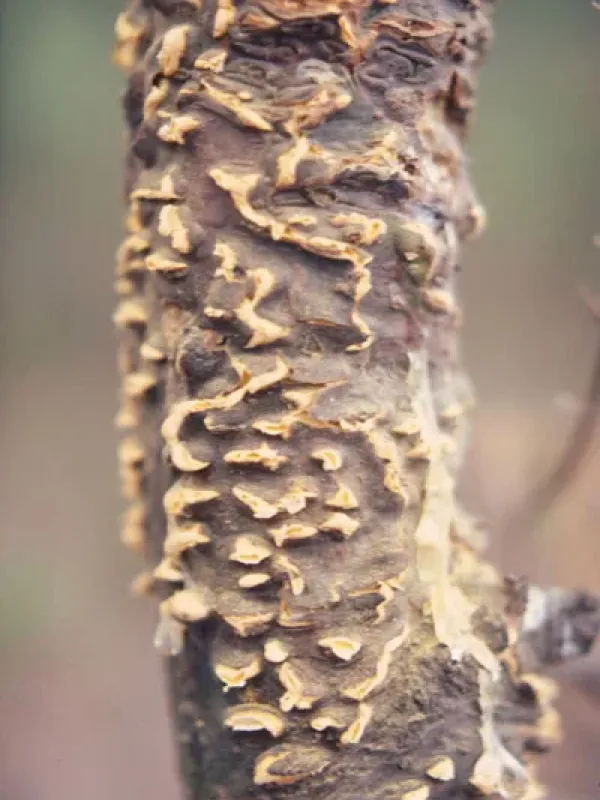
The most prominent sign of infection is the development of characteristic swellings and galls on the bark of trunks or main branches. In areas of infection, the bark often cracks, exposing the underlying woody tissues to further damage.
During the spring, aecia — the fruiting bodies of the fungus — form at the infection sites, appearing as orange or yellowish blisters. Once these blisters rupture, they release a mass of aeciospores, which appear as a fine, bright orange powder.
Needles on infected branches eventually turn yellow and drop prematurely. The affected zones often exhibit heavy resin flow, which acts as a defense mechanism by the tree against the mechanical destruction caused by the fungal mycelium.
The visual appearance of the crown changes over time, often characterized by the flagging or drying out of specific sections. In severe cases, particularly with trunk infections, the tree may exhibit localized thickenings or distorted growth patterns.
- Appearance of orange aecia on the bark.
- Hypertrophy of tissues at the infection site.
- Premature needle cast.
- Heavy resin exudation.
- Dieback of branches or tree tops.
Pathogen
The causative agent of the disease is the specialized rust fungus Cronartium yamabense, belonging to the Basidiomycota division. It is an obligate parasite, which often requires an alternate host to complete its complex life cycle, a trait common to many species within the Cronartium genus.
The biology of the pathogen is closely tied to its development within the woody tissues of the host. The fungus penetrates living plant cells, forming a mycelium that spreads throughout the vascular system, causing profound physiological disruptions to the host's metabolism.
The life cycle includes the production of several spore types, including aeciospores and urediniospores. Aeciospores are particularly critical for the primary infection of conifers, as they are wind-dispersed over significant distances during the spring season.
The pathogen demonstrates high adaptability to cool and temperate climates. Its mycelium is capable of persisting within the host tissues for many years, ensuring a chronic infection process that gradually exhausts the tree's resources.
This fungus is host-specific, primarily targeting species within the fir (Abies) genus. The infection attacks the cambium and bark, leading to significant structural deformities and impairing the tree's ability to transport water and nutrients effectively.
Conditions for development
The development of the disease is strictly dependent on atmospheric humidity levels. The fungal spores germinate most effectively in the presence of free moisture (dew or rain) on the surface of needles or bark, common during foggy or rainy weather.
Temperature is another critical factor in the disease cycle. Optimal conditions for spore germination typically range between 15°C and 20°C, making spring the most high-risk period for the onset of new infections.
Dense forest stands or overcrowded nurseries facilitate the accumulation of spores and create a microclimate with high humidity. Poor air circulation prevents the drying of needles, providing ideal conditions for fungal colonization.
The presence of alternate hosts in the vicinity of fir stands significantly increases the risk of infection. The pathogen utilizes these hosts for the production of secondary spores, thereby increasing the overall inoculum pressure on the primary host.
Trees already stressed by poor soil conditions or environmental factors are more susceptible to primary infection. Mechanical wounds in the bark serve as direct entry points for the pathogen to establish itself.
Why it matters
Cronartium yamabense causes significant harm to forestry by weakening trees and ultimately leading to stand mortality. Infected trees lose commercial value due to severe trunk deformations and reduced timber quality.
The chronic nature of the infection depletes the tree's nutrient reserves, making it highly vulnerable to secondary pests such as bark beetles. This cumulative stress leads to the accelerated decline of forest ecosystems.
In nurseries and ornamental horticulture, the disease results in the loss of aesthetic and market value. Infected plants are typically discarded, leading to substantial economic losses for producers.
The disease can erupt into localized outbreaks that, if left unchecked, spread rapidly across large areas. The ecological impact includes the degradation of conifer communities and shifts in forest composition.
The primary danger lies in the latent infection period, where the fungus colonizes the host long before visible symptoms appear. This makes the early detection and containment of disease outbreaks exceptionally difficult.
Protection
The primary strategy for prevention is the rigorous sanitary selection of planting stock. Ensuring that only healthy, certified seedlings from disease-free nurseries are used is essential to prevent the introduction of the pathogen.
In forest management, the timely execution of sanitary logging is critical. Identifying, removing, and burning infected trees immediately prevents the spread of spores to healthy neighboring trees.
Chemical control measures involve the application of systemic fungicides during the active sporulation phase. Targeted treatments aim to suppress spore development on the bark and foliage during the early stages of the growing season.
Silvicultural practices, such as thinning stands to improve air circulation and crown drying, are effective in reducing infection risks. Avoiding overhead irrigation is recommended in areas where the disease is prevalent.
Regular monitoring of forest stands allows for the early identification of symptoms. Prompt intervention is the most effective factor in preventing the transformation of isolated cases into widespread disease outbreaks.
Discussion
No discussions yet — be the first.