
Cryphonectria carpinicola
Cryphonectria carpinicola
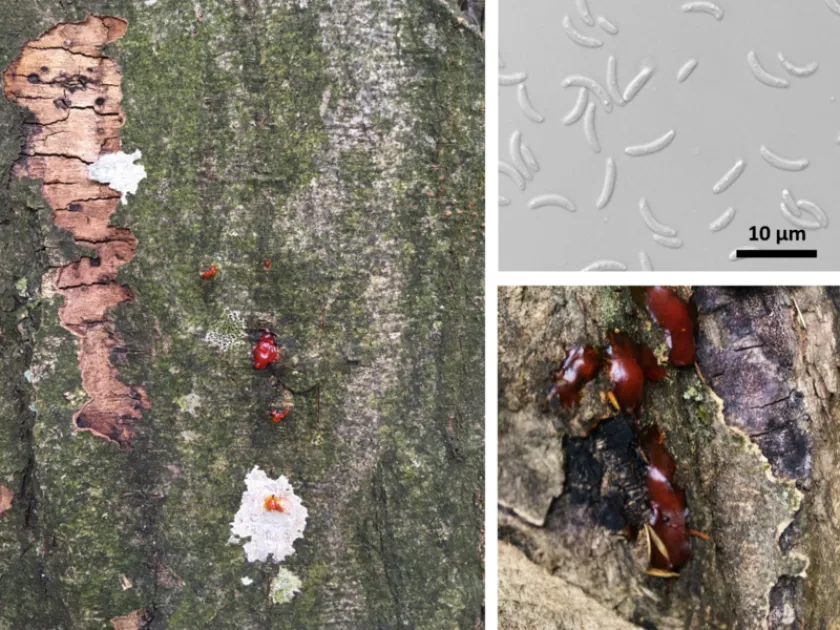
Description
Symptoms
The first external sign of infection is the development of sunken necrotic lesions on the bark of trunks and primary branches. The affected bark becomes dry, brittle, and often changes to a darker or discolored appearance.
A distinctive diagnostic feature is the appearance of small, orange-colored pustules or stromata on the bark surface. These structures represent the reproductive phase of the fungus and break through the bark as the disease progresses.
As the mycelium spreads within the cambium, the bark begins to crack and peel away from the wood. This exposure of the woody cylinder further weakens the tree and provides an entry point for secondary wood-decaying organisms.
Crown symptoms follow the trunk infection, characterized by chlorosis (yellowing) of the leaves and premature defoliation. This reflects the tree's inability to maintain its physiological functions due to the girdling effect of the necrosis.
- Sunken necrotic patches on the trunk or branches.
- Visible orange stroma breaking through the bark.
- Cracking and peeling of the bark tissue.
- Yellowing and premature shedding of the foliage.
- Progressive dieback of branches located above the infection site.
Pathogen
The pathogen responsible for this disease is the ascomycete fungus Cryphonectria carpinicola. It belongs to the Cryphonectriaceae family and acts as a specialized parasite that colonizes the bark and cambium layers of host trees.
The fungus produces stroma, which are complex fungal structures that break through the host's periderm. These stromata are essential for the survival and reproduction of the pathogen, allowing it to release spores into the environment.
Biological activity is closely linked to the physiological state of the host. The fungus thrives in tissues where the natural defenses of the tree have been compromised by environmental stress or physical injuries.
The life cycle encompasses both asexual reproduction, producing conidia, and sexual reproduction, yielding ascospores. This dual strategy allows the fungus to persist in diverse habitats and spread effectively.
As a causal agent of necrotic disease, it causes significant physiological disturbances in the host tree by disrupting the phloem and xylem, which interferes with nutrient and water transport.
Conditions for development
High humidity and moderate temperatures are the most critical environmental factors that promote the development of Cryphonectria carpinicola. Moist conditions significantly increase the rate of spore germination on the bark surface.
Physical injuries, such as those caused by forest management equipment, falling debris, or wildlife activity, provide direct access for the fungus to enter the host's inner tissues.
Trees growing under stress—due to poor soil quality, water deficits, or excessive shade—are more susceptible to colonization. A robust tree can often contain or wall off small infections, whereas stressed trees succumb rapidly.
Wind-driven rain and splash dispersal are the primary mechanisms for the transmission of spores from infected areas to healthy tissues. Insects can also act as vectors, moving spores from one tree to another.
Stands with high planting density often suffer more severe outbreaks. Poor air circulation keeps the bark wet for longer periods, creating an ideal micro-environment for the fungus to establish itself.
Why it matters
The disease causes significant damage to hornbeam populations, leading to reduced growth, aesthetic degradation, and the potential death of infected trees. This is particularly problematic for young saplings.
Timber quality is severely degraded by the necrotic lesions and subsequent decay. The presence of the fungus makes the affected wood unusable for most commercial or structural applications.
At the ecosystem level, recurrent outbreaks can lead to the thinning of hornbeam stands, which alters the habitat structure and reduces the resilience of the forest to other biotic and abiotic stressors.
Economic impact is significant, as it necessitates expensive sanitary felling and removal operations to prevent the spread of the infection to the remainder of the healthy forest stands.
The pathogen threatens the long-term regeneration of the forest, as it frequently attacks younger trees that are less equipped to deal with systemic fungal infections.
Protection
The most effective strategy is a preventative approach based on proper forest hygiene. Avoiding physical damage during logging and thinning operations is crucial to prevent the entry of the fungus.
Sanitary pruning and removal of infected branches or whole trees are mandatory to reduce the inoculum load within the stand. It is vital to remove all dead wood that shows evidence of fungal growth.
For high-value ornamental trees, fungicide applications may be considered in the early stages of infection. However, these must be part of a broader integrated pest management program to be truly effective.
Regular monitoring of forest health is essential for early detection. Spotting the orange stroma early allows for surgical intervention and isolation of the pathogen before it can spread to the main trunk.
Ensuring that trees are in optimal health through appropriate watering and spacing is the best long-term strategy for building natural resistance against pathogenic fungi like Cryphonectria carpinicola.
Discussion
No discussions yet — be the first.