
Crucibulum laeve
Crucibulum laeve
Description
Symptoms
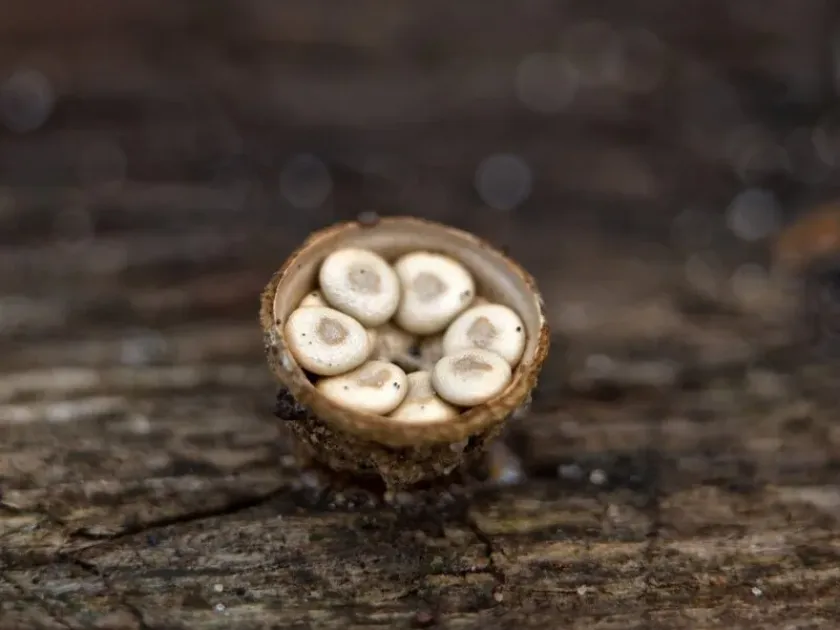
Crucibulum laeve is easily identifiable by its unique morphology, resembling miniature cups or "nests" containing small, disc-shaped structures known as peridioles.
The exterior of the cup typically ranges from light yellow to ochre-brown, with a texture that can be smooth or slightly hairy, especially in its early stages of growth.
These cup-like structures contain the fungal spores. When raindrops strike the "nests," the peridioles are splashed out, ensuring efficient spore dispersal across the immediate environment.
These fungi are most commonly observed growing in clusters on decaying wood, plant debris, or mulch, making them a distinctive sight in garden environments.
It is important to emphasize that this organism is not a primary pathogen of living tissues, appearing mostly as an indicator of organic matter decomposition.
Pathogen
The organism is a basidiomycete fungus belonging to the family Agaricaceae and is commonly referred to as a "bird's nest" fungus.
The scientific name of the species is Crucibulum laeve. It functions as a saprotroph, specializing in the breakdown of complex organic compounds like cellulose and lignin.
Biologically, it acts as a decomposer of woody debris. Its mycelium colonizes dead plant tissues, effectively contributing to the process of mineral recycling within the soil.
The feeding type of this fungus is strictly saprotrophic. It lacks the enzymes required to infect or degrade the living cells of healthy plants, making it harmless to crops.
Its life cycle is closely tied to humid microclimates and the availability of sufficient organic substrate needed to form both its vegetative and reproductive bodies.
Conditions for development
The development of Crucibulum laeve is directly dependent on environmental moisture levels. The fungus thrives in shaded and damp locations where water retention is high.
Ideal substrates for the fungus include decaying plant materials such as twigs, wood chips, bark, straw, or dry grass stems in the process of natural degradation.
The fungus prefers moderate temperatures and is most active during periods of prolonged rainfall, which is characteristic of wet summer or autumn conditions.
An abundance of non-decomposed organic matter on the soil surface provides an optimal environment for the mycelium of this species to establish and spread.
Poor aeration within thick layers of mulch further contributes to the persistent dampness required for the germination and growth of its reproductive structures.
Why it matters
Crucibulum laeve poses no direct threat to living agricultural or horticultural crops, as it is exclusively a saprotrophic organism.
Potential harm is limited to indirect effects, such as the aesthetic impact if the fungus colonizes nursery stock or ornamental wood chips in landscape designs.
In some cases, the proliferation of such fungi on mulch may indicate excessive soil moisture, which could be an unfavorable factor for certain sensitive plant species.
In specific greenhouse settings, an accumulation of decomposing organic debris infested with saprotrophs can potentially contribute to high humidity levels.
There is no evidence in agronomic practice to suggest that this species interferes with plant root health or disrupts the metabolic processes of crops.
Protection
Specific control measures for Crucibulum laeve are generally unnecessary because it does not compromise the health or yield of cultivated plants.
To prevent its appearance, gardeners should focus on removing excess plant debris, twigs, and old wood from the soil surface in crop rows or beds.
Ensuring proper ventilation and optimizing irrigation schedules helps reduce substrate humidity, making the environment less conducive to fungal colonization.
When using mulch, it is recommended to use materials that have been properly aged or processed to prevent the active development of saprotrophic mycoflora.
If the fungus is considered a nuisance, its fruiting bodies can be easily removed manually along with the top layer of the substrate they occupy.
Discussion
No discussions yet — be the first.