
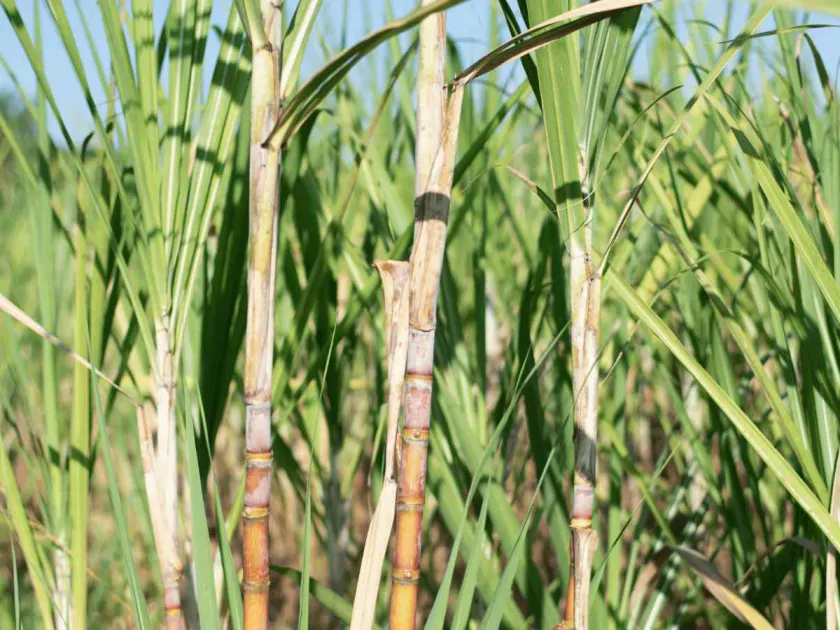
Description
Symptoms
The disease is characterized by the appearance of dark, sunken lesions on the internodes of the stalk, which eventually turn into a crust-like structure.
Small, black, dot-like pycnidia appear scattered across the lesions, which are the most reliable diagnostic feature for identifying the disease in the field.
Internal tissues of the infected stalk typically become discolored, showing shades of red or brown, and develop a characteristic dry, pithy texture.
In advanced stages, the rind of the sugarcane stalk may begin to crack, causing the stem to weaken and eventually collapse under its own weight or wind pressure.
Plants affected by the disease often exhibit reduced vigor and stunted growth compared to healthy neighboring stalks in the same plot.
Pathogen
The crust disease of sugarcane is caused by the fungal pathogen Phaeocytostroma sacchari. This fungus acts as an aggressive parasite that targets the stems of the sugarcane plant.
The pathogen completes its life cycle by forming dark, flask-shaped structures called pycnidia, which emerge through the host's epidermis to release spores.
Phaeocytostroma sacchari is known for its ability to persist in plant debris and soil, serving as a primary source of infection for subsequent planting seasons.
The fungus colonizes the parenchyma tissue, breaking down cellular structures and eventually disrupting the plant's vascular integrity.
Classification-wise, this disease is categorized as a stalk rot or necrosis, specifically affecting the rind and internal tissues of the sugarcane stem.
Conditions for development
High humidity and consistent rainfall are the primary environmental factors that promote the dispersal and germination of fungal spores.
The fungus thrives in warm temperatures, typically ranging from 25°C to 30°C, which are standard for most sugarcane-growing regions.
Poor ventilation within dense sugarcane stands creates an environment where moisture accumulates, favoring the spread of the pathogen from stalk to stalk.
Mechanical injuries caused by farming equipment or insect borers provide easy entry points for Phaeocytostroma sacchari to invade the plant tissue.
Soil conditions that lack proper drainage can keep the environment humid enough to support the long-term survival of the fungus in crop residues.
Why it matters
The economic impact of crust disease is significant due to the reduction in sucrose content and overall juice quality, which lowers factory recovery rates.
The disease contributes to a decrease in stalk weight, which directly translates into a lower total tonnage of harvested sugarcane.
Infected stalks have diminished viability, making them unsuitable for use as propagation material, thereby threatening the supply of healthy "seed" cane.
The pathogen causes premature death of stalks, leading to stand thinning and a reduction in the overall efficiency of the sugarcane plantation.
Furthermore, persistent infection cycles require increased labor and chemical inputs to manage the disease, raising the overall production costs.
Protection
The use of disease-free planting material is the most effective way to prevent the introduction of Phaeocytostroma sacchari into new areas.
Sanitation practices, such as removing and burning infected crop residues, are essential to reduce the inoculum load in the field after harvest.
Implementing a crop rotation schedule helps to break the cycle of the fungus in the soil, preventing the build-up of the pathogen over successive years.
Managing insect pests that damage the stalks is crucial, as they create wounds that significantly increase susceptibility to fungal colonization.
Balanced fertilization and ensuring adequate spacing between plants can improve overall crop resilience against various fungal pathogens.
Pathogens and affected parts
Affects crops · 1
Discussion
No discussions yet — be the first.