
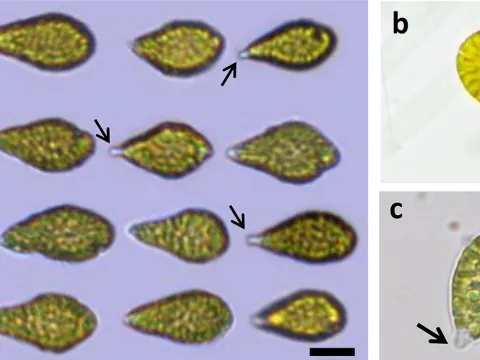
Chattonella subsalsa
Chattonella subsalsa
Chattonella subsalsa is a unicellular microalgae belonging to the Raphidophyceae class. It is recognized as a significant agent of harmful algal blooms (HABs) in coastal and estuarine environments.
What the section contains
Chattonella subsalsa
Unlike traditional fungal or viral pathogens, this organism causes damage through physical contact and chemical secretion. It possesses flagella, allowing it to navigate the water column effectively.
The biological cycle consists of motile vegetative cells and dormant benthic cysts. This duality allows the species to survive harsh seasonal changes in the sediment and recolonize the water during favorable conditions.
The organism produces neurotoxins and hemolytic compounds. These metabolites are specifically hazardous to aquatic animals, particularly gill-breathing organisms like fish.
Due to its high adaptability and rapid proliferation rate, C. subsalsa is considered a major threat to intensive aquaculture operations globally. Regular environmental monitoring is crucial for early detection.
The development of C. subsalsa blooms is primarily driven by eutrophication. High nutrient concentrations, specifically nitrogen and phosphorus, provide the fuel for rapid population explosions.
Seasonal temperature fluctuations are critical triggers. As water temperatures rise, dormant cysts in the sediment germinate, releasing motile cells into the water column.
Physical oceanographic conditions such as water column stratification play a major role. Calm weather and low wind speeds prevent vertical mixing, allowing the algae to concentrate in surface layers.
Salinity tolerance is a hallmark of this species, allowing it to colonize diverse environments from brackish estuaries to marine systems. This flexibility makes it difficult to predict bloom events.
High light intensity during sunny periods enhances the photosynthetic efficiency of the cells. Combined with nutrient availability, this creates ideal conditions for massive algal proliferation.
The primary damage caused by Chattonella subsalsa is large-scale mortality of fish in aquaculture cages. The toxins directly impact the gill epithelium, leading to severe cell necrosis.
Gills damaged by these toxins fail to perform essential gas exchange, causing the fish to suffocate. This often happens even if dissolved oxygen levels in the water are adequate.
Secondary ecological damage includes nocturnal hypoxia. The respiration of a massive algal biomass rapidly depletes dissolved oxygen during the night, leading to widespread environmental stress.
Economic impacts are profound, often resulting in total losses of stock for aquaculture farms. Recovery periods are lengthy due to the persistence of resting cysts in the benthic environment.
Furthermore, the disruption of local food webs affects non-target species. The shift in phytoplankton composition can impact biodiversity and long-term ecosystem health in the affected areas.
Early detection through frequent water sampling and microscopic analysis is the most effective preventative measure. Identifying cells before bloom thresholds is key to mitigation.
Mechanical management, such as artificial aeration or bubble curtains, can disrupt stratification. By forcing vertical mixing, operators can prevent the concentration of algal biomass in surface layers.
Clay flocculation is a technique used to remove algal cells from the water column. By spreading specific types of clay, cells can be aggregated and settled to the bottom safely.
Reducing feeding rates during high-risk periods is a recommended operational response. This minimizes the metabolic stress on fish, potentially helping them survive short-term exposures to toxic blooms.
Long-term prevention requires stringent management of nutrient runoff from surrounding land. Reducing the influx of fertilizers and sewage into coastal waters is the only sustainable strategy.