
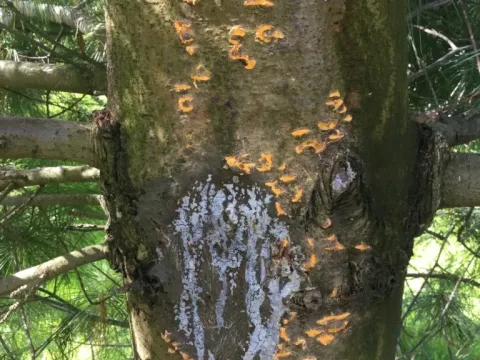
White pine rust
Ceropsora weirii
The causative agent of this disease is the fungus Ceropsora weirii, a specialized pathogen that targets pine species. It belongs to the rust fungi family, known for causing significant physiological distress in host plants.
What the section contains
White pine rust
Operating as an obligate parasite, the fungus derives nutrients directly from the living tissue of the pine. It embeds its mycelium within the needles, effectively disrupting normal cell function and inhibiting vital metabolic processes.
The fungus completes its life cycle by producing various spore types, which are easily disseminated by wind currents. This efficiency allows the pathogen to colonize adjacent trees rapidly, particularly in dense forest stands.
Understanding the biology of Ceropsora weirii is essential for effective disease management. The pathogen requires specific environmental conditions to germinate and successfully penetrate the protective layers of the pine needles.
As an aggressive pathogen, it poses a recurring challenge to forest management. Persistent observation of fungal activity is required to prevent widespread outbreaks in nurseries and mature stands alike.
The initial signs of white pine rust are the appearance of chlorotic, yellow spots on the needles. As the disease progresses, these spots evolve into vivid orange pustules, indicating the sporulation phase of the fungus.
Affected needles frequently show signs of structural distortion and curling. As the fungal mycelium ruptures the needle epidermis to release spores, the needles turn yellow, wither, and eventually fall off the tree.
In mature trees, the loss of foliage can be dramatic, leaving branches bare and the tree significantly weakened. The visual impact of the rust-colored spore clusters makes the infection easy to spot during the growing season.
A closer examination of the needle undersides often reveals clustered aecia, which serve as a diagnostic feature for this specific fungal pathogen. These structures confirm the presence of an active infection site.
- Chlorotic yellow spots on needles
- Visible orange fungal pustules
- Needle curling and deformation
- Premature needle cast and foliage loss
- Weakened overall tree growth
Environmental conditions play a primary role in the spread of white pine rust. High humidity levels, such as frequent rainfall or heavy morning fog, provide the moisture necessary for fungal spores to germinate.
The disease thrives in moderate temperatures, typically between 15°C and 20°C. In these conditions, the fungal pathogen can reproduce rapidly, leading to high infection rates in susceptible pine populations.
Poor air circulation, often caused by overly dense planting or lack of pruning, significantly increases the risk of infection. Stagnant, humid air around the foliage creates a perfect microclimate for the pathogen.
Trees that are already stressed by poor soil quality, drought, or nutrient deficiencies are significantly more vulnerable. A weakened tree lacks the defensive capabilities to fend off fungal colonization effectively.
Spring and early summer are the most critical times for infection. During this period, the young needles are most susceptible, and weather conditions often favor the rapid dispersion of spores across the plantation.
The primary impact of white pine rust is the reduction of photosynthetic efficiency. By damaging the needles, the fungus limits the tree's ability to produce energy, leading to stunted growth and poor health.
Severe infestations lead to massive defoliation, which exhausts the tree's internal nutrient reserves. This makes the pines more susceptible to secondary pests, including bark beetles and other wood-boring insects.
In nursery settings, this disease can cause high mortality rates, leading to substantial economic losses. Entire batches of seedlings can be rendered unsellable due to poor appearance and compromised health.
The loss of aesthetic value is a significant concern in ornamental and urban forestry. Trees showing signs of rust damage are often considered unsightly and may require expensive removal or curative treatments.
Over time, recurring infections weaken the wood quality of commercial timber species. This reduces the value of the forest harvest and complicates long-term sustainable forest management strategies.
Stringent quarantine and inspection protocols are the first line of defense. Ensuring that only disease-free nursery stock is introduced to a site is vital for preventing the spread of the pathogen.
Sanitation practices, such as the prompt removal and burning of infected branches and fallen needles, are highly effective in reducing the local spore load. Regular maintenance is essential to mitigate outbreaks.
Fungicidal treatments can be applied to nursery stock or high-value trees to prevent infection. Timing is critical, with applications most effective just before or during the peak periods of spore dispersal.
Proper silvicultural practices, including thinning and adequate spacing, improve air circulation and reduce humidity levels. This creates a less hospitable environment for the development of Ceropsora weirii.
Selecting and planting resistant pine varieties remains the most effective long-term solution. Genetic resistance minimizes the need for chemical intervention and ensures more resilient forest ecosystems.